
Long Island’s roads see over 200,000 accidents annually, making the right auto coverage essential for your safety and finances. New York requires minimum liability protection, but that’s often not enough to shield you from unexpected costs.
We at JW Hirschfeld Agency, Inc. help drivers navigate Long Island auto coverage options tailored to their actual commute patterns and risk factors. This guide walks you through the coverage types that matter most and how to find a policy that truly fits your needs.
Why Auto Insurance Matters on Long Island
High Crash Rates and Your Daily Risk
Long Island crash data tells a stark story. The region experienced roughly 75,000 crashes in 2022, up from about 65,000 annually in 2015–2017, according to the Institute for Traffic Safety Management and Research. That upward trend means your odds of being involved in an accident are higher than they were a decade ago. The average Long Island commute runs 37.2 minutes each way, per the United States Census Bureau, which compounds your exposure to risk every single day.
New York’s Minimum Coverage Falls Short
Minimum New York liability coverage-$25,000 per person and $50,000 per accident for bodily injury, plus $10,000 for property damage-sounds adequate on paper. In reality, a serious crash on the Long Island Expressway racks up medical bills, vehicle repairs, and legal costs that far exceed those thresholds. A single catastrophic injury costs hundreds of thousands of dollars. If you’re found at fault and your liability limits are exhausted, your personal assets become vulnerable.
New York’s no-fault system means your own Personal Injury Protection (PIP) covers your medical expenses up to $50,000 per accident regardless of who caused the crash. However, that protection only covers medical costs and lost wages-not vehicle damage or liability claims against you. Without collision and comprehensive coverage, you’re responsible for repairs or replacement out of pocket.
How Your Situation Shapes Your Costs
Long Island auto insurance averages about $195 per month for full coverage according to Insurify data, but that figure masks huge variation. A driver with excellent credit pays roughly $174 per month, while someone with poor credit pays $350. A speeding ticket pushes rates up by 15 percent or more. A DUI sends rates to about $432 per month statewide.
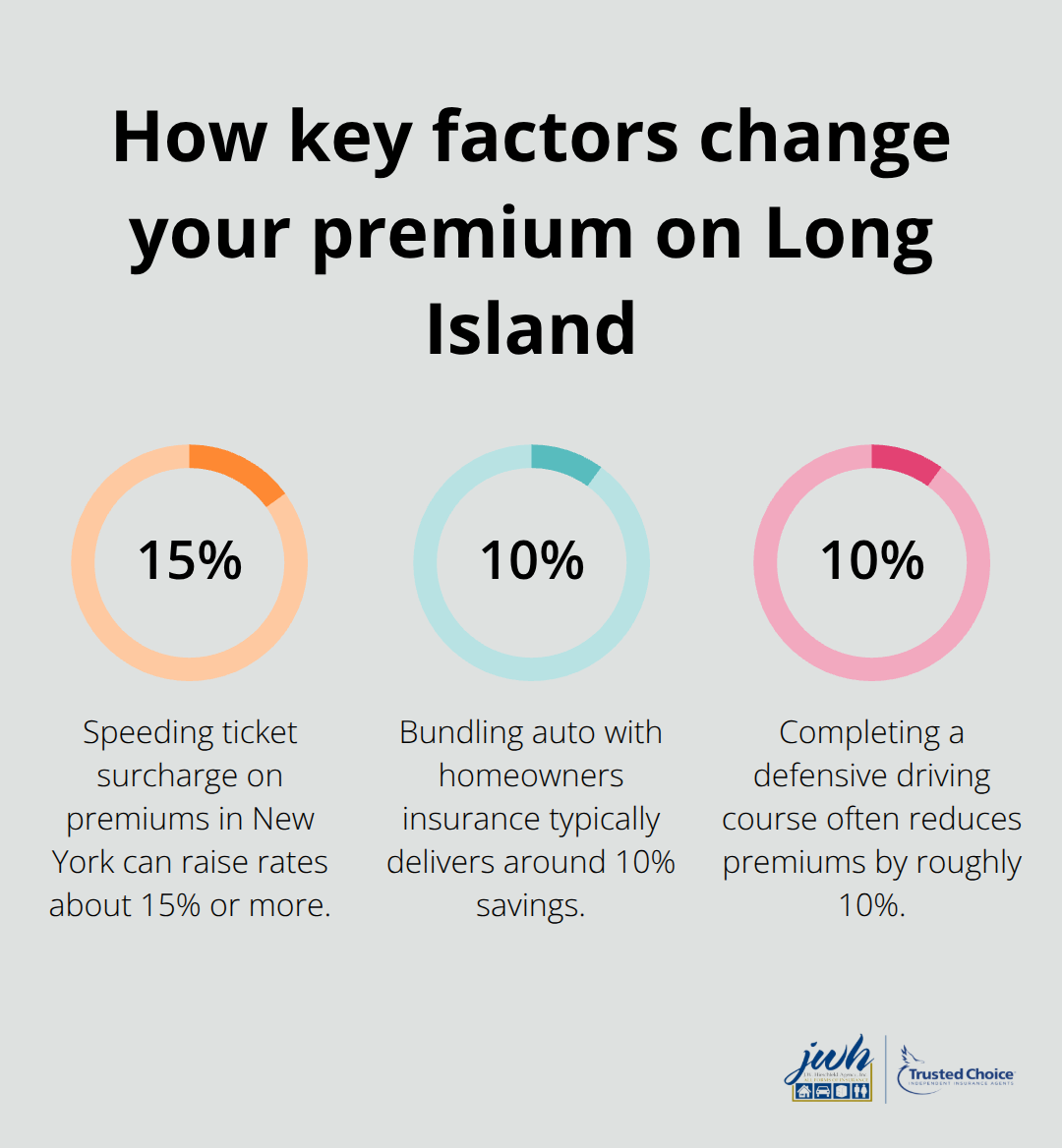
Your specific situation-your driving history, vehicle type, location, and coverage choices-determines whether you’re paying $150 monthly or $400.
The Hidden Danger of Underinsurance
Underinsurance is the silent killer of Long Island budgets. Liability-only coverage saves money initially, but if you cause a crash that injures another person or damages their vehicle, you’re personally liable for anything your insurance doesn’t cover. Property damage claims alone exceed $10,000 in a multi-vehicle collision. Medical claims routinely hit $50,000 or more for serious injuries. If you have a car loan or lease, your lender mandates full coverage anyway, so the savings evaporate.
Strategic Coverage Alignment Pays Off
Long Island isn’t one risk profile. Someone commuting 37 minutes each way on the LIE faces different hazards than a short trip to a local business. An older vehicle with a paid-off loan needs different coverage than a new car financed at the dealer. A driver with a clean record and excellent credit qualifies for discounts that others don’t. Bundling auto with homeowners insurance yields meaningful savings-USAA members who switched policies saved an average of $840 per year. That’s what happens when you align your coverage strategically.
An independent agent accesses quotes from multiple carriers and identifies which discounts apply to your specific situation, whereas a captive agent can only quote their own company’s rates and rules. This flexibility matters most when you’re trying to find the right balance between protection and cost. Understanding the coverage types available to you-and how they work together-is the next step toward a policy that actually fits your commute and your wallet.
Types of Auto Coverage and What They Cover
Liability Coverage Protects Your Financial Future
Liability coverage is your legal requirement and your first line of defense, but it’s also where most Long Island drivers stop thinking. New York mandates $25,000 per person and $50,000 per accident for bodily injury, plus $10,000 for property damage. That minimum barely covers a serious injury claim or multi-vehicle collision on the Long Island Expressway. A single hospitalization for a crash victim runs $100,000 to $300,000 in medical costs alone. If you’re at fault and your liability limits cap at the state minimum, the injured party sues you personally for the difference.
Higher liability limits-$100,000 per person and $300,000 per accident-cost only slightly more but shield your paycheck and savings from judgment. An independent agent representing multiple carriers shows you exactly how much extra protection costs per month, then helps you decide if that $15 or $25 monthly increase is worth the peace of mind.
Collision and Comprehensive Coverage Protect Your Vehicle
Collision and comprehensive coverage protect your vehicle, not someone else’s. Collision pays for damage to your car from a crash regardless of fault, while comprehensive covers theft, weather, vandalism, and animal strikes. If you financed or leased your vehicle, your lender requires both coverages until the loan is paid off-there’s no negotiating that requirement.
For older cars with low resale value, skipping these coverages makes financial sense, but for vehicles worth $15,000 or more, a single accident without collision coverage forces you to pay thousands out of pocket or drive an unsafe vehicle. Your deductible choice directly affects your premium; raising it from $500 to $1,000 typically cuts your monthly cost by 15 to 25 percent, but you’ll pay that $1,000 if a claim occurs.
Uninsured and Underinsured Motorist Coverage Fills the Gap
Uninsured and underinsured motorist coverage fills a critical gap that liability doesn’t touch. If another driver hits you and either has no insurance or insufficient coverage, your own UM or UIM policy pays your medical bills and vehicle damage up to your limits. New York requires UM coverage at your bodily injury liability limits, but many drivers don’t realize it exists or how it works.
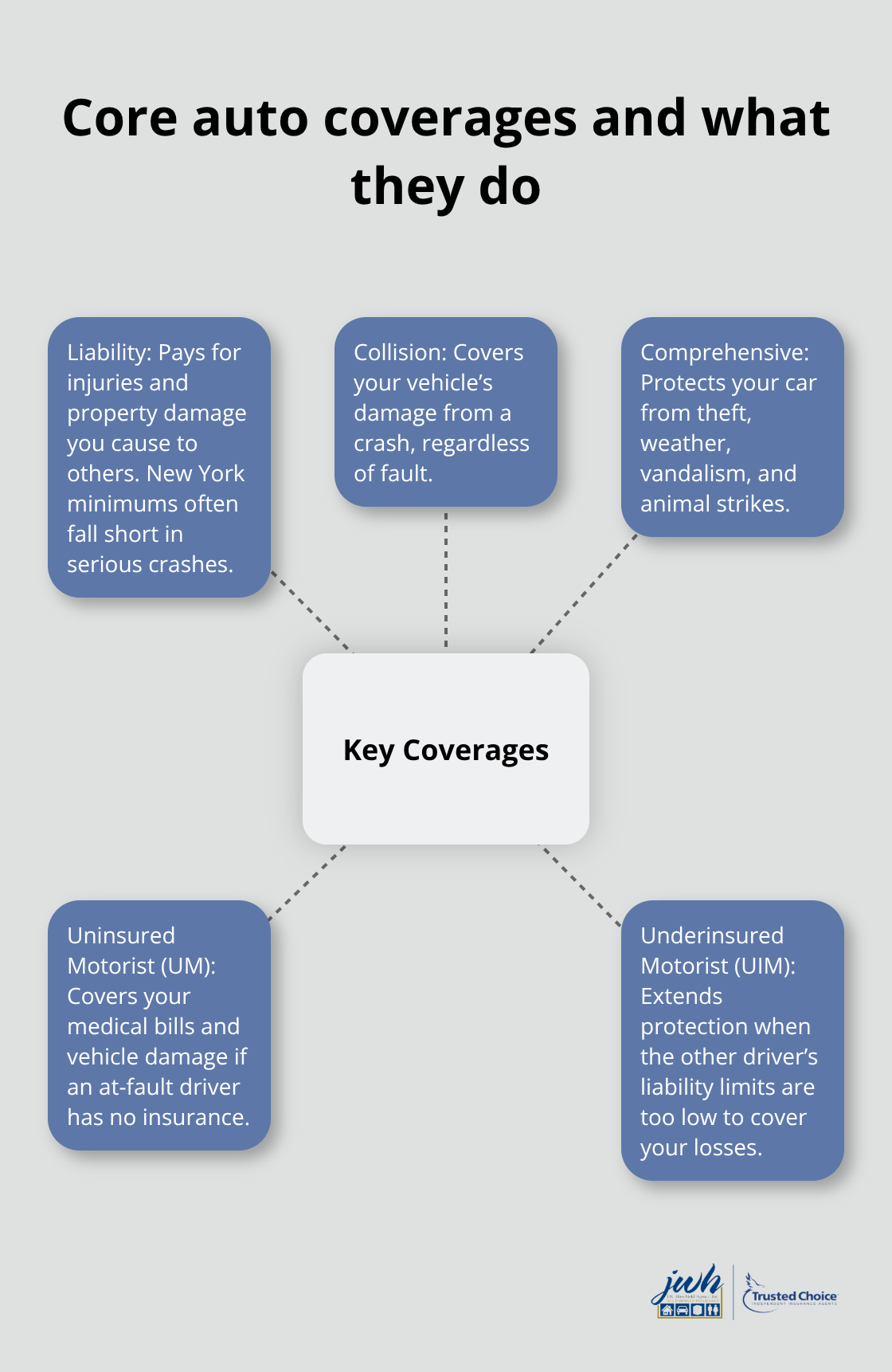
On Long Island, where crash frequency has climbed steadily, this coverage isn’t optional-it’s essential protection against drivers who skipped insurance or carry bare-minimum limits. An independent agent reviews your existing policies and recommends UM and UIM limits that match your liability coverage, ensuring no gap between what you covers you and what you’re actually exposed to on the road. Understanding how these three coverage types work together sets the stage for choosing limits that actually fit your Long Island commute and assets.
How to Choose the Right Auto Insurance Policy
Match Your Coverage to Your Actual Commute
Your driving habits and location determine which coverage matters most. A 37-minute daily commute on the Long Island Expressway exposes you to far more risk than occasional local trips, which means your policy must reflect that reality. Track your actual miles per month and identify the routes you drive most frequently. High-traffic corridors like the LIE and Northern State Parkway see significant crash rates that justify higher liability limits and uninsured motorist coverage. If you drive during rush hours, your collision risk climbs significantly compared to off-peak driving. Once you understand your real exposure, you can match coverage to your actual commute instead of purchasing a generic policy that covers nothing well.
Compare Quotes Across Multiple Carriers
Shopping for auto insurance on Long Island means comparing quotes across multiple carriers because pricing varies dramatically by insurer and your specific situation. However, these averages mask the fact that the same driver might pay $150 with one carrier and $280 with another based on how each company weighs your credit score, driving history, and vehicle type. An independent agent representing multiple carriers pulls quotes from over 120 insurers and shows you side-by-side comparisons without requiring you to fill out separate applications for each company. This matters because a 15 percent rate increase from a speeding ticket or a 10 percent discount for bundling your home policy can swing your annual bill by $600 or more.
Unlock Discounts and Bundling Savings
Discounts and bundling opportunities exist across nearly every policy, but you must know they exist and qualify for them. Bundling auto with homeowners insurance typically yields savings of 10 percent or more. Defensive driving courses cut premiums by roughly 10 percent depending on the insurer. Multi-vehicle discounts apply if you insure two or more cars. Good student discounts, anti-theft device discounts, and telematics programs like Liberty Mutual’s RightTrack reward safe driving habits with lower rates.
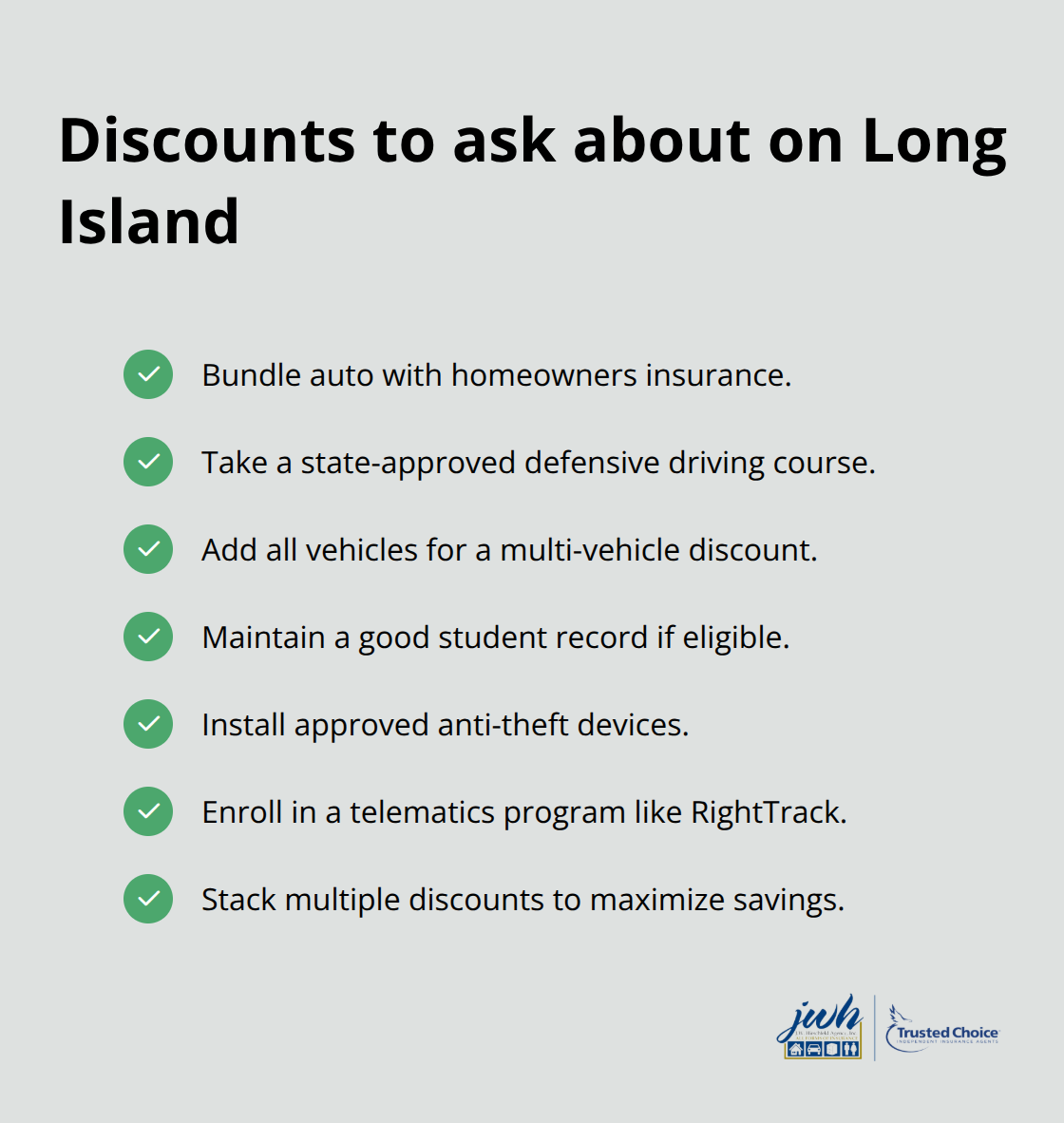
An independent agent compares how discounts stack across carriers to find the combination that saves you the most money. A driver with an excellent credit score, a clean driving record, and two vehicles bundled with homeowners insurance might qualify for five or six stacked discounts that total 25 to 35 percent off the base rate-but only if someone actively identifies and applies them to your policy.
Final Thoughts
Long Island auto coverage requires you to balance protection with cost, and that balance shifts based on your commute, vehicle, driving history, and financial situation. Liability coverage meets New York’s legal requirement but often falls short of protecting your assets in a serious crash. Collision and comprehensive coverage protect your vehicle, while uninsured and underinsured motorist protection fills gaps that liability leaves open.
An independent agent makes this process straightforward by representing multiple top carriers and pulling quotes from over 120 insurers to show you side-by-side comparisons tailored to your actual commute and risk profile. They identify which discounts apply to your situation, calculate how bundling your home and auto policies saves money, and explain coverage gaps you might miss shopping alone. When a claim happens, an independent agent advocates on your behalf, translating policy language and pushing for fair settlement rather than leaving you to negotiate with an adjuster.
Schedule a coverage review with an independent agent who knows Long Island’s roads, accident patterns, and local risk factors. Bring your current policy, your vehicle information, and a realistic picture of your commute so an agent can compare your current coverage against your actual needs and show you quotes from multiple carriers. Contact JW Hirschfeld Agency, Inc. to start that conversation today.
The information provided in this blog is for general informational purposes only and does not constitute legal, financial, or insurance advice. Coverage options, terms, and availability may vary. Please consult with a licensed professional for advice specific to your situation.
Artificial intelligence may have been used to generate text and images in some blog articles.