

Rental property owners on Long Island face real financial exposure. A standard homeowners policy won’t cover your rental income or liability from tenants and guests.
We at JW Hirschfeld Agency, Inc. help landlords build landlord insurance for rentals that actually matches their properties. The right coverage protects your building, your income, and your assets when something goes wrong.
What Does Landlord Insurance Actually Cover
Property Damage Protection Covers Your Building and Lost Income
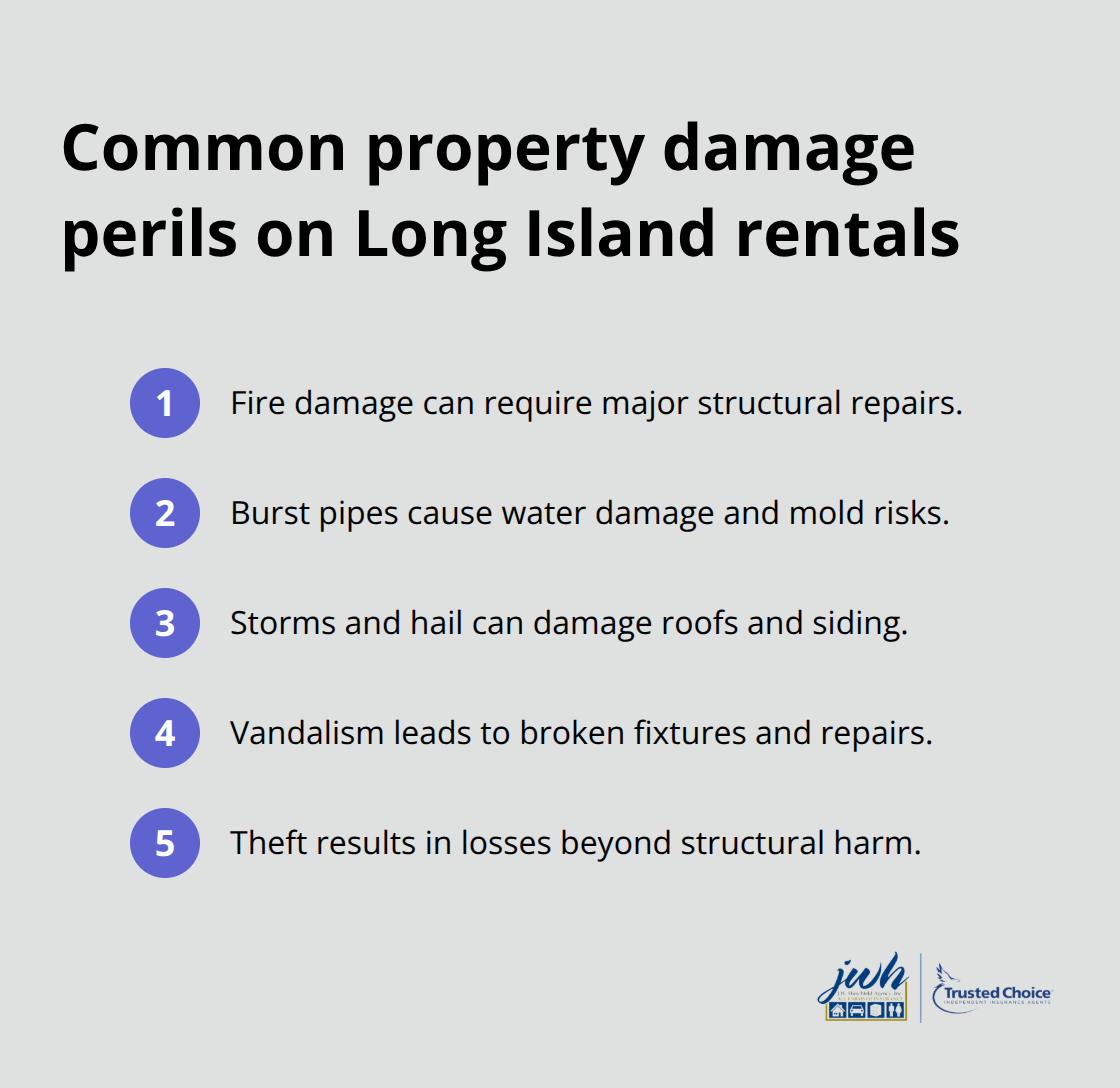
Landlord insurance on Long Island protects three distinct financial exposures that rental property owners face constantly. Fire damage, water damage from burst pipes, storm and hail damage, vandalism, and theft all fall under property damage protection, covering both structural repairs and lost rental income while your unit sits vacant. These coverages address the perils most common to Long Island’s dense rental market near New York City, where weather events and urban risks create real exposure for property owners.
Liability Coverage Protects You From Tenant and Guest Injuries
Legal liability coverage is where many landlords find gaps in their thinking-this covers medical bills and legal fees if a tenant or guest gets injured on your property and sues. Liability limits typically range from $300,000 to $2,000,000 per occurrence, and adding higher limits costs only $200 to $400 annually. Most landlords underestimate this exposure, which makes working with an independent agent valuable; they review your specific property type and tenant profile to recommend appropriate limits rather than selling you a standard package.
Loss of Rent Coverage Protects Your Cash Flow During Repairs
Loss of rent coverage keeps your cash flow steady, helping you cover mortgage payments, taxes, and maintenance without tapping into reserves when a covered event like a fire or burst pipe makes the unit temporarily uninhabitable. This protection matters most when repairs stretch weeks or months, as your cash flow stops while your expenses continue. Without this coverage, you absorb the full financial hit until tenants return and rent resumes.
Critical Coverage Gaps Landlords Often Miss
Standard homeowners policies exclude rental income entirely and cap liability at levels too low for multi-unit properties. Flood damage requires a completely separate flood insurance policy, so Long Island properties near waterways or in designated flood zones need explicit flood coverage added to their landlord policy. Riot and civil commotion coverage protects against damage from unrest but requires police documentation linking the damage directly to the event. Vandalism and burglary claims typically need a police report filed before your insurer will pay.
Why Property Type Matters for Your Coverage
An independent agent reviews your specific property type-whether it’s a single-family rental, multi-unit building, or vacation rental-and tailors your limits and deductibles to match your actual exposure. This approach prevents you from overpaying for unnecessary coverage while preserving essential protections for your Long Island rental portfolio. The next section explains how independent agents access multiple carriers to find rates and coverage options that fit your needs better than direct writers can offer.
What Gaps Does Homeowners Insurance Leave for Landlords?
Homeowners Policies Exclude Rental Income Entirely
Your homeowners policy was designed to protect your primary residence, not rental income or tenant liability. That fundamental mismatch creates real exposure on Long Island. A standard homeowners policy typically excludes any rental income coverage entirely, meaning if a fire forces tenants out for three months while repairs happen, your mortgage, property taxes, and maintenance costs continue while your rental income stops. The liability limits in homeowners policies are normally limited to a percentage of your coverage limit, and fall dangerously short for rental properties where multiple tenants and frequent guests create higher injury exposure than a single-family home.
Liability Limits Fall Short for Rental Properties
Long Island’s dense rental market near New York City amplifies liability risk; properties in high-traffic areas or multi-unit buildings face greater injury claims than suburban single-family homes. An independent agent reviews your specific property and tenant profile to recommend liability limits that actually match your exposure rather than accepting whatever a direct writer offers as standard. This personalized approach prevents you from carrying inadequate protection that leaves you personally liable for claims exceeding your policy limits.
Umbrella Coverage Protects Against Major Claims
Umbrella liability coverage fills the gap when a major claim exhausts your underlying policy limits. If a guest suffers a serious injury on your rental property and wins a $1.5 million judgment, but your landlord policy covers only $500,000, the umbrella policy picks up the remaining $1 million. Umbrella policies for rental property owners typically cost $150 to $300 annually for $1 million in additional coverage, making them affordable relative to the protection they provide.
Specialized Coverage for Unique Properties and Vacation Rentals
Specialized coverage becomes essential for high-value properties, vacation rentals, or multi-unit buildings. Vacation rentals like Airbnb or VRBO properties need explicit coverage since standard landlord policies often exclude short-term rentals entirely. Properties with expensive finishes, recent renovations, or equipment like HVAC systems may need agreed-value coverage rather than replacement-cost coverage to avoid underinsurance. Flood insurance remains mandatory if your Long Island property sits in a designated flood zone or near waterways, and it requires a completely separate policy since no standard landlord policy covers flood damage.
Independent Agents Compare Multiple Carriers for Your Needs
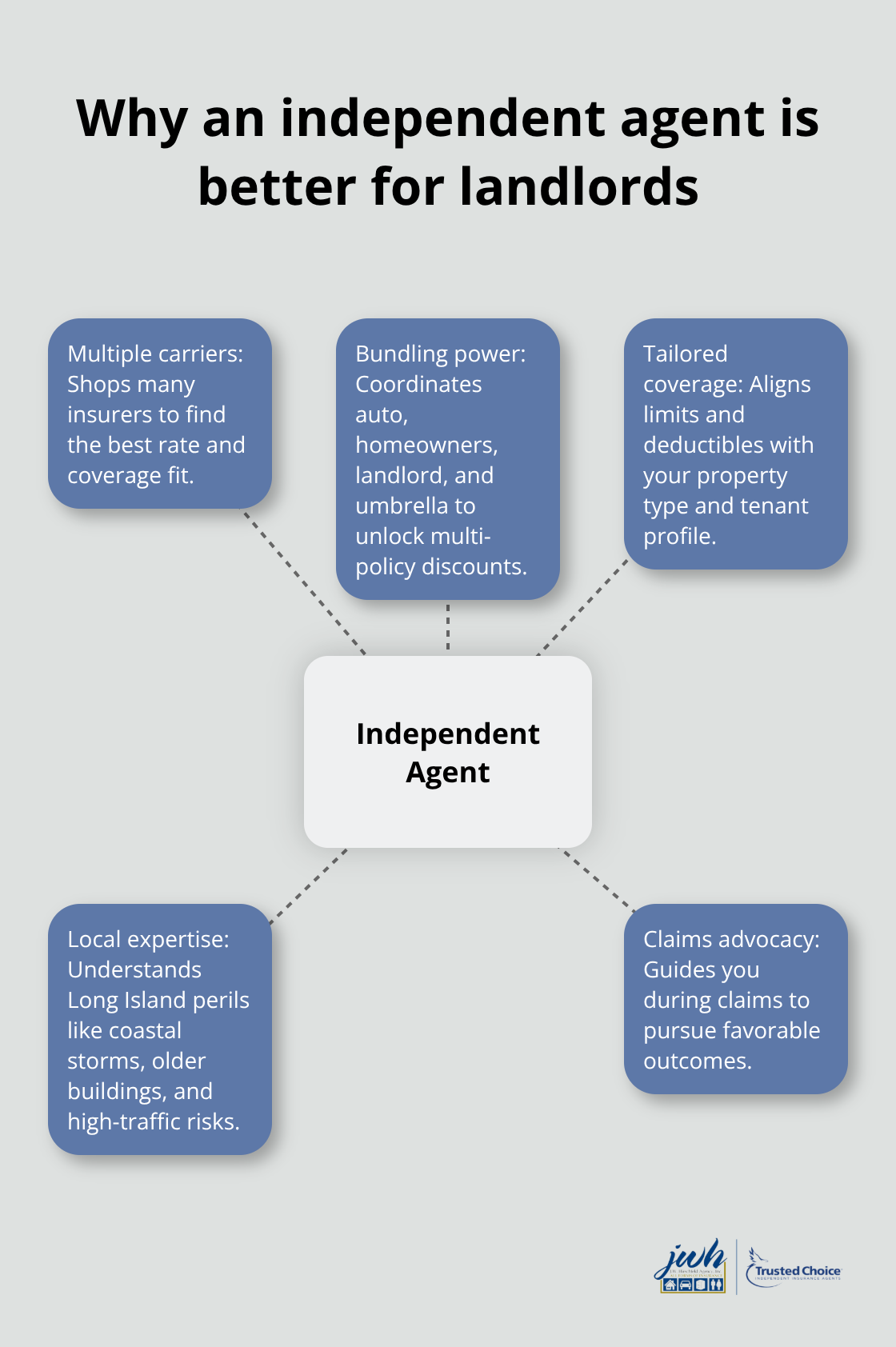
An independent agent compares options across multiple carriers, identifying which insurers offer the best rates and coverage for your specific property type and exposure profile-something a direct writer cannot do. This access to multiple carriers means you receive tailored recommendations based on your actual risk, not a one-size-fits-all package. The next section explains how independent agents leverage this carrier access to secure competitive rates and bundle discounts that protect your Long Island rental portfolio more effectively.
How Independent Agents Get You Better Landlord Rates
Multiple Carriers Mean Real Price Competition
Direct insurance writers lock you into one company’s pricing and coverage menu. An independent agent shops across multiple carriers simultaneously, comparing what each insurer charges for your exact property type, location, and risk profile. This matters on Long Island because rates vary dramatically between carriers; one insurer might charge $1,200 annually for a single-family rental in Huntington while another charges $1,800 for identical coverage. When you work with an independent agent, you see actual differences side-by-side, so you understand exactly what you’re paying for and why. A direct writer has no incentive to shop around because they only sell their own policies-your options end the moment you meet with them. An independent agent advocates for you throughout the entire process because your satisfaction determines whether you stay with that agent for future coverage needs.
Bundling Policies Unlocks Substantial Discounts
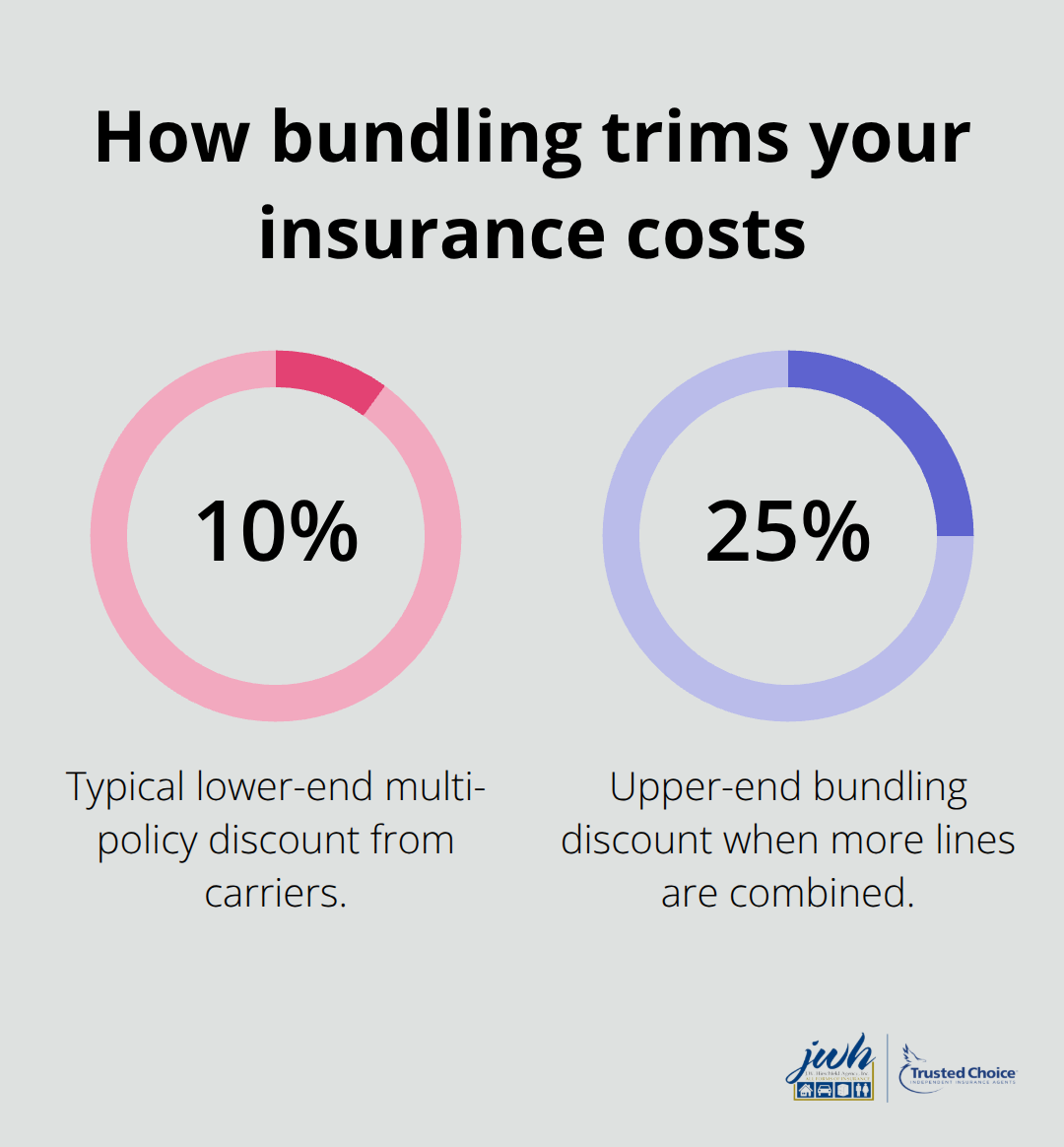
Bundling personal and commercial policies through one agent generates discounts most landlords never find on their own. If you combine your homeowners policy, auto insurance, and landlord coverage together, carriers typically reduce your combined premium by 10 to 25 percent compared to purchasing each policy separately. That bundling discount compounds when you add umbrella liability or flood insurance to your landlord policy.
A direct writer selling only landlord insurance cannot offer bundling advantages because they don’t represent other carriers for auto or homeowners coverage. An independent agent structures your complete insurance portfolio to maximize those discounts while protecting your rental properties with specialized coverage that homeowners policies cannot provide.
Tailored Coverage Matches Your Actual Exposure
An independent agent tailors your deductibles and coverage limits based on your specific portfolio-if you own three single-family rentals versus one multi-unit building, your liability exposure and property protection needs differ significantly. Your policy should reflect that reality rather than forcing you into a standard package designed for generic landlords. This personalized approach (combined with access to multiple carriers) means you avoid overpaying for unnecessary coverage while preserving essential protections for your Long Island rental properties. An independent agent reviews your property type, tenant profile, and financial situation to recommend appropriate liability limits and deductibles that actually match your exposure.
Local Expertise Strengthens Your Coverage Strategy
Long Island’s dense rental market near New York City creates unique risks that require local knowledge. An independent agent familiar with the area understands the perils common to your neighborhood-whether that’s storm exposure in coastal areas, water damage risks in older buildings, or liability concerns in high-traffic rental zones. This local perspective helps you avoid gaps that generic, national policies often miss. An independent agent also advocates for you during claims, helping you navigate settlements and secure favorable outcomes when something goes wrong with your rental property.
Final Thoughts
Protecting your Long Island rental investment requires specialized coverage that matches your actual exposure, not a generic package designed for national markets. Your rental properties face distinct perils-from storm exposure in coastal areas to water damage risks in older buildings to liability concerns in high-traffic zones-that demand landlord insurance for rentals tailored to your specific situation. An independent agent familiar with Long Island understands these local risks and helps you avoid gaps that national policies often miss.
Independent agents shop multiple carriers simultaneously, comparing actual rates and coverage options so you see real price differences between insurers. They access bundle discounts that combine your landlord insurance with auto, homeowners, and umbrella coverage-discounts that typically save 10 to 25 percent compared to purchasing policies separately. When claims arise, an independent agent advocates for you throughout the settlement process, helping you navigate the system and secure favorable outcomes.
JW Hirschfeld Agency, Inc. represents multiple top carriers and finds tailored landlord insurance for rentals with competitive pricing while providing bundle discounts and hands-on advocacy through claims. Contact them to build coverage that actually protects your Long Island rental portfolio.
The information provided in this blog is for general informational purposes only and does not constitute legal, financial, or insurance advice. Coverage options, terms, and availability may vary. Please consult with a licensed professional for advice specific to your situation.
Artificial intelligence may have been used to generate text and images in some blog articles.