
Your small business fleet is the backbone of your operations. When multiple vehicles are on the road daily, standard auto insurance simply doesn’t cut it-you need small business fleet coverage designed for your specific risks.
At JW Hirschfeld Agency, Inc., we help business owners protect their fleets with policies that actually match how they operate. This guide walks you through everything you need to know about fleet insurance.
What Fleet Coverage Actually Protects
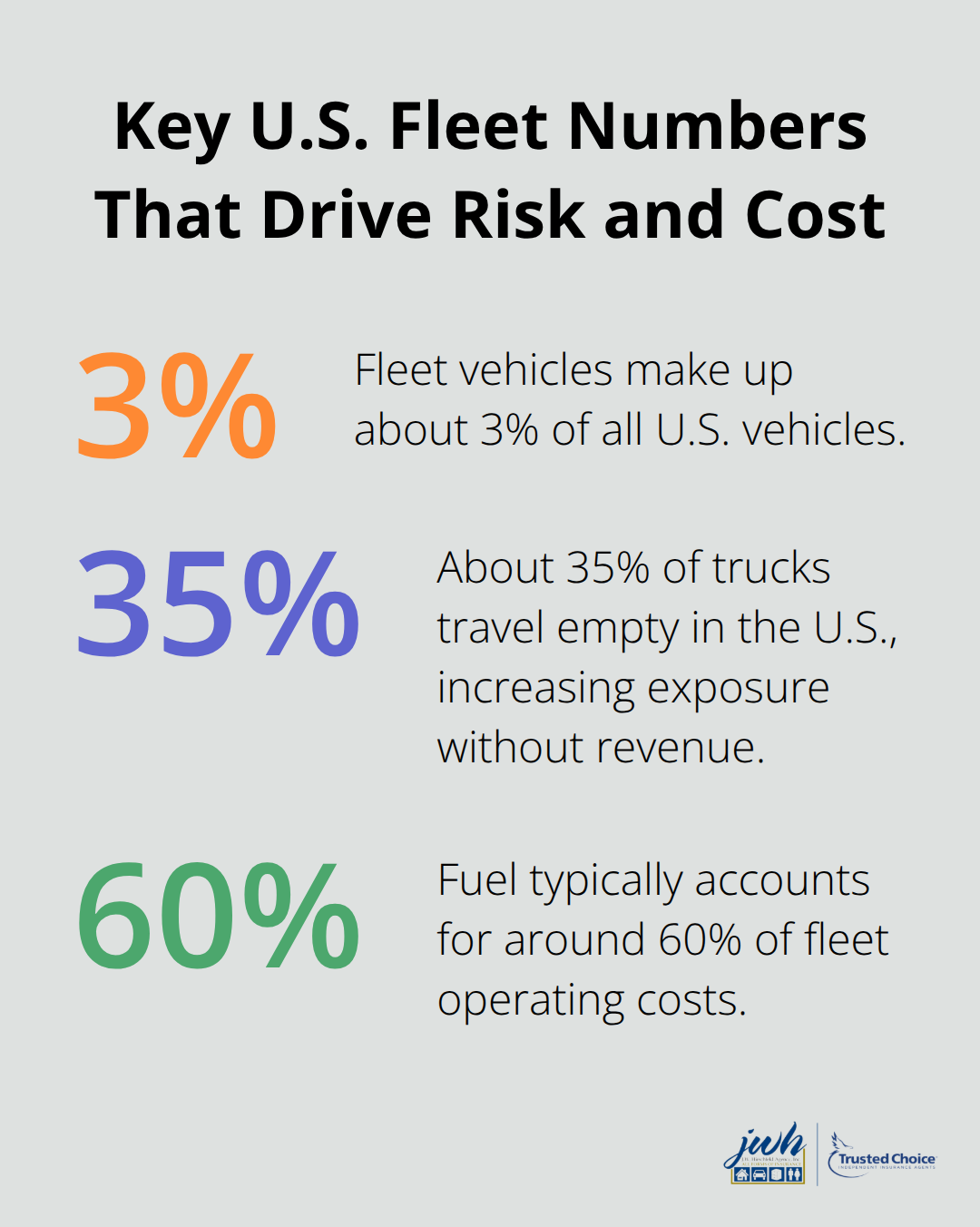
Fleet coverage consolidates multiple vehicles under a single commercial policy, fundamentally different from stacking individual auto policies. With fleet insurance, you cover all drivers on all vehicles or assign specific drivers to specific vehicles, offering flexibility as your business grows. The average annual cost runs about $1,000 per vehicle, though premiums vary based on industry, vehicle type, fleet size, driving history, location, and deductibles. This structure matters because roughly 8.1 million fleet vehicles operate in the U.S.-about 3% of all vehicles-and they face distinct operational risks that personal auto policies simply don’t address.
Standard auto insurance treats each vehicle as isolated; fleet coverage recognizes that your vehicles work together as a business system, with shared drivers, routes, cargo, and liability exposure. The difference becomes critical when a single incident affects multiple vehicles or when you need proof of coverage across your entire operation.
Understanding your real exposure
Small business fleets face specific risks that standard policies ignore. About 35% of trucks travel empty in the U.S., creating deadhead miles that waste fuel and increase accident exposure without generating revenue. An estimated 61 billion deadhead miles occur annually, according to Trucking Dive, meaning your vehicles carry liability with no offsetting income. Fuel typically accounts for around 60% of fleet operating costs, so inefficient routes and idle time compound your financial risk. Physical damage coverage protects your vehicles from collisions and comprehensive losses, while liability protection covers injuries and property damage your drivers cause. Specialized coverage for cargo in transit, hired and non-owned vehicles, and uninsured motorist protection fills gaps that standard policies leave open.
Coverage types that match your operations
Commercial auto insurance for fleets addresses non-trucking liability-protecting drivers when they operate personal vehicles for business purposes-and motor truck cargo if you transport goods. Your deductible choice directly impacts premiums; higher deductibles lower your annual cost but increase out-of-pocket expenses after a claim. Industry risk and vehicle type influence pricing too; couriers, delivery services, and high-mileage operations face higher rates than occasional-use vehicles. Location matters significantly: urban driving typically costs more than rural routes due to increased accident exposure.
How scale works in your favor
Adding more vehicles to your fleet actually lowers per-vehicle premiums through economies of scale, making expansion more affordable. An independent insurance agent assesses your specific operations-vehicle types, driver experience, routes, and cargo-then matches you with carriers offering competitive rates and tailored coverage rather than forcing you into a one-size-fits-all package. This personalized approach means your policy reflects how you actually operate, not how an algorithm thinks you should operate. When you’re ready to evaluate specific carriers and understand what separates a good fleet policy from a mediocre one, the right agent becomes your competitive advantage.
What Each Coverage Type Actually Covers
Commercial Auto Liability: Your Foundation
Commercial auto liability forms the foundation of any fleet policy, protecting your business when a driver injures someone or damages property. This coverage pays medical bills, lost wages, and repair costs up to your policy limit-typically ranging from $100,000 to $1 million depending on your operation’s size and risk profile. Liability protection matters most because a single serious accident can expose your business to six-figure claims that personal auto policies won’t touch.
Physical Damage and Collision Protection
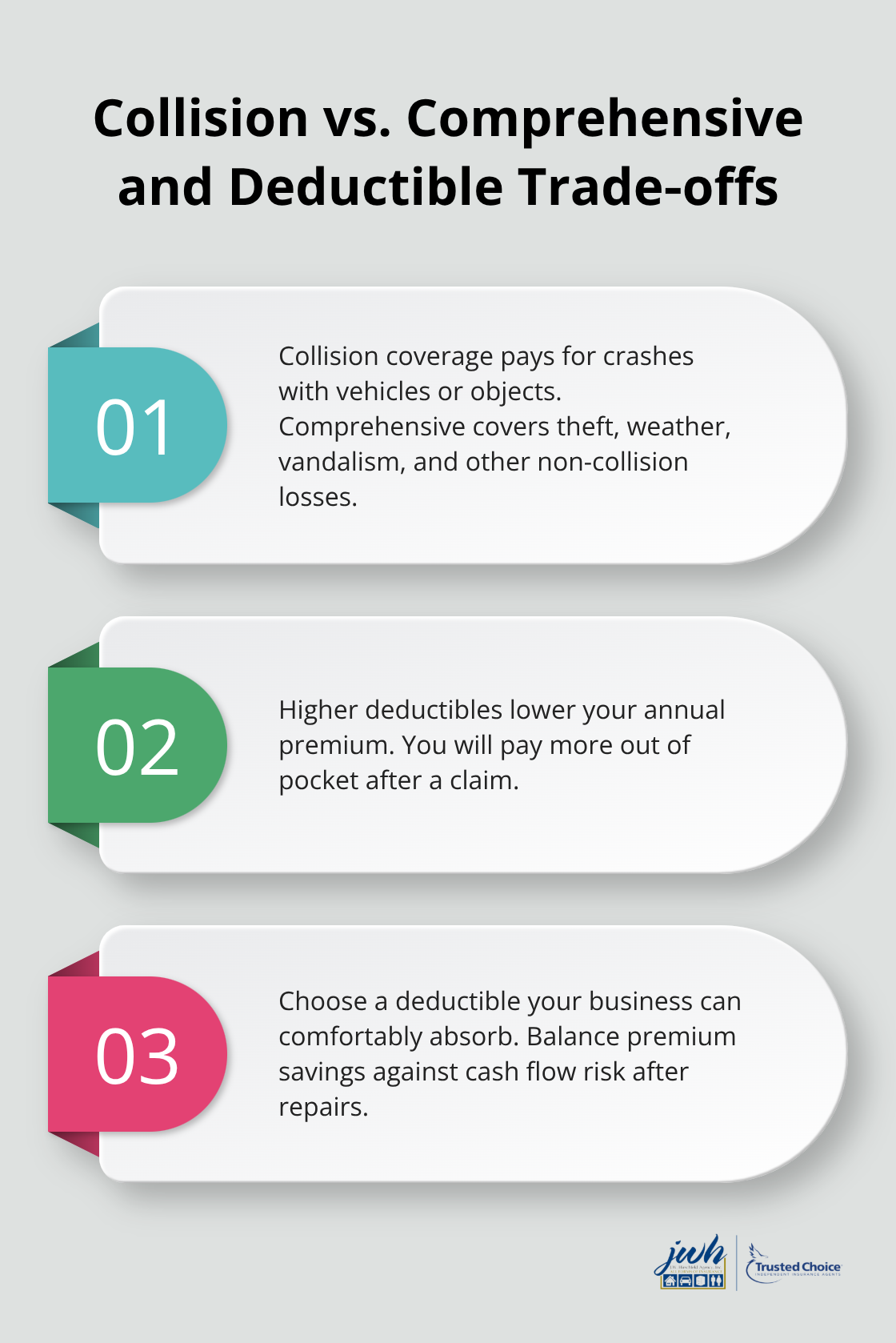
Physical damage coverage splits into two categories: collision protection covers accidents with other vehicles or objects, while comprehensive coverage handles theft, weather, vandalism, and other non-collision losses. Your deductible choice directly affects your premium; a $1,000 deductible costs less than a $500 deductible, but you’ll pay more out-of-pocket after a claim. Higher deductibles lower your annual cost, so evaluate what your business can absorb financially if a vehicle sustains damage.
Protecting Your Drivers and Operations
Uninsured and underinsured motorist coverage protects your drivers when they’re hit by someone without adequate insurance-a real risk given the rise in uninsured drivers. Medical payments coverage covers your drivers’ medical expenses regardless of fault, reducing the likelihood they’ll file personal injury lawsuits against your business. Most carriers include hired and non-owned auto coverage automatically, protecting you when employees rent vehicles or use personal cars for business purposes without adding them to your policy.
Specialized Coverage for Your Specific Needs
Motor truck cargo insurance protects goods in transit if you transport products, materials, or client belongings-critical if a collision damages inventory worth thousands. Non-trucking liability covers your drivers when they operate personal vehicles for business without the truck, filling a gap that standard policies ignore. Roadside assistance coverage reduces downtime by covering towing, lockouts, and mechanical failures 24/7, keeping vehicles operational and drivers safe.
Finding Coverage That Matches Your Business
An independent insurance agent evaluates your specific operations-whether you deliver packages, transport equipment, serve customers on-site, or operate mixed fleets-then recommends coverage combinations that match your actual exposure rather than pushing unnecessary add-ons. This tailored approach means you avoid overpaying for coverage you don’t need while remaining protected against risks unique to your business model. Once you understand what coverage types exist, the next step involves selecting a provider who actually listens to how your fleet operates.
How to Choose the Right Fleet Insurance Provider
Coverage Limits and Deductibles Shape Your Protection
Your choice of coverage limits and deductibles directly determines both your premiums and financial exposure after losses occur. A $500,000 liability limit costs less than $1 million but leaves your business vulnerable if a serious accident generates claims exceeding that threshold. Deductibles work the opposite way: higher deductibles ($2,500 or $5,000) reduce annual premiums substantially, but you absorb those costs out-of-pocket after each claim. The right balance depends on your business’s financial capacity to handle unexpected expenses and your fleet’s accident history. If your drivers maintain clean records and you operate primarily in lower-risk environments, higher deductibles make financial sense. If your fleet operates in congested urban areas or handles valuable cargo, lower deductibles protect your cash flow despite higher premiums. Most carriers offer multiple deductible options, so evaluate what your business can realistically afford without disrupting operations after a claim occurs.
Multiple Quotes Reveal Massive Price Variations
Comparing quotes across multiple carriers reveals pricing differences that single-quote shopping completely misses. Independent insurance agents represent multiple top carriers, meaning they access competitive pricing and specialty markets that direct insurers cannot match. An independent agent assesses your specific operations-vehicle types, driver experience, routes, safety programs, claims history-then presents quotes from carriers actually interested in your business rather than forcing you into standardized pricing tiers. This access to multiple carriers fundamentally changes your negotiating position because you avoid being locked into one company’s rates or accepting mediocre service.
Why Independent Agents Outperform Direct Insurers
Independent agents act as advocates between your business and carriers, ensuring your policy reflects how you actually operate and that you pay competitive rates for the coverage you genuinely need. When incidents happen, your agent pushes carriers to resolve claims fairly rather than leaving you to fend for yourself against a faceless company. An independent agent also understands local business conditions-traffic patterns, weather risks, industry-specific exposures-that national carriers overlook when setting standard rates. This local expertise means your policy accounts for real operational challenges rather than generic assumptions about how fleets should operate.
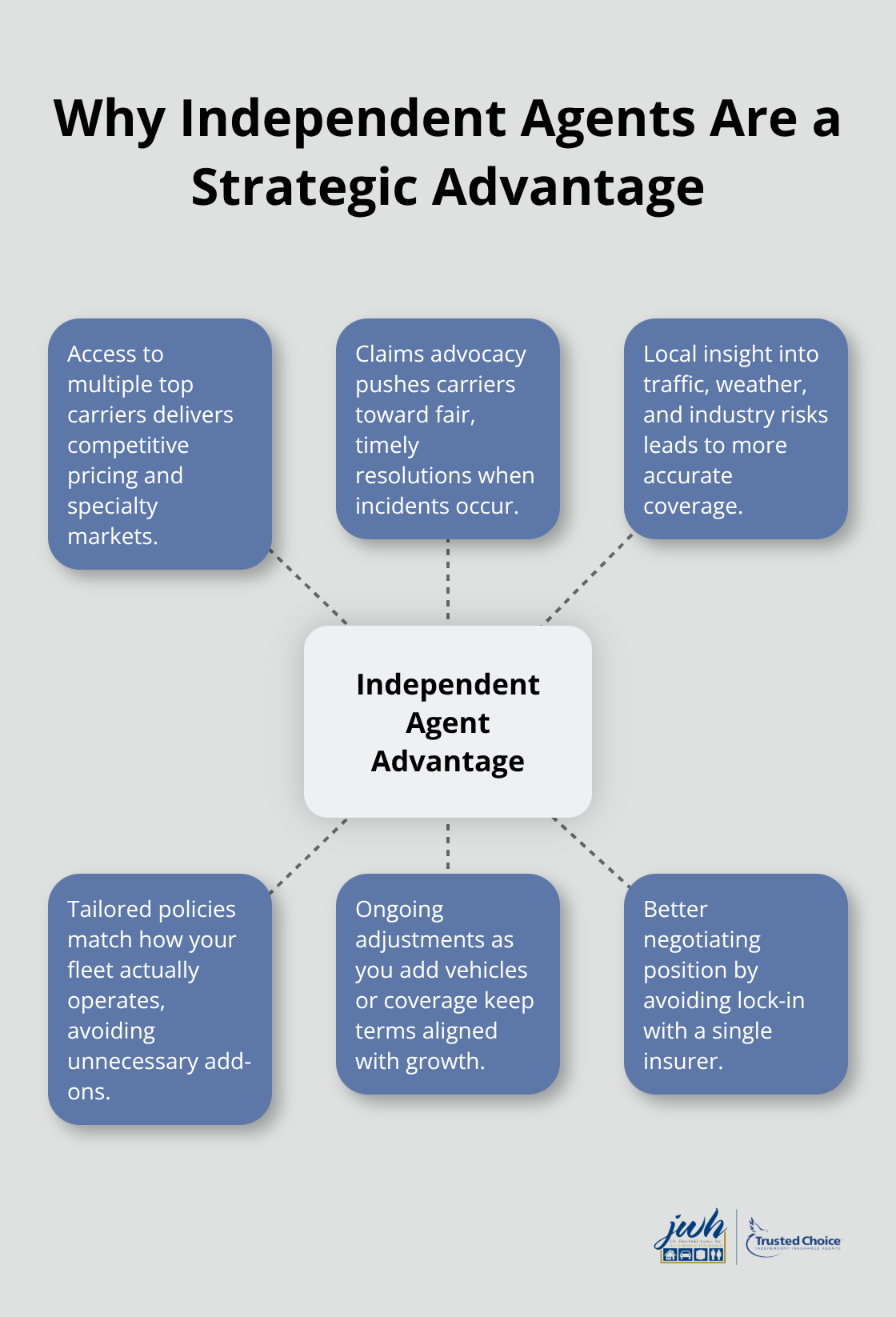
Independent agents also handle policy adjustments as your business grows, adding vehicles or coverage without forcing you to renegotiate with a new carrier or accept unfavorable terms.
Final Thoughts
Small business fleet coverage protects your vehicles, drivers, and bottom line by consolidating multiple vehicles under a single commercial policy that matches how you actually operate. Standard auto insurance leaves gaps exposing your business to financial risk when incidents happen, but the right fleet policy addresses those gaps with liability protection, physical damage coverage, and specialized add-ons matching your specific operations. The foundation that keeps your operations running when accidents, theft, or mechanical failures occur starts with understanding what coverage types matter most for your business.
Work with an independent insurance agent who represents multiple top carriers and understands your local market conditions rather than relying on direct insurers using standardized pricing algorithms. Local independent agents act as advocates for your business, not as order-takers for insurance companies-they push back when carriers propose inadequate coverage limits, negotiate competitive rates based on your actual risk profile, and handle claims fairly when incidents happen. An independent agent also adjusts your policy as your fleet grows, adding vehicles or coverage without forcing you to renegotiate with a new carrier or accept unfavorable terms.
Contact JW Hirschfeld Agency, Inc. to discuss your small business fleet coverage options and protect your fleet with a policy that reflects how you actually operate.
The information provided in this blog is for general informational purposes only and does not constitute legal, financial, or insurance advice. Coverage options, terms, and availability may vary. Please consult with a licensed professional for advice specific to your situation.
Artificial intelligence may have been used to generate text and images in some blog articles.