

Getting homeowners insurance quotes on Long Island requires more than just picking the lowest price. Your home faces unique risks-from coastal weather to local property values-that directly impact what coverage you actually need and what you’ll pay for it.
We at JW Hirschfeld Agency, Inc. help Long Island homeowners navigate this process by connecting you with multiple carriers and explaining what each quote really means. This guide walks you through comparing quotes effectively and finding real savings without sacrificing protection.
What Coverage Long Island Homes Actually Need
Long Island homeowners face three distinct seasonal threats that shape your insurance needs. Coastal nor’easters and heavy rainstorms arrive in fall and winter, bringing wind damage and water infiltration that standard policies cover only partially. Summer brings hail storms, which your dwelling and personal property coverage handles, but not vehicle damage unless you carry comprehensive auto coverage. Hurricane season adds another layer: standard homeowners policies cover hurricane wind damage, but not the flooding that often accompanies storms.
This matters because NFIP payouts in New York from 2015 to 2025 exceeded 300 million dollars, with more than half paid to Westchester and Long Island residents.
Coverage Types Your Long Island Home Requires
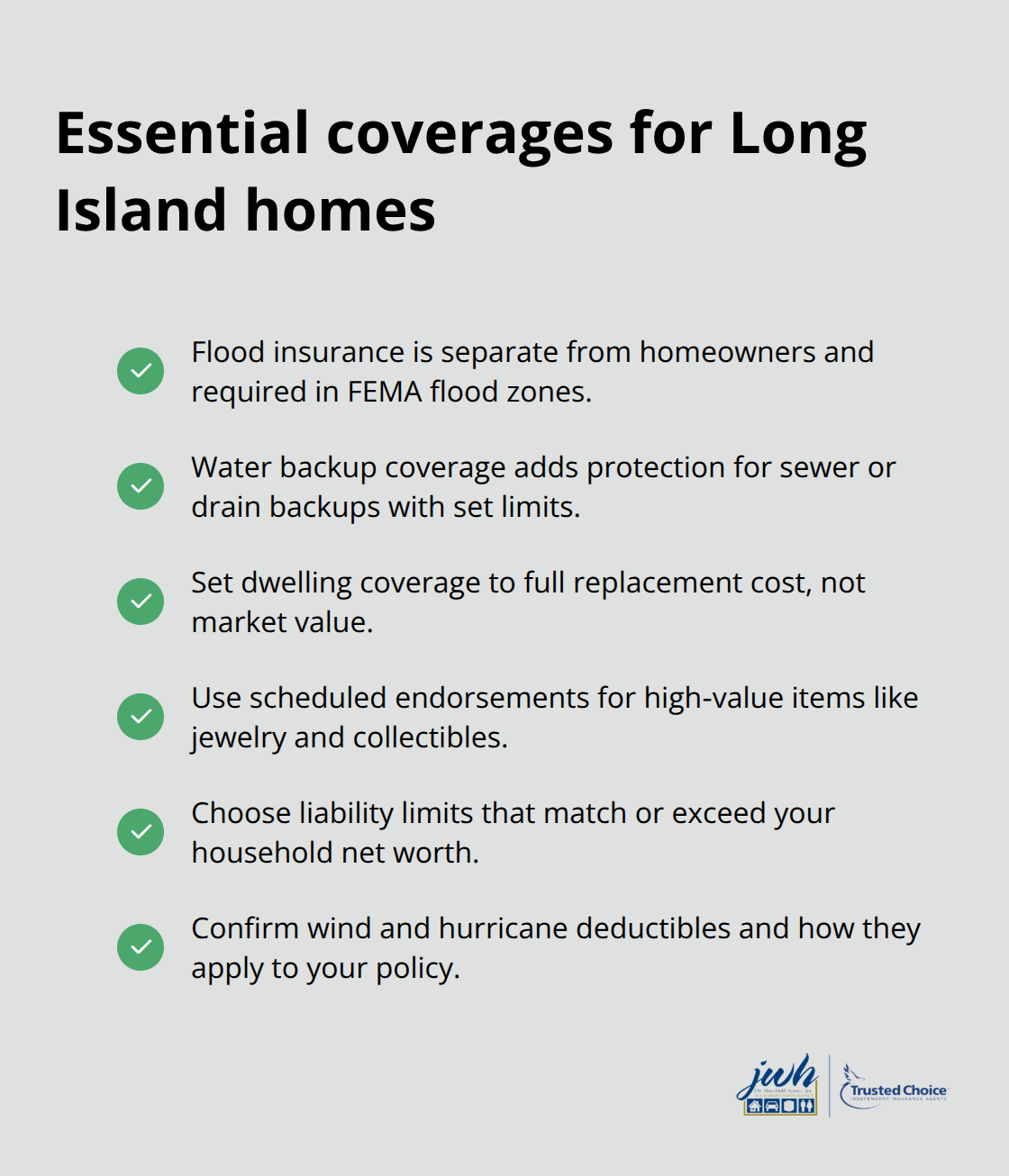
Your location determines which coverage types matter most. If your address sits in a FEMA flood zone or near one, flood insurance becomes non-negotiable-standard policies exclude it entirely. Water backup coverage for sewer or drain backups is optional but practical for Long Island properties, typically offering limits between 5,000 and 25,000 dollars with its own deductible.
Dwelling coverage should equal your full replacement cost, not your home’s market value. Most carriers base quotes on what it costs to rebuild from scratch, which on Long Island often exceeds market price due to labor and material costs. Personal property coverage at 50 percent of dwelling value rarely suffices if you own jewelry, electronics, or collectibles; scheduled endorsements remove sub-limits and deductibles for high-value items. Liability limits should match or exceed your household net worth to protect your assets in a lawsuit-this protection is essential.
How Location Directly Changes Your Premium
Your ZIP code drives premium more than any other factor. Napeague on the South Fork averages around 3,257 dollars annually for 350,000 dollars in dwelling coverage, roughly 135 percent above the state average of 1,387 dollars. Manhattan averages 3,477 dollars yearly, while Staten Island runs about 2,307 dollars. Outer Long Island coastal areas command these higher rates because insurers price in frequent nor’easters, hurricane exposure, and historical claim frequency. Inland Long Island properties pay substantially less-the difference between beachfront and five miles inland can exceed 1,500 dollars annually for identical coverage.
Building age and construction type amplify location-based pricing. Homes built before 1980 with wood-shake roofs cost more to insure than newer homes with asphalt or metal roofing. The 80 percent rule applies here: insurers want your dwelling coverage at least 80 percent of replacement cost, or they reduce claim payouts proportionally. This rule exists because underinsured homes become higher risk.
Policy Forms and Deductibles Shape Real Costs
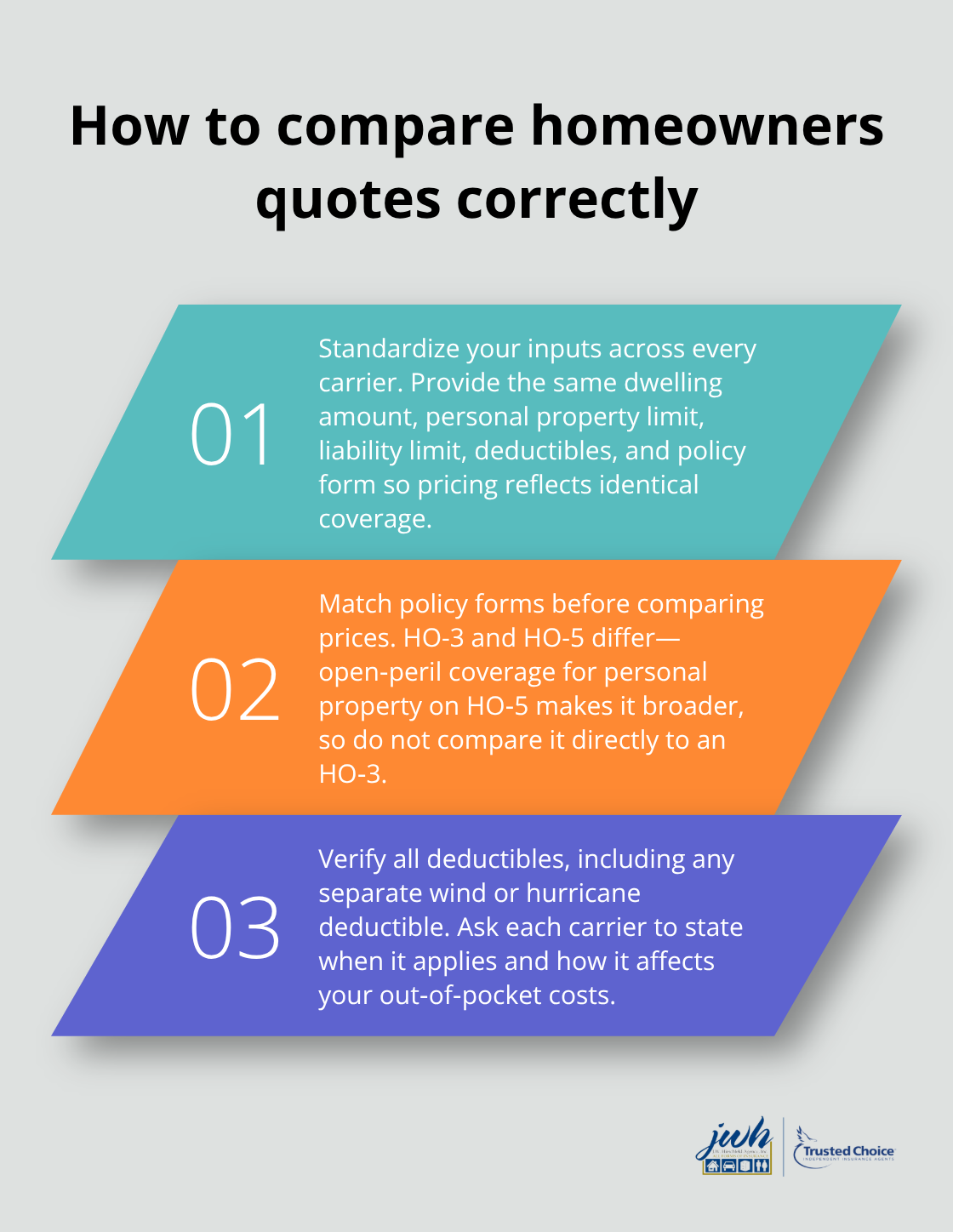
Comparing homeowners quotes requires matching identical coverage across carriers to see true price differences. A Nationwide HO-5 policy at 1,485 dollars annually offers different protection than a Liberty Mutual HO-3 at 1,680 dollars-the policy form matters as much as the price. HO-3 policies cover your dwelling and other structures on an open-peril basis but limit personal property to named perils. HO-5 covers both dwelling and personal property on an open-peril basis, meaning broader protection.
Wind or hurricane deductibles on Long Island are often separate from standard deductibles and typically run 2 to 5 percent of dwelling coverage, meaning a 500,000 dollar home could have a 10,000 dollar hurricane deductible. Most online quote tools fail to explain these details. You get a number but no context about what you actually get for that price.
Bundling and Independent Agent Advantages
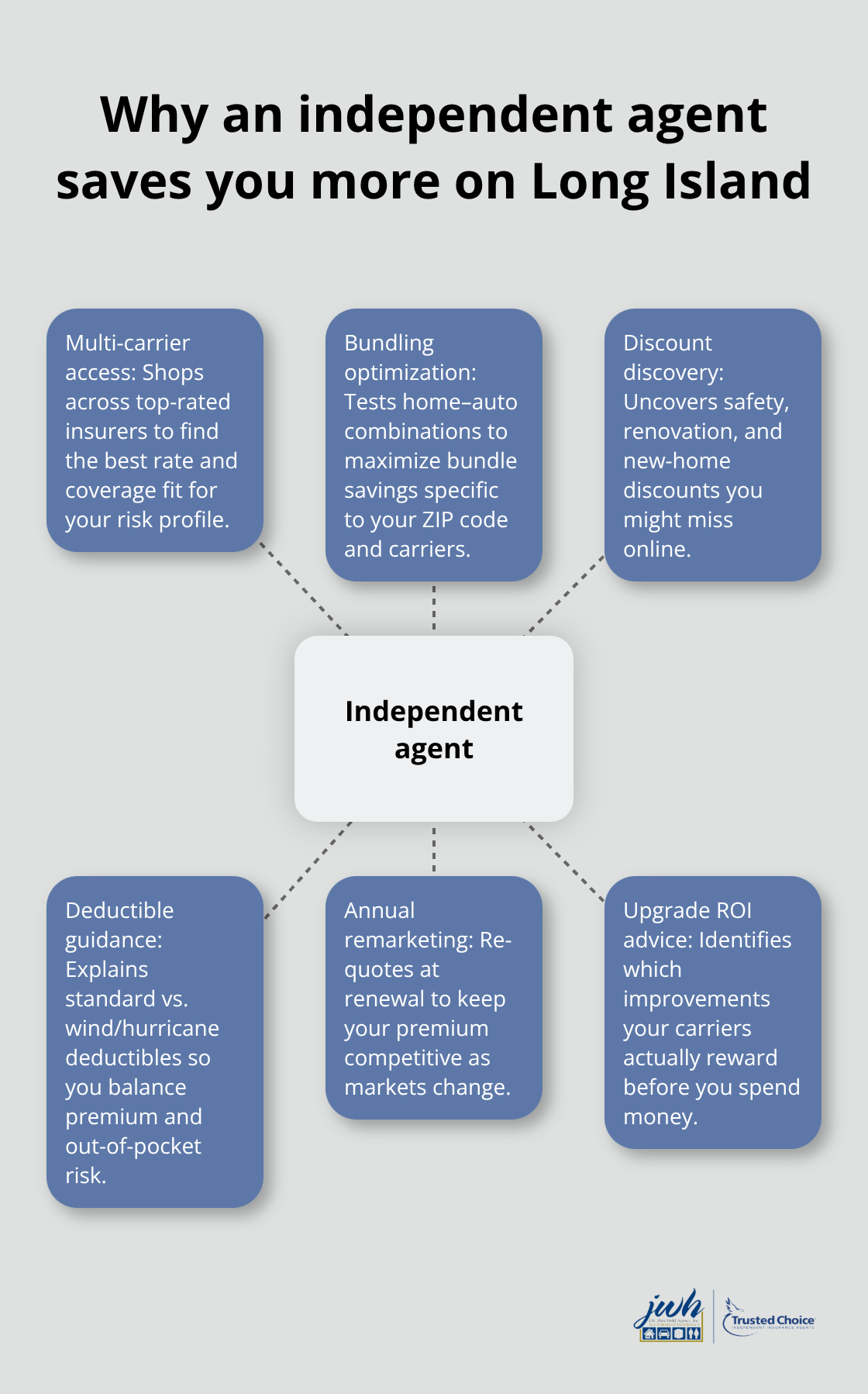
Bundling auto with home insurance generates real savings-bundling typically saves around 922 dollars yearly according to carrier data, though this varies by insurer and location. An independent agent personalizes your policy to match your unique needs and connects you with multiple top-rated carriers. Independent brokers representing multiple carriers (rather than captive agents tied to one company) shop your renewal annually to guarantee you stay at the lowest rate among available options-a service that protects your wallet year after year.
How to Gather and Compare Quotes That Actually Match
Getting homeowners quotes on Long Island means contacting multiple carriers with the exact same coverage details, not shopping based on price alone. Start by collecting your home’s specifics: full address, year built, square footage, number of stories and bathrooms, roof material, exterior construction, and any prior claims. When you request quotes, specify identical dwelling coverage amounts, personal property limits, liability limits, deductibles, and policy forms across each carrier. A Mercury HO-5 quoted at 1,524 dollars annually and a Nationwide HO-5 at 1,485 dollars are genuinely comparable; a Liberty Mutual HO-3 at 1,680 dollars is not, because the HO-3 form provides less personal property coverage. Most online quote tools skip this step and show you prices without explaining the coverage differences underneath.
This is why apples-to-apples comparison matters so much-you could be comparing a robust policy against a stripped-down one and never know it.
Deductibles and Wind Coverage Create Hidden Price Gaps
Long Island’s hurricane and nor’easter exposure means your quote likely includes a separate wind or hurricane deductible, often running 2 to 5 percent of dwelling coverage. A 500,000 dollar home might carry a 10,000 dollar hurricane deductible while maintaining a standard 500 or 1,000 dollar deductible for other covered losses. When comparing quotes, confirm whether the price includes this separate deductible or if the carrier applies it only when a named storm causes damage. Some carriers quote one deductible prominently and bury the wind deductible in fine print. Ask explicitly about wind deductibles in every quote you request.
Raising your standard deductible from 500 to 1,000 dollars typically lowers your annual premium by 100 to 200 dollars, but only do this if you can afford to pay that amount out of pocket when filing a claim. The 80 percent rule still applies to your dwelling coverage amount-insurers want you insured at least 80 percent of replacement cost or they reduce payouts proportionally on partial losses. Underinsuring saves premium upfront but costs far more when you need the coverage.
Discounts and Bundling Reveal Real Savings Potential
Bundling home and auto insurance saves approximately 922 dollars yearly on average, though your actual savings depend on which carriers quote you and your location within Long Island. Request bundling quotes from each carrier even if you currently insure your auto elsewhere-the savings often justify switching. Safety features like alarm systems, deadbolts, and fire extinguishers sometimes qualify for discounts ranging from 5 to 15 percent depending on the carrier. New or recently renovated homes may qualify for additional discounts. Online purchase discounts exist but are often smaller than bundling savings. When evaluating quotes, compare the final price after all applicable discounts, not the base rate.
An independent agent representing multiple carriers can access discounts you won’t find shopping online alone. Independent brokers shop across top-rated carriers to uncover every discount your home qualifies for, then compare the final bundled price across options. Expect to review around ten different quotes to see genuine coverage and price variation across carriers-this effort reveals whether you’re paying 1,387 dollars or 2,307 dollars for nearly identical protection, a difference that compounds over years of renewal. This comparison process exposes gaps in coverage that online tools miss and shows you exactly what protection costs at each price point.
Money-Saving Strategies for Long Island Homeowners
Home Safety Features That Reduce Your Premium
Home safety features directly reduce your Long Island insurance premium, but only when you invest in upgrades that insurers actually reward. A monitored alarm system typically cuts your rate by 5 to 15 percent depending on the carrier-not a small discount when your annual premium runs 1,387 to 3,257 dollars depending on location. Fire extinguishers, deadbolts, and storm shutters qualify for additional discounts at many carriers, though the savings vary widely. The real opportunity lies in roof upgrades: replacing an aging wood-shake roof with asphalt or metal shingles can reduce your premium by 10 to 20 percent because newer roofing withstands nor’easters and hail damage far better. Before you invest in upgrades, contact multiple carriers to confirm which improvements they reward-installing features that one carrier discounts while another ignores wastes your money. Long Island homeowners often spend 500 to 2,000 dollars on upgrades expecting premium reductions that never materialize because they chose the wrong improvements for their specific insurer.
Bundling Home and Auto Insurance Delivers Substantial Savings
Bundling home and auto insurance generates significant annual savings, making this the single most effective money-saving tactic available. The catch: savings vary enormously by location and carrier. A Long Island homeowner paying 1,387 dollars for home coverage might save 600 dollars through bundling with one carrier while another carrier offers only 300 dollars in bundle discounts. This is precisely why comparing quotes across multiple carriers matters-bundling savings alone can swing your total annual cost by hundreds of dollars. Wind or hurricane deductibles further complicate savings calculations: a 500-dollar standard deductible paired with a separate 10,000-dollar hurricane deductible on a 500,000-dollar home costs far more to insure than the same coverage with a 1,000-dollar combined deductible, yet some carriers structure deductibles differently than others.
Working With an Independent Agent for Maximum Savings
An independent agent representing 15 or more top-rated carriers can access bundling discounts and deductible structures you won’t find shopping online alone. Independent brokers shop across multiple carriers to uncover every discount your home qualifies for and compare final bundled prices across options. We at JW Hirschfeld Agency, Inc. work with you to customize your policy to identify which improvements your specific carriers reward, then calculate your actual savings before you spend money on upgrades. This approach (comparing carrier-specific discounts before you invest) prevents wasted spending on features that don’t reduce your premium. An independent agent also shops your renewal annually across multiple carriers to ensure you capture every available discount and maintain the lowest rate among available options-a service that protects your budget year after year while keeping your coverage current with your actual needs.
Final Thoughts
Finding the right homeowners insurance quotes on Long Island requires you to balance adequate coverage for your home’s actual risks, competitive pricing that fits your budget, and protection that lasts through renewals. Comparing identical coverage across multiple carriers, understanding how wind deductibles affect your actual costs, and bundling policies strategically can save you hundreds annually while ensuring you’re not underinsured when a nor’easter or hurricane strikes. Local expertise transforms this process from frustrating to straightforward, since Long Island’s coastal risks, variable ZIP code pricing, and carrier-specific discount structures demand someone who understands the market deeply.
An independent agent representing multiple top-rated carriers accesses bundling discounts and deductible options you won’t find shopping online, then shops your renewal annually to keep your rate competitive year after year. We at JW Hirschfeld Agency, Inc. represent multiple top carriers and specialize in finding tailored coverage and competitive pricing for Long Island homeowners. Contact us to gather homeowners insurance quotes on Long Island that match your actual needs and budget, then let us shop those quotes across carriers to find your best option.
The information provided in this blog is for general informational purposes only and does not constitute legal, financial, or insurance advice. Coverage options, terms, and availability may vary. Please consult with a licensed professional for advice specific to your situation.
Artificial intelligence may have been used to generate text and images in some blog articles.