

One accident can derail your business finances. New York general liability insurance protects you from the costs of injuries, property damage, and lawsuits that could otherwise drain your resources.
At JW Hirschfeld Agency, Inc., we help local business owners find coverage that matches their actual risks-not generic policies that leave gaps. This guide walks you through what you need to know to make an informed decision.
What General Liability Insurance Actually Covers
The Three Core Protections
General liability insurance protects your New York business from three major financial threats: injuries that occur on your property or result from your operations, damage you cause to someone else’s property, and the legal costs that follow. When a customer slips in your store and breaks their arm, when your contractor accidentally damages a client’s home, or when someone claims your business harmed them, general liability steps in to cover medical bills, repair costs, and attorney fees.
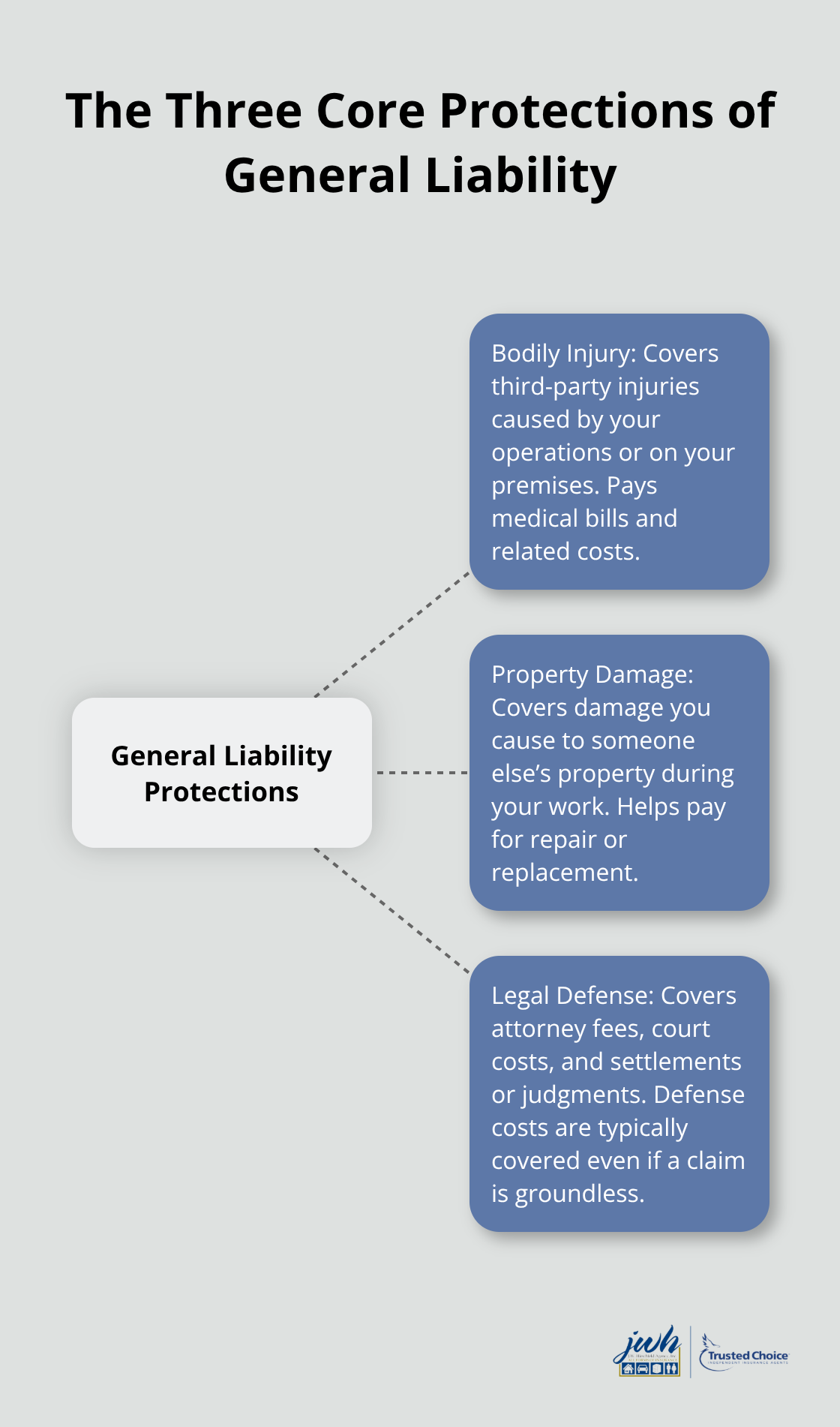
The policy typically covers defense costs even if the claim is groundless-a critical advantage, since defending a case through trial can cost between $175,000 and $250,000.
Medical Payments and Preventive Coverage
Most New York businesses carrying general liability policies also receive medical payments coverage, which pays small medical expenses (usually $500 to $5,000 per person) for injuries on your premises without requiring the injured party to file a formal lawsuit. This coverage often prevents minor incidents from escalating into major claims. A customer who receives immediate medical attention and reimbursement is far less likely to pursue litigation than one who must navigate the claims process.
What General Liability Does Not Cover
The policy excludes theft of your own property, mistakes in professional services like consulting or design work, injuries to your own employees, and damage to your own business property or equipment. If you’re a contractor, a slip-and-fall on a client’s site receives coverage; if it happens at your office, that’s a different story. Many New York business owners assume one policy covers everything, then discover gaps when a claim lands.
Identifying Coverage Gaps Before They Cost You
When you compare policies, ask your agent specifically what exclusions apply to your industry, what the deductible is, and whether replacement cost or actual cash value applies to property damage claims (the difference can mean thousands of dollars in your pocket or out of it). An independent agent audits your actual operations, identifies what’s missing, and recommends additional coverage like professional liability or workers’ compensation if needed. This personalized assessment prevents the costly surprises that arise when you rely on generic policies.
Your industry, location, and specific operations determine exactly which gaps matter most-which is why the next section walks you through assessing your actual risks before you select a policy.
Why Your New York Business Needs General Liability Coverage
The Real Cost of Operating Without Coverage
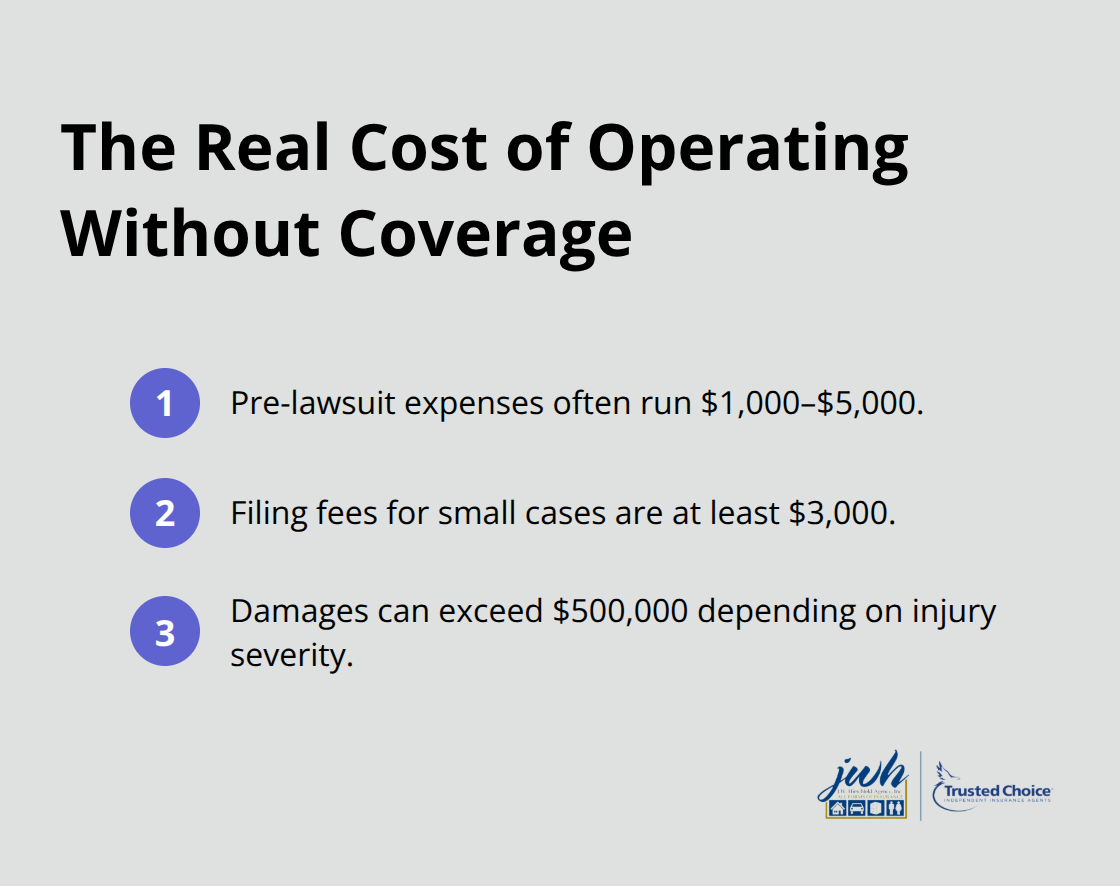
General liability insurance isn’t optional for most New York businesses-it’s the foundation of financial survival. Without it, a single incident wipes out years of profits. The average cost to defend a premises liability claim in New York includes pre-lawsuit expenses of $1,000–$5,000 and filing fees of at least $3,000 for small cases. If you lose that case, you face personal liability for damages that could exceed $500,000 or more, depending on injury severity.
Many New York landlords, vendors, and clients won’t even consider doing business with you without proof of active coverage. They demand a Certificate of Insurance before signing a lease, awarding a contract, or allowing you on their property. For contractors, service providers, and retailers especially, lacking this coverage means losing deals before you even bid.
Legal Mandates and Industry Requirements
Certain industries face legal mandates that make general liability non-negotiable. New York construction companies must carry general liability to bid on public projects, and some licensing boards require proof of coverage as a condition of operation. These aren’t suggestions-they’re hard requirements that determine whether you can legally operate in your field. Beyond licensing, contracts and leases frequently include insurance requirements as standard terms. A vendor who refuses to carry coverage simply won’t get hired. The financial exposure is real and immediate.
Third-Party Claims Hit Harder Than You Expect
Slip-and-fall injuries, property damage claims, and customer injuries happen fast and cost far more than most business owners anticipate. A customer injured in your retail space, a delivery driver who damages a client’s driveway, or an employee of yours who accidentally breaks equipment at a job site-these situations trigger claims that your own business cannot absorb. Medical expenses alone for a serious injury range from $10,000 to $100,000+, and that’s before legal fees and lost productivity. General liability covers these third-party claims, meaning injuries or damage you cause to someone else, not damage to your own property or employee injuries. The policy pays medical bills, repair costs, settlements, and defense expenses, protecting both your business assets and your personal wealth. Without this coverage, a judgment against you leads to wage garnishment, asset seizure, or business closure.
Matching Coverage to Your Actual Operations
Different businesses face different risks, and a one-size-fits-all approach leaves you either underinsured or overpaying. An independent agent assesses your actual operational risks-not industry averages-to set appropriate coverage limits and deductibles that match your real exposure. This prevents both underinsurance (leaving you exposed) and overinsurance (wasting money on coverage you don’t need). Your industry, location, and specific operations determine exactly which gaps matter most, which is why the next section walks you through assessing your actual risks before you select a policy.
Finding the Right Coverage Limits for Your Business
Coverage Limits That Match Your Actual Exposure
Selecting appropriate coverage limits separates businesses that survive a claim from those that face financial devastation. Most New York business owners underestimate their exposure and choose limits that sound reasonable until a real incident occurs. A standard general liability limit of $1 million might seem adequate for a small retail operation, but a single serious injury claim can exhaust that coverage within weeks of legal fees and medical expenses. Your actual revenue, assets, and operational scope determine what limits protect you adequately.
Deductibles: The Trade-Off Between Premium and Out-of-Pocket Cost
Your deductible choice directly impacts both your premium and your out-of-pocket exposure when a claim happens. Increasing your deductible from $500 to $2,500 typically reduces your annual premium by 15 to 25 percent, but that savings vanishes if you face three claims in a year and pay $7,500 out of pocket instead of $1,500. The math only works if your business can absorb that deductible without strain. An independent agent reviews your actual revenue, assets, and claim history to recommend limits and deductibles that match your financial capacity and risk profile, not industry averages or what competitors carry.
Industry-Specific Risks Require Industry-Specific Solutions
Generic policies fail to address what actually threatens your operations. A contractor working on client sites faces completely different exposures than a photographer shooting in a studio, yet many policies treat both the same way. Contractors need higher limits and should verify that completed operations coverage extends beyond the job site, while photographers need professional liability coverage layered alongside general liability to protect against claims of negligence in their services. Your location matters too: a business operating in Manhattan faces different liability exposure than one in rural upstate New York.
Comparing Quotes Across Multiple Carriers Reveals Hidden Coverage Differences
Independent agents compare quotes across multiple carriers because a $1,200 annual premium from one insurer often includes endorsements and coverage options that a $900 quote from another carrier excludes entirely. Shopping price alone guarantees you’ll miss critical coverage differences and end up either underinsured or paying for protections you don’t need. An independent agent ensures your policy actually covers the risks you face. At JW Hirschfeld Agency, Inc., we assess your specific industry, location, and operational details to identify what coverage gaps exist and what limits actually protect your business.
Final Thoughts
General liability insurance protects your New York business from financial ruin, but only if the coverage matches your actual operations. The policies that work best aren’t the cheapest-they’re the ones tailored to your specific industry, location, and risk profile. A contractor’s exposure differs entirely from a retailer’s, and a policy designed for one won’t adequately protect the other.
Working with a local independent agent changes this equation fundamentally. Unlike direct online carriers that offer one-size-fits-all policies, independent agents represent multiple top carriers and compare coverage options across all of them. This access means you receive quotes that reflect your business, not generic estimates based on industry averages. An independent agent audits your operations, identifies coverage gaps before they become costly problems, and explains the difference between replacement cost and actual cash value-details that matter when a claim happens.
Contact JW Hirschfeld Agency, Inc. with details about your business type, location, number of employees, and annual revenue. We’ll compare New York general liability insurance options across carriers, explain what each policy actually covers, and recommend limits and deductibles that protect your assets without overpaying. A few minutes of conversation now prevents the financial devastation that follows when you’re underinsured.
The information provided in this blog is for general informational purposes only and does not constitute legal, financial, or insurance advice. Coverage options, terms, and availability may vary. Please consult with a licensed professional for advice specific to your situation.
Artificial intelligence may have been used to generate text and images in some blog articles.