
Owning rental properties on Long Island comes with real financial exposure. Most landlords underestimate the risks they face, from tenant injuries to property damage that standard homeowners policies won’t cover.
Long Island landlord insurance fills these gaps with protection designed specifically for rental properties. We at JW Hirschfeld Agency, Inc. help property owners understand what they actually need and avoid costly coverage mistakes.
What Your Long Island Landlord Policy Actually Covers
Long Island landlord insurance protects your rental property and finances in ways a standard homeowners policy simply cannot. The core coverage includes the building structure itself, liability if a tenant or guest is injured on your property, and lost rental income if the property becomes uninhabitable after a covered loss. Property damage protection covers perils like fire, wind, theft, and vandalism-the events that can devastate your cash flow. Liability coverage typically ranges from $300,000 to $2,000,000 per occurrence, and increasing limits to $1 million costs only about $200 to $400 annually, a smart investment for multi-unit properties or high-value rentals. Loss of rent coverage reimburses you for mortgage payments, property taxes, and maintenance costs during repairs, which is essential because tenants stop paying rent when the unit is uninhabitable but your expenses don’t stop.
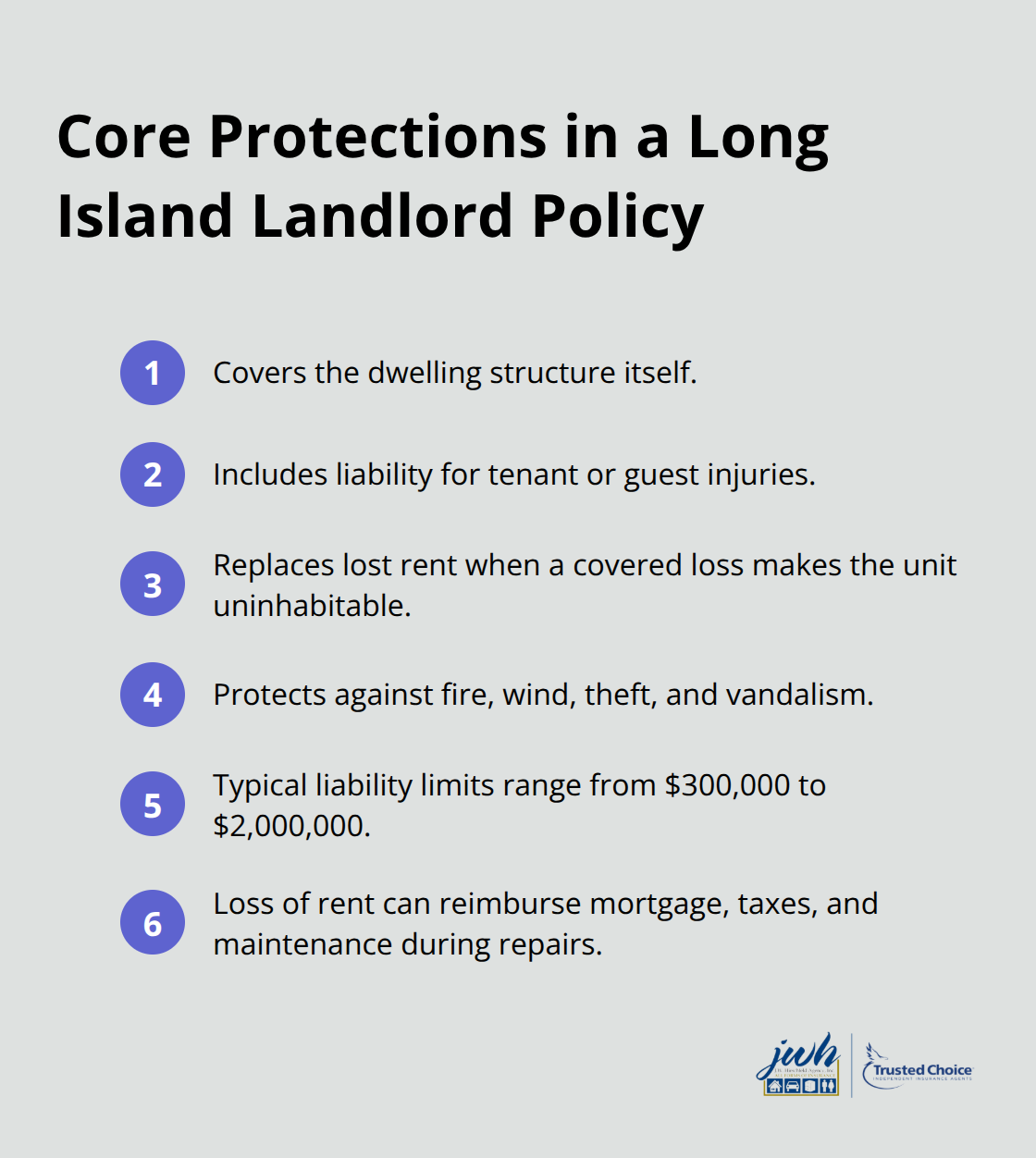
Many Long Island landlords make the mistake of choosing the cheapest policy without understanding these limits-a $300,000 liability limit may leave you exposed if a guest suffers a serious injury on your property.
Dwelling Coverage That Matches Your Property’s Value
Accurate replacement cost calculations are non-negotiable on Long Island, where property values are high and rebuilding costs keep climbing. Standard homeowners policies undervalue rental properties, which means you could face significant out-of-pocket costs after a loss. A DP-3 landlord policy provides open-peril coverage for the dwelling structure, protecting against nearly all perils except those specifically excluded. Detached structures like garages, sheds, and fences receive coverage at roughly 10 percent of your dwelling limit, so if your home is insured for $500,000, your garage gets about $50,000. Landlord-owned items such as appliances and furnishings you provide in furnished rentals are covered separately; maintain an itemized inventory to avoid disputes with your insurer. Optional endorsements for water backup and equipment breakdown add protection relevant to Long Island properties with basements or aging systems prone to freezing pipes or HVAC failures.
Why Tenants’ Belongings Require Action from You
Tenants often assume their landlord’s insurance covers their personal property, which is completely false. Their furniture, electronics, and clothing are not your responsibility unless you explicitly agree to cover them in a lease. You should require every tenant to carry renters insurance-this simple step prevents disputes over minor damage, keeps tenants from filing claims on your policy, and signals financial responsibility from day one. Standard lease rider letters formalize this requirement, and some insurers even help arrange renters coverage for tenants who lack it. Flood damage presents another critical gap because standard landlord policies exclude it entirely. Properties near water or in designated flood zones require separate flood insurance from FEMA’s National Flood Insurance Program or private providers; lenders typically mandate this coverage anyway, so verify your property’s flood risk before your next renewal.
How Coverage Gaps Expose Your Portfolio
Many Long Island landlords discover coverage gaps only after a claim is denied. Standard homeowners policies fail to cover rental income, leaving you without protection when a covered loss makes the unit uninhabitable. Liability limits that seemed adequate for a single-family rental may prove insufficient if you own multiple properties or rent to several tenants. Lead paint exposure in older properties creates additional liability that standard policies often overlook, particularly if your property was built before 1978.
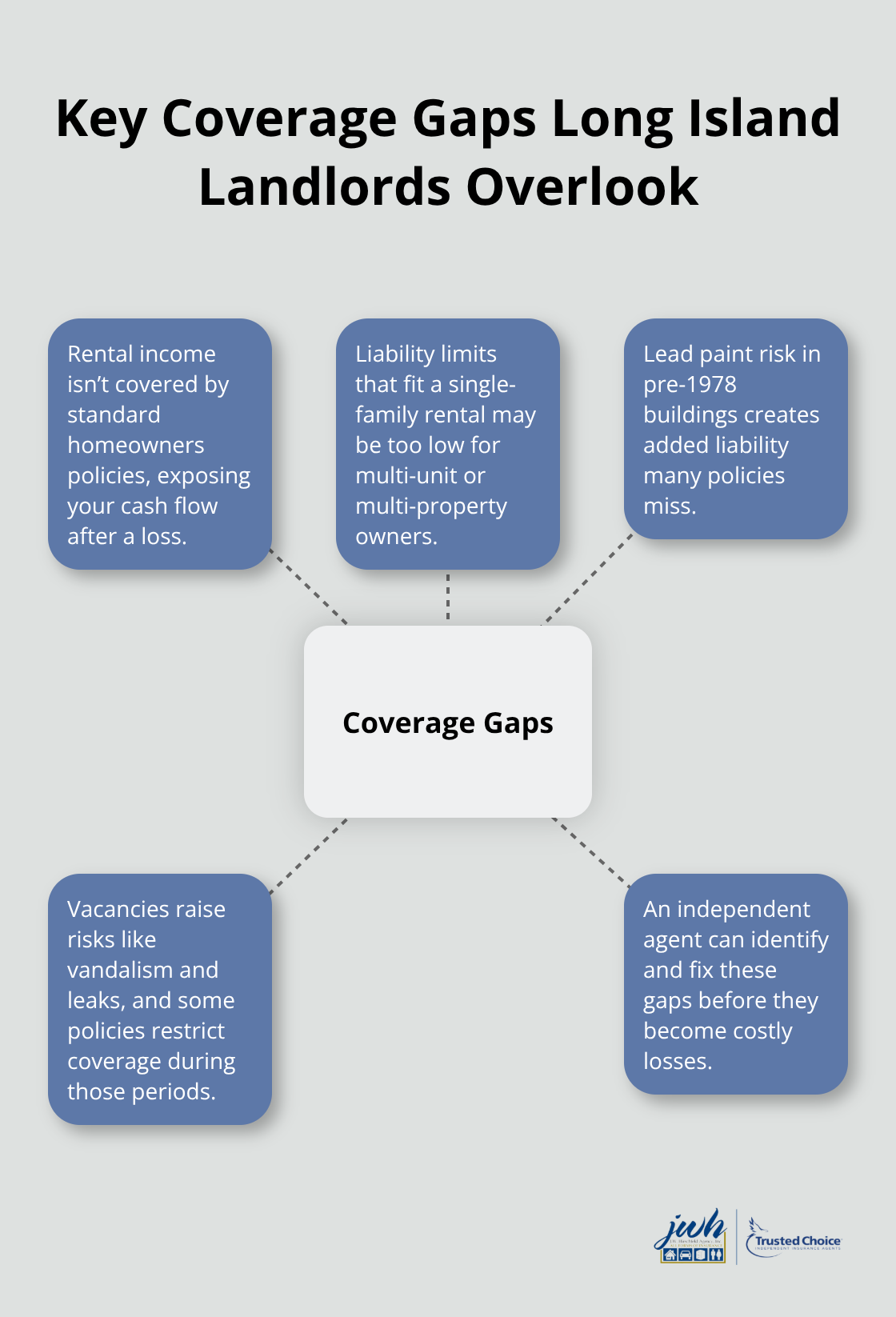
Vacancy between tenancies increases risk of vandalism and undetected leaks, yet many policies restrict coverage during extended vacancies. An independent insurance agent who understands Long Island’s rental market can identify these gaps before they cost you money and help you tailor coverage to your specific properties and exposure.
Why Independent Agents Deliver Better Landlord Coverage on Long Island
Captive Agents Lock You Into One Carrier’s Options
Captive agents represent one insurance company, which means they can only show you policies from that single carrier. Independent agents represent multiple top carriers, giving you access to fundamentally different quotes for the same property. Price variations across carriers for identical coverage are substantial on Long Island-rate differences of 30 to 50 percent for the same dwelling limit, liability coverage, and loss of rent protection appear regularly in the market. A captive agent cannot show you these options because they are contractually limited to their employer’s products.
Access to Multiple Carriers Changes Your Bottom Line
When you work with an independent broker, you get quotes from 10 or more AM Best-rated carriers, which dramatically increases the odds that you’ll find both better rates and coverage that actually fits your rental properties. This matters because Long Island property values and coastal exposure create unique risk profiles that national insurers often misprice or underprice. An independent agent takes time to understand your specific properties, your ownership structure, and your liability exposure before presenting quotes-not a generic form you fill out online. JW Hirschfeld Agency, Inc., a third-generation family-owned independent broker in Huntington, represents multiple top carriers and finds tailored coverage and competitive pricing for rental property owners across Long Island.
Claims Advocacy Separates Independent Agents from the Rest
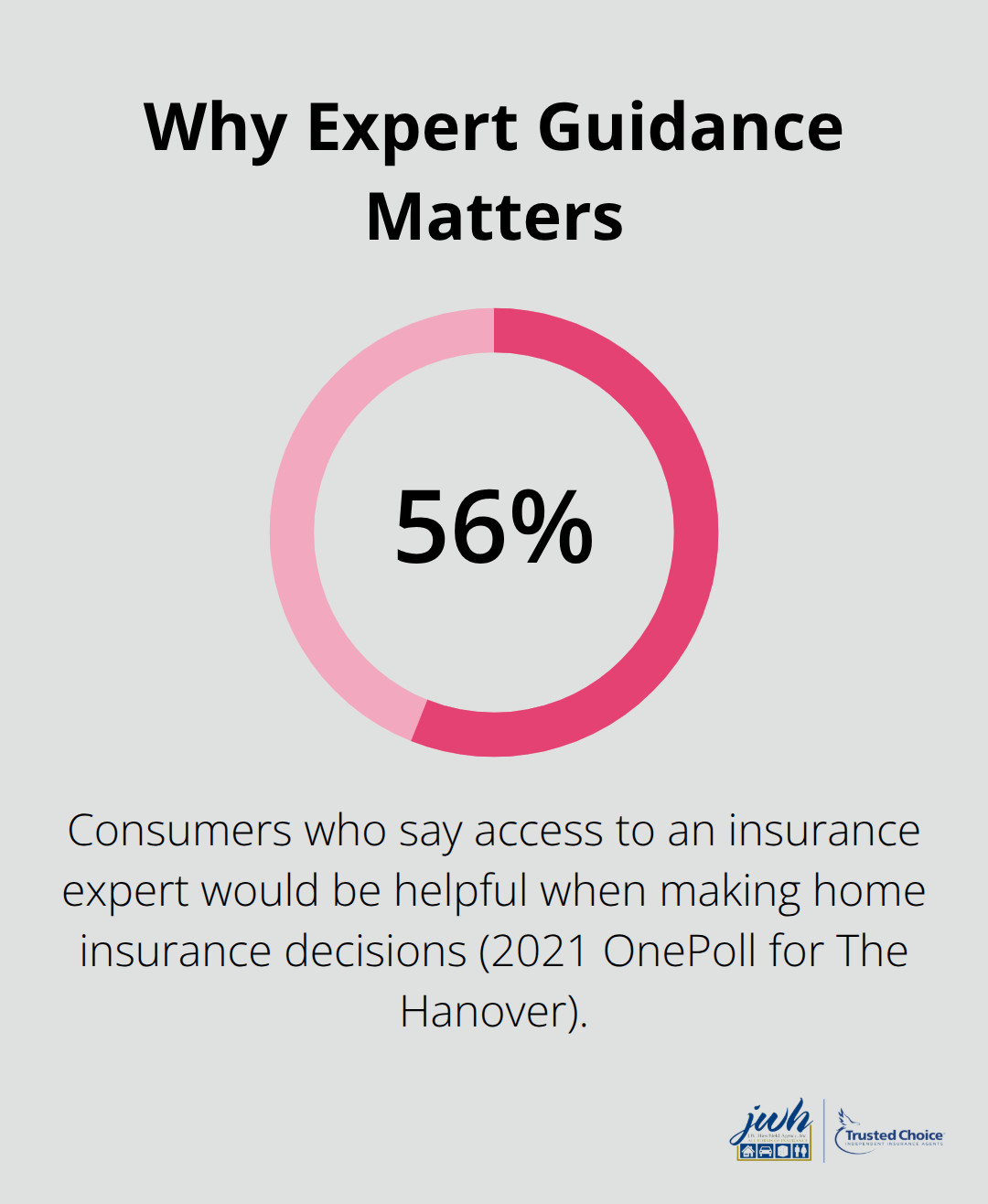
Independent agents serve as your advocate during claims, which is where most landlords discover whether they chose the right policy. When a pipe bursts, a tenant is injured, or vandalism damages your property between tenancies, you need someone who understands the policy language and can guide the carrier toward a fair settlement. A claims-focused independent agent reviews your policy with the adjuster, identifies what is and isn’t covered, and pushes back on denials that don’t hold up. According to a 2021 OnePoll study conducted for The Hanover, 56 percent of consumers say access to an insurance expert would be helpful when making home insurance decisions-yet most landlords buy policies without that expert input and then regret it when a loss occurs.
Renewal Shopping Keeps Your Coverage Current
Independent agents re-shop your policy at renewal, ensuring you stay with the lowest-cost carrier among those meeting your coverage requirements. Property values and rental income change over time, so your dwelling limit and loss of rent coverage should adjust accordingly. An independent agent catches these changes and updates your coverage before you face a claim that reveals your policy is now underinsured. This proactive approach protects your portfolio as it evolves rather than leaving you to discover gaps years later when it’s too late. With this foundation in place, understanding the specific mistakes that landlords make becomes your next priority.
Common Mistakes Long Island Landlords Make with Insurance
Most Long Island landlords face their insurance failures only after a loss occurs, when the carrier denies a claim or pays far less than expected. The root cause is straightforward: they buy policies based on price alone rather than understanding what their actual exposure requires. A single-family rental insured for $400,000 might carry only $300,000 in liability coverage because that seemed adequate, yet a guest who suffers a serious injury on the property can sue for $500,000 or more. When the judgment exceeds your policy limit, you personally owe the difference. Replacement cost calculations on Long Island are particularly prone to error because property values fluctuate and rebuilding costs rise faster than most landlords anticipate. A property you insured five years ago for $350,000 may now cost $450,000 to rebuild after a total loss, leaving you severely underinsured. The mistake happens because landlords treat insurance renewal as a box to check rather than a financial decision that requires actual analysis. They accept whatever quote arrives in the mail without questioning whether the dwelling limit reflects current market conditions or whether their liability coverage matches their actual portfolio size.
Homeowners Policies Create Coverage Disasters for Rentals
Using a standard homeowners policy for a rental property is one of the costliest mistakes a Long Island landlord can make, yet many do it either intentionally to save money or through simple ignorance. A homeowners policy excludes rental income entirely, meaning if a covered loss makes your unit uninhabitable, you receive nothing to cover your lost rent while repairs happen. Your mortgage payment, property taxes, and maintenance expenses continue regardless, so your cash flow collapses. The policy also fails to address landlord-specific liability scenarios like a tenant’s guest being injured on the property or a tenant suing over lead paint exposure in a pre-1978 building. Carriers view homeowners policies and rental properties as fundamentally incompatible, and they have every right to deny your claim if they discover the property was rented when the loss occurred. A DP-3 landlord policy costs roughly 15 to 25 percent more than a homeowners policy, but that difference is actually the price of proper protection. Skipping it to save $300 or $400 annually puts your entire investment at risk.
Liability Limits That Fall Short of Your Portfolio
Long Island’s dense rental market and urban density create liability scenarios that many landlords simply do not account for when they choose coverage limits. A tenant’s injury claim, a guest’s slip-and-fall, or a liability judgment from a property defect can easily exceed $300,000, yet that limit remains the most common choice because it is the cheapest option. Increasing your liability limit to $1,000,000 costs only $200 to $400 per year, a trivial expense relative to the protection it provides. Multi-unit properties face compounded liability exposure because each tenant, guest, and visitor on your properties increases the statistical likelihood of an injury claim. If you own a two-family home or a small multi-unit building, your liability limit should reflect that concentration of risk. An independent insurance agent who understands Long Island’s rental environment can model your actual exposure and recommend limits that align with your portfolio rather than suggesting a generic amount.
Vacancy Periods and Hidden Exposure
Vacancy between tenancies also creates liability gaps that standard policies may restrict or exclude, particularly for vandalism or theft. A property sitting empty for three months while you find a new tenant faces increased risk, yet some policies limit coverage or raise your deductible during vacancy. This exposure becomes critical if vandalism occurs during that window or if an intruder is injured on the property. Identifying these gaps requires an agent who reads policy language carefully and understands how Long Island’s rental market actually functions, not someone who simply quotes the cheapest available option. An independent broker representing multiple carriers can compare how different policies handle vacancy periods and select one that protects you during those vulnerable windows.
Final Thoughts
Protecting your Long Island rental investment requires more than finding the cheapest policy available. You need coverage that reflects your actual property values, liability exposure, and cash flow needs-and you need someone in your corner when a claim happens. The mistakes outlined above cost landlords thousands of dollars every year, from underinsured dwellings to liability judgments that exceed their policy limits, and these losses are preventable with the right guidance upfront.
Working with an independent insurance agent transforms how you approach Long Island landlord insurance. Instead of accepting whatever quote arrives in your email, you gain access to multiple carriers and can compare actual price differences for identical coverage. An independent agent takes time to understand your specific properties, your ownership structure, and your portfolio size before recommending coverage limits and endorsements that fit your actual needs.
Your next step is straightforward: contact an independent insurance agent who understands Long Island’s rental market and can review your current coverage. JW Hirschfeld Agency, Inc. represents multiple top carriers and specializes in finding tailored coverage and competitive pricing for rental property owners across Long Island, identifying gaps in your existing policies and ensuring your portfolio is properly protected.
The information provided in this blog is for general informational purposes only and does not constitute legal, financial, or insurance advice. Coverage options, terms, and availability may vary. Please consult with a licensed professional for advice specific to your situation.
Artificial intelligence may have been used to generate text and images in some blog articles.