
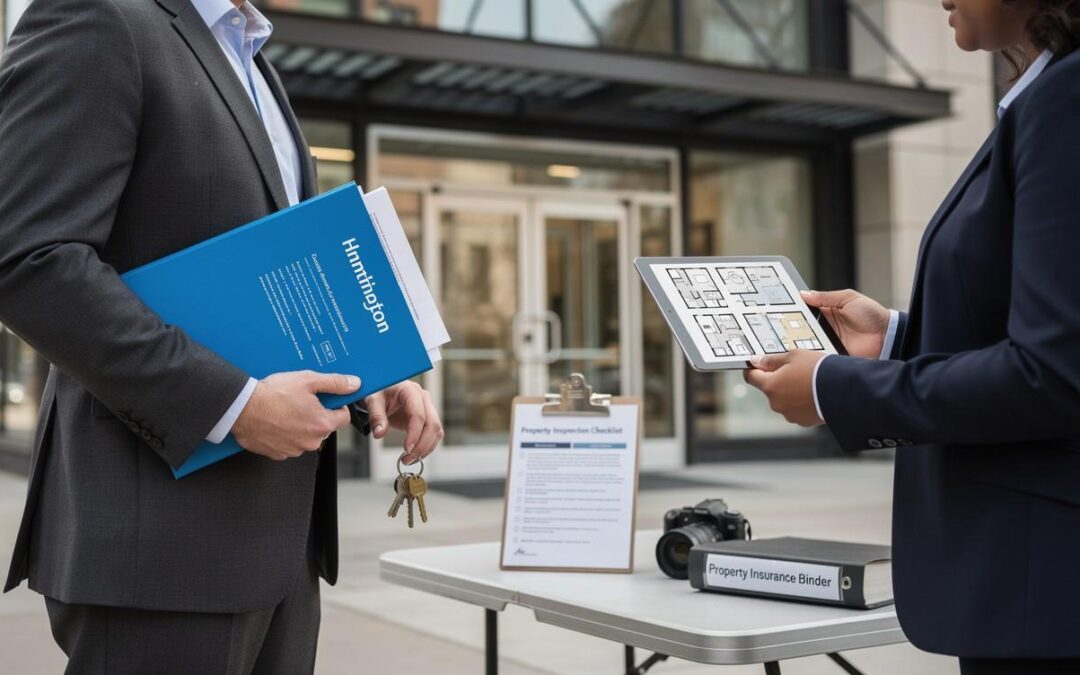
Your business property is one of your biggest investments, and it needs real protection. Huntington commercial property insurance covers everything from your building to your equipment and inventory when disaster strikes.
We at JW Hirschfeld Agency, Inc. know that one-size-fits-all policies don’t work for Huntington businesses. That’s why we’ll walk you through the coverage options that actually match your specific needs.
Why Your Huntington Business Needs Property Insurance
Huntington businesses face real threats that can shut down operations overnight. According to the National Fire Protection Association, structure fires cause significant property damage annually across the United States. A single fire, break-in, or severe storm destroys your building, wipes out equipment worth tens of thousands of dollars, and eliminates inventory that represents months of revenue. Without commercial property insurance, you’re betting your entire business on the hope that disaster never strikes.
The financial reality of uninsured losses
Most business owners underestimate how quickly losses accumulate. If your building suffers significant fire damage, repair costs easily run 100 to 300 dollars per square foot depending on the structure type and local construction standards. Equipment replacement adds another layer of expense-a manufacturing facility’s machinery costs hundreds of thousands to replace. The Insurance Information Institute reports that businesses without adequate property coverage face closure within two years of a major loss more than 40 percent of the time. Independent agents review policies line by line instead of selling generic packages, which means they catch critical gaps before claims arise.
Building, equipment, and inventory protection matters differently
Your building structure, the equipment inside it, and your sellable inventory each require separate consideration. A restaurant owner’s building needs different protection than the kitchen equipment and food stock inside. A retail store’s building shell requires coverage that doesn’t automatically extend to the merchandise on shelves. Commercial property insurance separates these components so you pay for exactly what you need. Many Huntington business owners assume one policy covers everything, then face denial when they file a claim on inventory or equipment that wasn’t explicitly listed.
Legal and financial obligations you can’t ignore
New York State doesn’t mandate commercial property insurance, but your mortgage lender absolutely does. Every commercial mortgage includes a requirement to maintain property coverage at replacement value. Failure to maintain this coverage gives your lender the right to purchase insurance on your behalf and charge you for it (at rates far higher than you’d pay independently). Additionally, if someone is injured on your property and you lack adequate coverage, personal liability can follow you beyond the business itself.
Why independent agents make the difference
An independent agent structures coverage that satisfies lender requirements while protecting your personal assets. They represent multiple top carriers, which means they find tailored solutions instead of pushing one company’s standard package. This approach matters in Huntington, where businesses range from waterfront operations to retail shops to manufacturing facilities-each with distinct risks and needs.
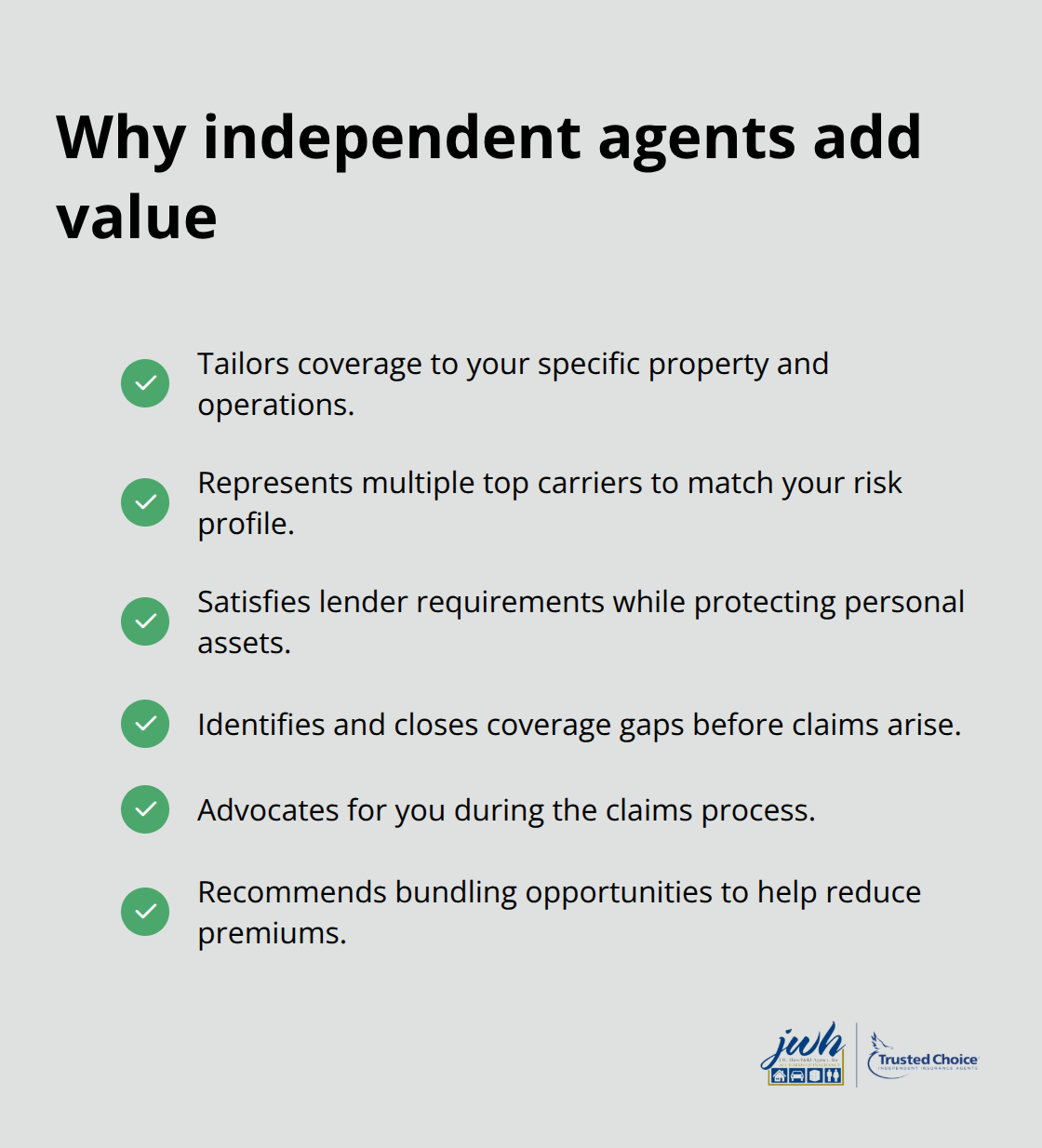
Your next step involves talking with an independent agent who understands your specific property and can recommend the right coverage types for your situation.
What Coverage Types Actually Protect Your Business
Commercial property insurance breaks down into distinct coverage categories, and understanding the difference between them prevents costly claim denials. Building coverage protects the structure itself-walls, roof, foundation, and permanently installed systems like electrical wiring and plumbing. This is separate from business personal property coverage, which protects movable assets like equipment, furniture, inventory, and machinery. The distinction matters because a fire that damages your building structure gets paid under building coverage, while that same fire destroys your restaurant equipment under personal property coverage.
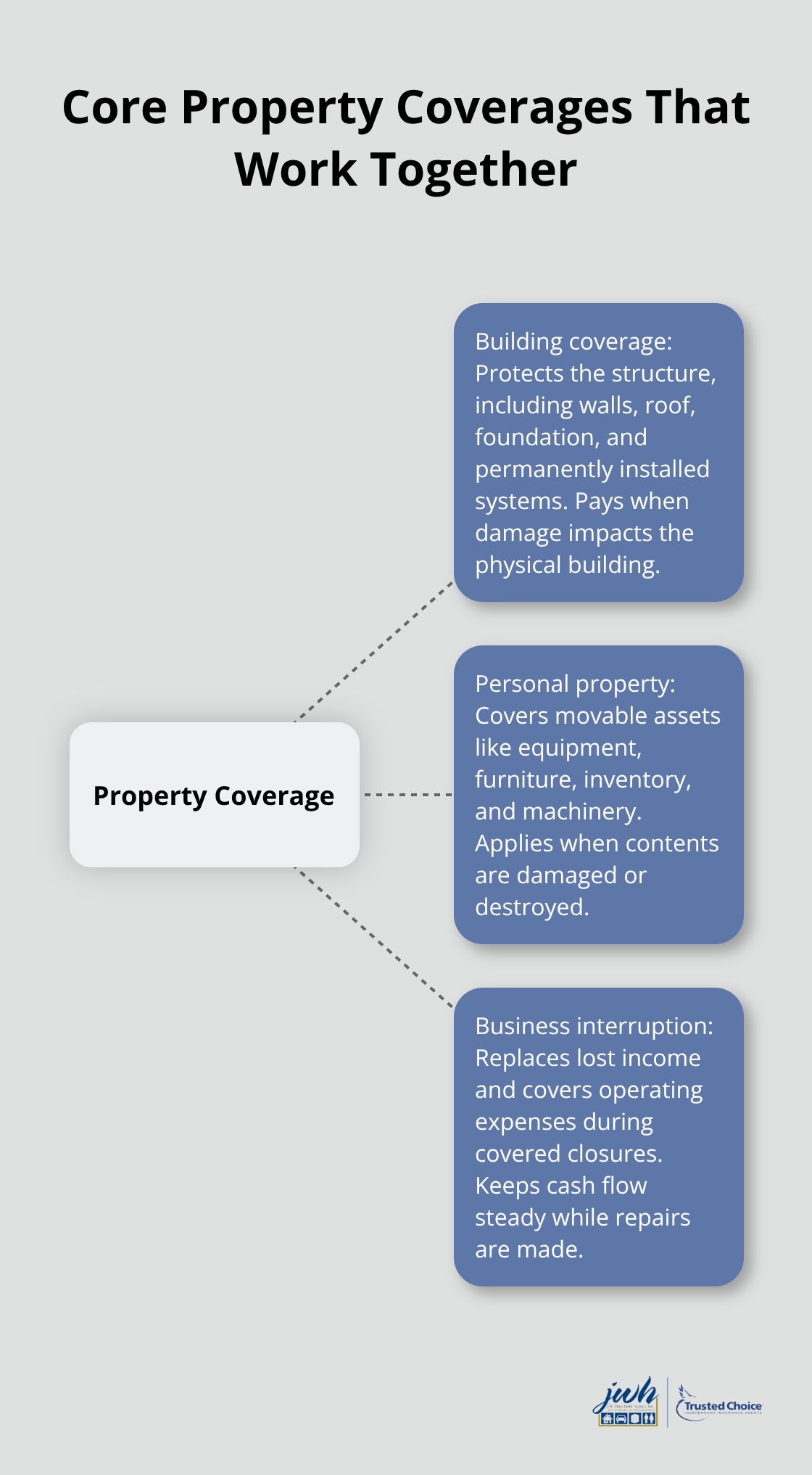
Many Huntington business owners assume these are bundled automatically, then discover mid-claim that they only purchased one or the other.
Building Coverage Protects Your Physical Structure
Your building’s walls, roof, and foundation represent your largest single asset, and building coverage protects these components specifically. This coverage also includes permanently installed systems-electrical wiring, plumbing, HVAC equipment, and built-in fixtures that you cannot remove without damaging the structure. A fire that damages your roof and interior walls triggers building coverage. A flood that destroys your foundation triggers building coverage. The key distinction is that building coverage applies only to what’s permanently attached to the structure itself.
Personal Property Coverage Handles Equipment and Inventory
Equipment and inventory require separate protection because they’re movable assets. A dental practice’s chair and imaging equipment falls under personal property coverage. A manufacturing facility’s machinery falls under personal property coverage. Your policy should list high-value equipment specifically, because general coverage limits often fall short of actual replacement value. An independent agent structures both building and personal property components into your policy upfront, eliminating coverage gaps that create claim denials.
Business Interruption Coverage Bridges Financial Gaps During Closures
Loss of income coverage, sometimes called business interruption insurance, pays your operating expenses and lost revenue when a covered disaster forces temporary closure. If a pipe burst shuts your retail store for three weeks during peak season, this coverage pays your rent, utilities, payroll, and lost profits during those weeks. This coverage is non-negotiable for any business where even brief closures create significant financial strain.
Matching Coverage Limits to Your Actual Assets
Most Huntington businesses need all three coverage types working together-building protection for your physical structure, personal property coverage for equipment and inventory at replacement value, and business interruption coverage to bridge the financial gap during recovery. When you review your current policy, check the declarations page to confirm these three elements exist and that the coverage limits match your actual assets. If your building is worth 1.5 million dollars but your policy limits cap at 800,000 dollars, you face a catastrophic shortfall. The same applies to equipment-if you own 200,000 dollars in machinery, your personal property limit must reflect that amount. An independent agent reviews these numbers against your actual property and adjusts limits accordingly, whereas online quotes often underestimate what businesses truly own. A property inspection documents your building size, construction type, and equipment inventory-this creates the foundation for accurate coverage that pays when you need it. With the right coverage structure in place, you’re ready to evaluate which specific risks matter most for your Huntington operation.
Choosing Coverage That Matches What Your Business Actually Owns
Document Your Property and Assets Accurately
Start by recording exactly what you own. Walk through your building with a camera or notepad and record the square footage, construction materials, roof age, and any recent upgrades. Then inventory your equipment and stock-not rough estimates, but actual replacement costs. A manufacturing facility owner who thinks machinery costs 150,000 dollars but hasn’t checked prices in five years will face severe underinsurance. Pull invoices for major equipment purchases and get current quotes from suppliers for items you’d need to replace immediately. This inventory becomes your baseline for coverage limits.
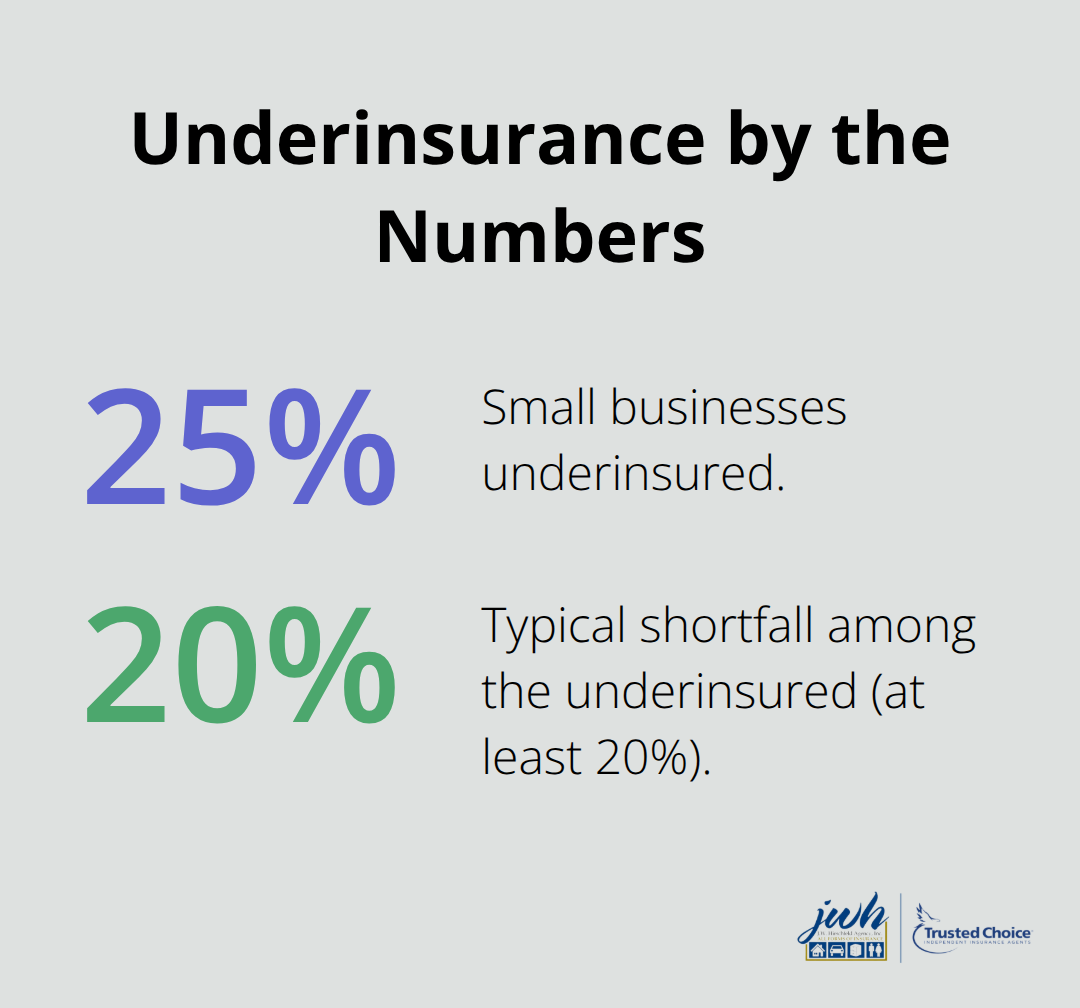
Most Huntington business owners skip this step and rely on guesses, which guarantees inadequate protection. The National Association of Insurance Commissioners found that roughly 25 percent of small businesses are underinsured by at least 20 percent, meaning their coverage falls significantly short of actual asset value.
Identify Your Specific Operational Risks
Your property assessment should also identify specific exposures unique to your operation. A waterfront business faces different flood risks than an inland retailer. A restaurant’s kitchen equipment requires different protection than office furniture. An older building with outdated electrical systems carries different fire risk than a newly constructed space. These details matter because they determine which coverage types you actually need and what limits protect your operation adequately.
Work with an Independent Agent for Proper Coverage Structure
The difference between working with an independent agent versus purchasing online becomes stark when you need claims support. An independent agent conducts a thorough property inspection, asks detailed questions about your operations, and adjusts coverage limits based on your square footage, industry, and estimated needs. They represent multiple top carriers, which means they can recommend the right company for your specific risk profile rather than forcing your business into one carrier’s standard package.
When a loss occurs, that same agent advocates on your behalf during the claims process-they know your policy inside and out and can explain coverage nuances that online quotes never address. An agent also identifies opportunities to bundle commercial property with liability and other policies, which typically saves 10 to 25 percent on premiums according to insurance industry data. They catch overlooked exposures before claims arise, such as equipment that should be specifically scheduled, inventory that needs blanket coverage, or business interruption limits that fall short of your actual monthly operating expenses.
Why Local Knowledge Matters for Huntington Businesses
An independent agent familiar with Huntington properties understands local construction standards, regional weather patterns, and industry-specific risks that affect your coverage needs. They structure protection that reflects a real understanding of your property and operation, not a generic online questionnaire. JW Hirschfeld Agency, Inc., a third-generation family-owned independent agency in Huntington, represents multiple top carriers and provides the hands-on advocacy that protects your business through the entire claims process.
Final Thoughts
Huntington commercial property insurance protects your business from financial devastation when fire, theft, or natural disasters strike. Building protection, personal property coverage, and business interruption insurance work together to safeguard your physical assets and keep your operation running through recovery periods. The real protection comes from matching your coverage limits to what you actually own, not what you think you own or what an online quote suggests.
An independent agent conducts a thorough property inspection, asks the right questions about your operations, and structures coverage that reflects your specific risks rather than forcing your business into a generic package. They represent multiple top carriers, which means they find competitive pricing and bundle opportunities that online quotes never offer. When a loss occurs, that same agent advocates on your behalf during claims-they know your policy inside and out and catch coverage nuances that matter when you need payment.
Local knowledge matters in Huntington. An independent agent familiar with your community understands regional weather patterns, local construction standards, and industry-specific exposures that affect your coverage needs. Contact an independent agent who can review your current coverage, identify gaps, and recommend the right limits for your assets by visiting JW Hirschfeld Agency, Inc. today to schedule a property review and get the protection your business actually needs.
The information provided in this blog is for general informational purposes only and does not constitute legal, financial, or insurance advice. Coverage options, terms, and availability may vary. Please consult with a licensed professional for advice specific to your situation.
Artificial intelligence may have been used to generate text and images in some blog articles.