

Business owners often leave money on the table by not knowing what discounts they qualify for. At JW Hirschfeld Agency, Inc., we help companies uncover savings opportunities that most miss entirely.
The right combination of policies and safety practices can significantly reduce your premiums. We’ll show you exactly how to maximize business policy discounts and get a fair rate.
What Discounts Actually Apply to Your Business
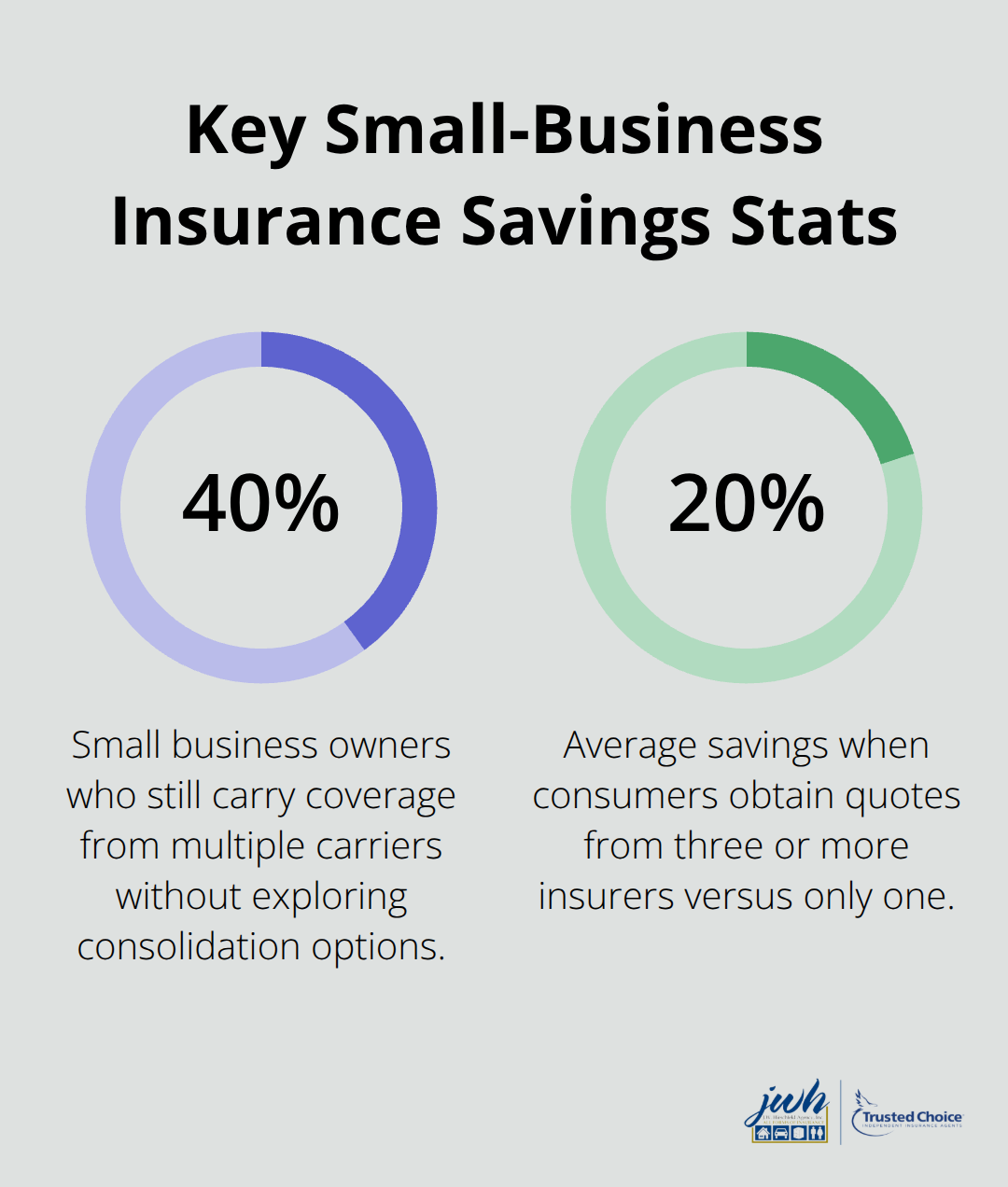
Commercial insurance carriers offer far more discounts than most business owners realize, and the gap between what you’re paying and what you could pay is often substantial. Insurance companies typically provide discounts across three main categories: safety and loss prevention measures, policy bundling, and business characteristics. Safety discounts reward companies that invest in security systems, employee training, or hazard reduction-these can reduce premiums by 5% to 25% depending on your industry and the specific controls you implement. Bundle discounts apply when you combine multiple policies like general liability, property, and workers’ compensation with the same carrier, often saving 20-30% on your total premium. Business characteristic discounts recognize factors like your claims history, years in operation, revenue stability, and even your industry classification. Bundled policies consistently outperform single-policy purchases in terms of overall cost efficiency, yet roughly 40% of small business owners still carry coverage from multiple carriers without exploring consolidation options.
How underwriters determine your eligibility
Discount eligibility isn’t automatic or mysterious-underwriters base it on specific criteria that each carrier evaluates during the quote process. When you apply for coverage, underwriters assess your loss history, the physical condition of your business location, your safety protocols, and your claims patterns over the past three to five years. A spotless claims record typically qualifies you for preferred rates that can be 15% to 30% lower than standard pricing. Some carriers also offer discounts for completing online safety courses or implementing specific protective measures like sprinkler systems or alarm monitoring. The problem is that many business owners don’t know these opportunities exist until an agent specifically asks about them. Independent agents shop your profile across multiple carriers simultaneously, uncovering discounts that direct insurers or captive agents simply wouldn’t present because their compensation structure doesn’t incentivize thorough rate shopping.
The bundle discount trap that costs you money
Most business owners believe bundling always saves money, but that’s incomplete thinking. Bundling does save money, but only if you’re bundling with a carrier that offers competitive base rates on each policy included. The real trap is bundling with a carrier simply because they offer the discount, when another carrier offers lower base rates even without the bundle incentive. A business paying $5,000 for general liability and $3,000 for property coverage might save $800 with a 10% bundle discount, bringing the total to $7,200. But if a different carrier quotes $4,200 for general liability and $2,400 for property with no bundle, you’re actually paying $400 more despite the discount. This happens frequently because business owners anchor to the discount percentage rather than the actual dollar amount. The only way to know whether your bundle is genuinely competitive is to obtain quotes from multiple carriers-something independent agents do as standard practice rather than as a special favor.
Why rate shopping reveals hidden savings
Comparing quotes across carriers exposes the real cost of your coverage and eliminates the guesswork from discount evaluation. When you work with a single carrier or captive agent, you see only one perspective on what your business should cost. Multiple quotes (ideally three to five from different carriers) show you the actual range of pricing available and which carrier values your risk profile most favorably. Some carriers specialize in specific industries and offer substantially better rates for those businesses, while others charge premiums for industries outside their sweet spot. An independent agent representing multiple top carriers can identify which carrier offers the best combination of base rates and available discounts for your specific situation, rather than forcing you into a one-size-fits-all solution.
How to Stack Discounts Without Overpaying
Base Rates Matter More Than Discount Percentages
The mistake most business owners make is treating each discount independently rather than understanding how discounts interact with your base rates. A 15% safety discount means nothing if your base rate is already 30% higher than competitors. This is why combining policies works best when you’ve already confirmed that the carrier’s foundation pricing is competitive in the first place. Start by obtaining quotes from at least three different carriers before you even discuss bundling options.
Once you have those baseline numbers, evaluate which carrier gives you the lowest total premium when you factor in their available discounts. Many businesses find that bundling with Carrier A saves 25% but still costs more overall than Carrier B’s 10% bundle discount because Carrier B’s base rates are substantially lower. Multiple quotes (ideally three to five from different carriers) expose the real cost of your coverage and eliminate the guesswork from discount evaluation.
Safety Improvements Deliver Measurable Premium Reductions
Safety improvements directly reduce what insurers charge because they lower the probability of claims. Installing a monitored alarm system typically qualifies for a 5% to 15% premium reduction depending on your industry and the system’s specifications. Sprinkler systems in commercial buildings reduce fire risk so significantly that many carriers offer 10% to 20% discounts for their installation.
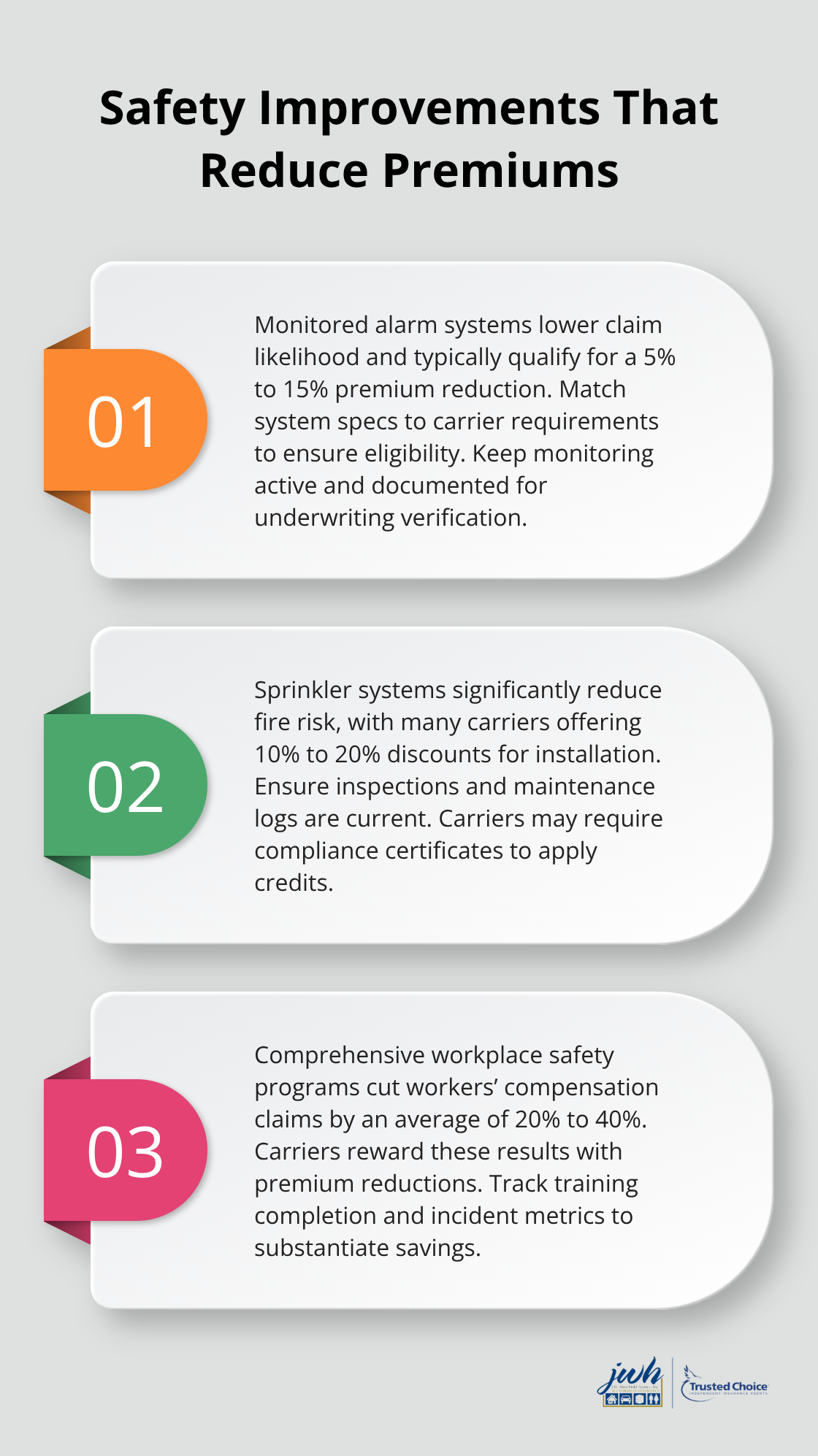
Employee safety training programs, documented maintenance schedules, and loss prevention protocols all carry measurable value to underwriters. Businesses implementing comprehensive workplace safety programs see workers’ compensation claims drop by an average of 20% to 40%. This creates a genuine financial incentive for carriers to reward these measures with premium reductions. However, most carriers won’t volunteer information about which specific improvements qualify for discounts-you have to ask or work with an agent who knows the detailed eligibility requirements for each carrier’s programs.
Annual Reviews Catch Discount Opportunities
Annual coverage reviews catch discount opportunities that slip through the cracks, especially when your business circumstances change. If you upgraded security systems, reduced employee turnover, expanded to a safer industry classification, or improved your claims history, these changes may qualify you for better rates. Reviewing your policy annually with your agent ensures you’re not overpaying based on old risk profiles. This practice prevents you from leaving money on the table year after year.
As your business evolves, your insurance needs and discount eligibility shift alongside it-which is why the next step involves understanding how to identify which coverage gaps or overlaps might be costing you money.
Why Independent Agents Secure Better Discounts
The Structural Advantage of Multiple Carriers
Independent agents operate under a fundamentally different business model than captive agents or direct insurers, and that difference translates directly into lower premiums for your business. A captive agent represents one insurance company and earns commissions based on selling that company’s policies, creating an incentive to bundle everything with their employer regardless of whether it’s actually the best deal for you. An independent agent represents multiple top carriers simultaneously, which means they only earn your business by finding genuinely competitive rates. This structural difference matters enormously. When you contact a captive agent asking for a rate review, you’re essentially asking them to shop within one company’s offerings. When you work with an independent agent, you’re asking them to shop across dozens of carriers at once.
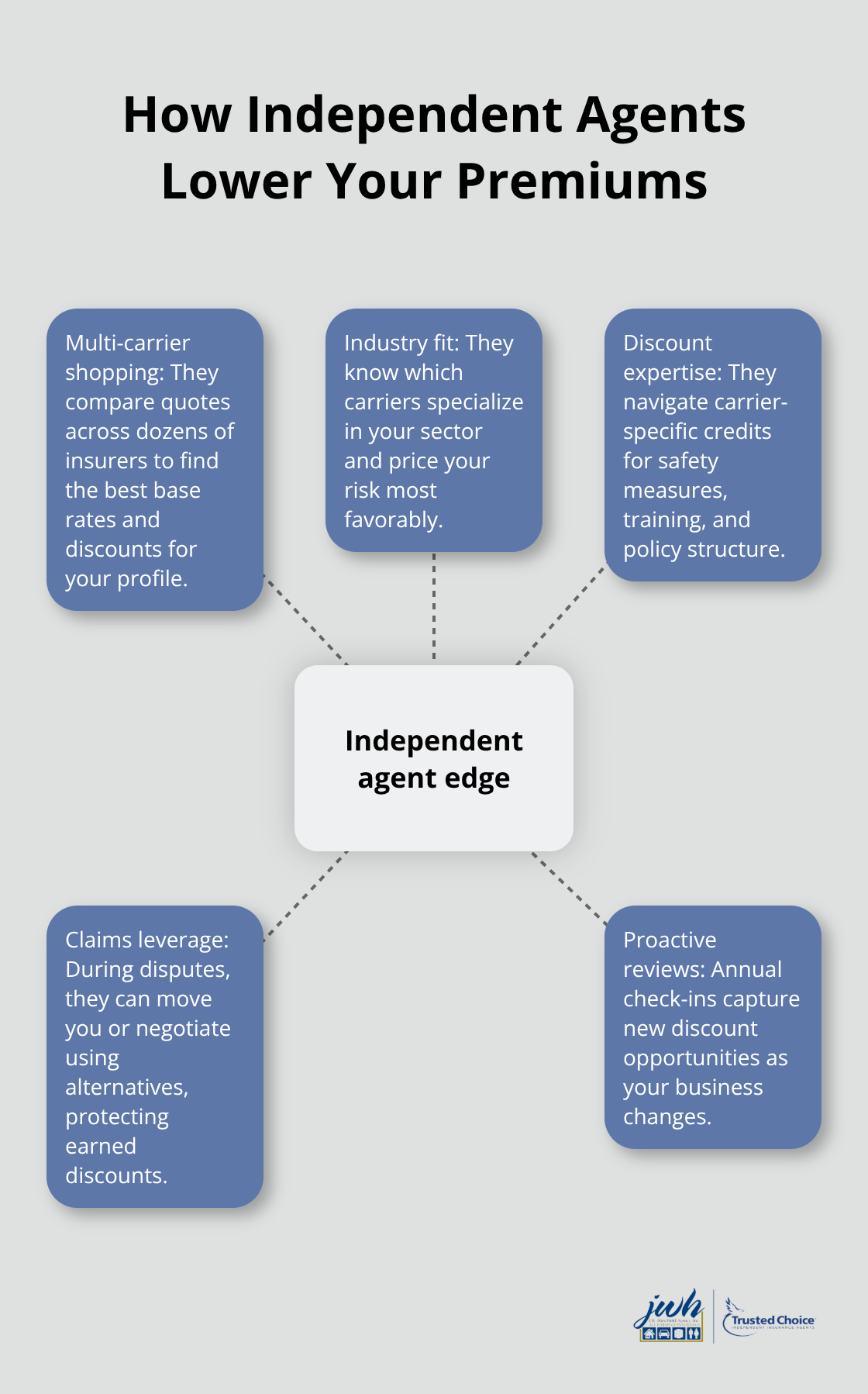
Consumers who obtain quotes from three or more insurers save an average of 20% compared to those who quote with only one carrier. Independent agents make obtaining those multiple quotes their standard process rather than asking you to contact five different companies yourself. They know which carriers specialize in your industry, which ones offer the most aggressive discounts for safety improvements, and which carriers have the most favorable underwriting appetite for your specific risk profile.
Active Advocacy During Claims
The discount advantage extends beyond initial quoting into ongoing advocacy. When a claim occurs, independent agents actively work on your behalf to protect the discounts you’ve earned. If an insurer tries to raise your rates based on a claim you believe was handled unfairly, your independent agent can leverage relationships with other carriers to find better pricing elsewhere or negotiate with your current carrier from a position of strength. Captive agents have no leverage in these situations because switching you to another carrier means losing your business entirely.
Proactive Annual Reviews and Rate Optimization
Independent agents conduct annual reviews specifically designed to identify new discount opportunities as your business changes. If you upgraded equipment, improved your safety record, or shifted operations in ways that reduce risk, an independent agent proactively identifies which carriers now offer better rates based on those improvements. This ongoing attention to your profile prevents the premium creep that occurs when businesses stay with the same carrier year after year without anyone actively shopping their coverage. The combination of competitive rate shopping at inception, detailed knowledge of carrier-specific discount programs, and ongoing advocacy creates a measurable financial advantage that captive agents simply cannot replicate due to their single-carrier structure.
Final Thoughts
Business policy discounts represent real money in your pocket, but only if you know where to find them and how to evaluate them correctly. Base rates matter more than discount percentages, bundling only works when you compare apples to apples across carriers, and safety improvements deliver measurable premium reductions that benefit both your business and your bottom line. Annual reviews catch opportunities that slip through the cracks as your business evolves, preventing the premium creep that happens when you stay with the same carrier without active shopping.
Independent agents represent multiple top carriers simultaneously, which means they shop your profile across dozens of options as standard practice rather than asking you to contact five different companies yourself. Captive agents represent one company and have limited incentive to find you genuinely competitive rates, while independent agents only earn your business by finding truly competitive pricing. Consumers who obtain quotes from three or more insurers save an average of 20% compared to those who quote with only one carrier.
Schedule a rate review with an independent agent who represents multiple carriers in your market and bring your current policy declarations along with any recent changes to your business operations, safety improvements, or claims history. At JW Hirschfeld Agency, Inc., we conduct these reviews regularly for businesses throughout our market and represent multiple top carriers to find tailored coverage and competitive pricing for your business policy discounts. Contact us today to schedule your business policy discount review.
The information provided in this blog is for general informational purposes only and does not constitute legal, financial, or insurance advice. Coverage options, terms, and availability may vary. Please consult with a licensed professional for advice specific to your situation.
Artificial intelligence may have been used to generate text and images in some blog articles.