

Construction projects face real financial risks from the moment work begins. Weather, theft, and accidents can destroy materials and equipment worth thousands of dollars before a building is even finished.
Builder risk insurance protects your investment during this vulnerable phase. We at JW Hirschfeld Agency, Inc. help construction owners understand their coverage options and find policies tailored to their specific project needs.
What Builder Risk Insurance Actually Protects
Builder risk insurance covers the physical structure under construction, materials delivered to the site, temporary fixtures, and equipment installed during the build. Fire remains the leading peril covered, followed by theft, vandalism, and weather-related damage like hail and windstorms. The policy protects against lightning strikes, explosions, and acts of God that occur during active construction phases. Standard coverage also includes debris removal costs after a covered loss and materials in transit to your project.
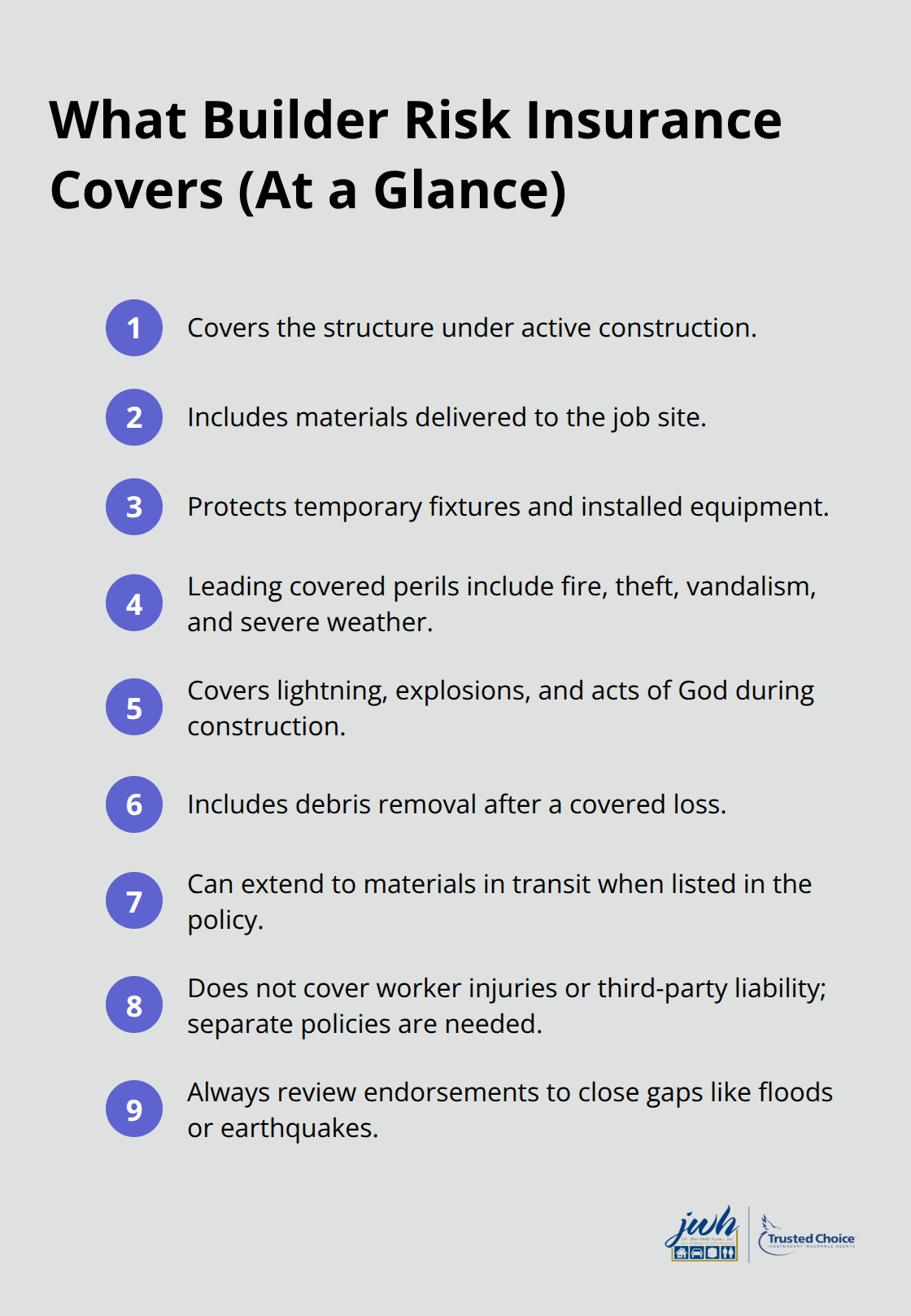
However, the policy does not cover worker injuries or third-party liability claims-those require separate workers compensation and general liability policies. Many builders mistakenly assume one policy covers everything, then face gaps when accidents happen on site.
How Location and Construction Type Shape Your Costs
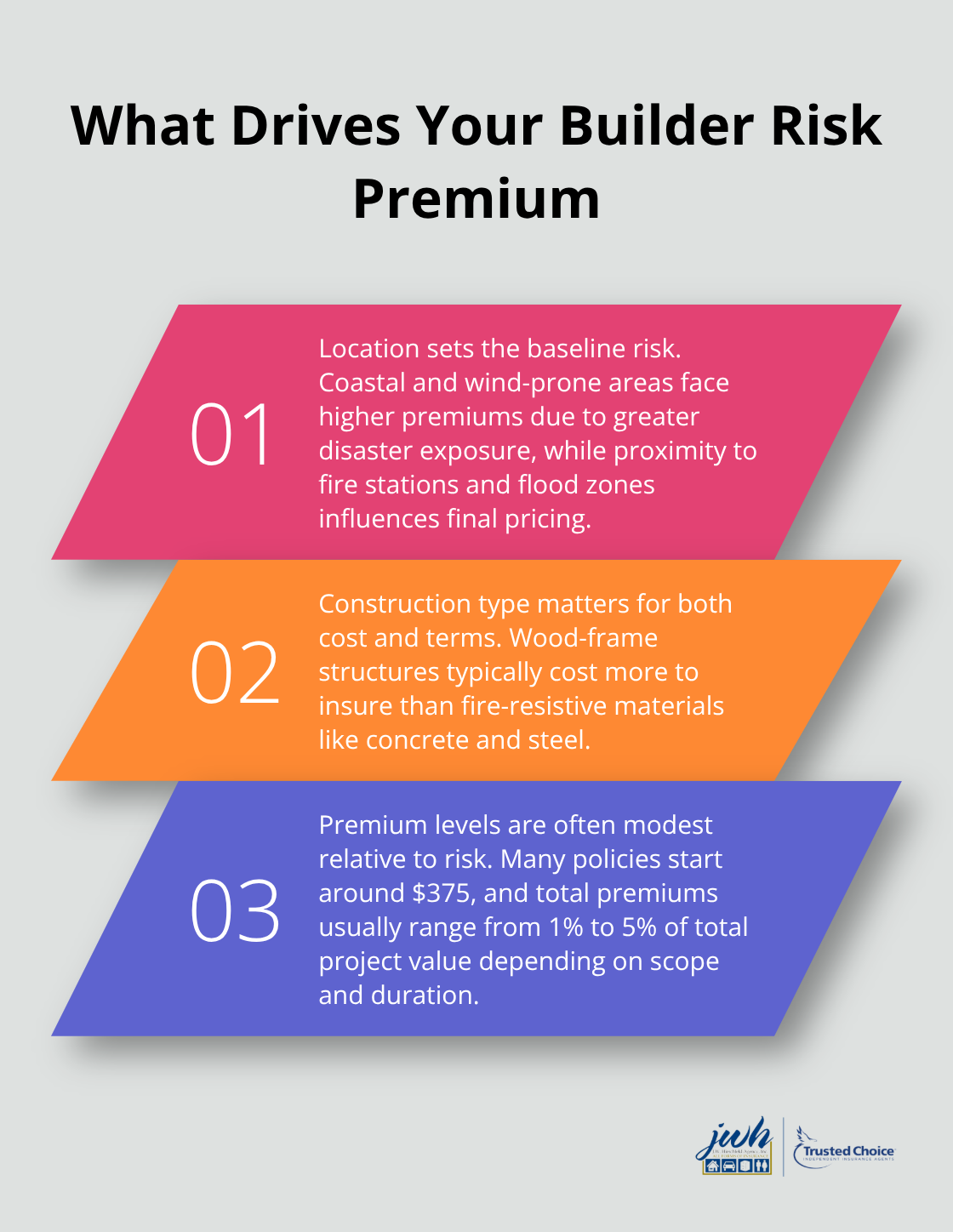
Location matters significantly for pricing and available coverage. Coastal properties and wind-prone regions face higher premiums due to increased natural disaster exposure, with proximity to fire stations and flood zones influencing final costs. Construction type affects coverage terms as well; wood-frame structures typically cost more to insure than fire-resistive materials. Most policies start at around $375 in many states, though total premiums usually range from 1% to 5% of your total project value depending on scope and duration.
Materials and Equipment Need Explicit Coverage
Your lumber, fixtures, appliances, and temporary structures must be specifically listed or broadly described in the policy to qualify for protection. If materials sit in storage before installation, verify the policy covers property at temporary locations, not just on-site. Many contractors lose claims because materials lack coverage. Theft of copper wiring, appliances, and tools happens regularly on construction sites, and standard homeowners policies reject these claims entirely. Builder risk fills that gap.
Soft Costs Endorsements Protect Your Timeline
Soft costs endorsements add coverage for lost rental income, additional loan interest, and real estate taxes if a covered loss delays your project completion. These extensions cost more but protect your financial timeline when disasters strike. An independent agent who understands your specific project phases can tailor coverage accordingly and recommend which endorsements make sense for your situation.
Exclusions You Must Know About
Faulty workmanship, design errors, and defective materials are never covered under builder risk insurance. If a contractor installs something incorrectly and that poor installation causes damage to other parts of the building, some policies include ensuing loss provisions that may cover the resulting damage to surrounding property-but the original defective work stays excluded. Earthquakes and floods are commonly excluded in standard policies, though endorsements can add these protections in high-risk areas at additional cost. Before signing any policy, read the entire document to identify exclusions specific to your location and construction type. An independent agent can explain exactly what gaps exist and recommend endorsements to close them. Understanding these exclusions now prevents costly surprises later and positions you to select the right coverage limits for your next phase.
Why Builder Risk Insurance Protects Your Bottom Line
Lenders Require Coverage Before Releasing Funds
Lenders will not release construction funds without proof of builder risk coverage in place. Banks and government agencies require this protection before the first shovel hits the ground because they have a financial stake in your project. If you cannot show active coverage when materials arrive, your project stalls immediately. This requirement applies consistently across residential and commercial builds.
Your coverage must activate before work begins or materials reach the site. An independent agent understands these lender requirements and coordinates timing so your policy activates exactly when you need it, preventing costly delays.
Contractors Demand Proof of Coverage
General contractors and subcontractors will not mobilize crews without proof that the property owner carries builder risk. Many construction contracts explicitly require the owner to maintain this coverage throughout the project term. Contractors protect themselves by insisting on this requirement because they do not want to absorb losses from fires, theft, or weather damage that occur on your property. When you work with an independent agent who represents multiple carriers, they secure a policy that satisfies both lender and contractor requirements while offering competitive pricing.
A Single Loss Can Exceed Your Entire Budget
A warehouse fire that destroys framing materials, electrical systems, and temporary structures can easily cost fifty thousand dollars or more depending on project scope. Without builder risk coverage, you absorb this loss entirely and face delays while securing replacement materials and scheduling crews again. Weather damage halts work for weeks-frozen pipes burst concrete, high winds damage roof systems, or flooding destroys basement work already completed.
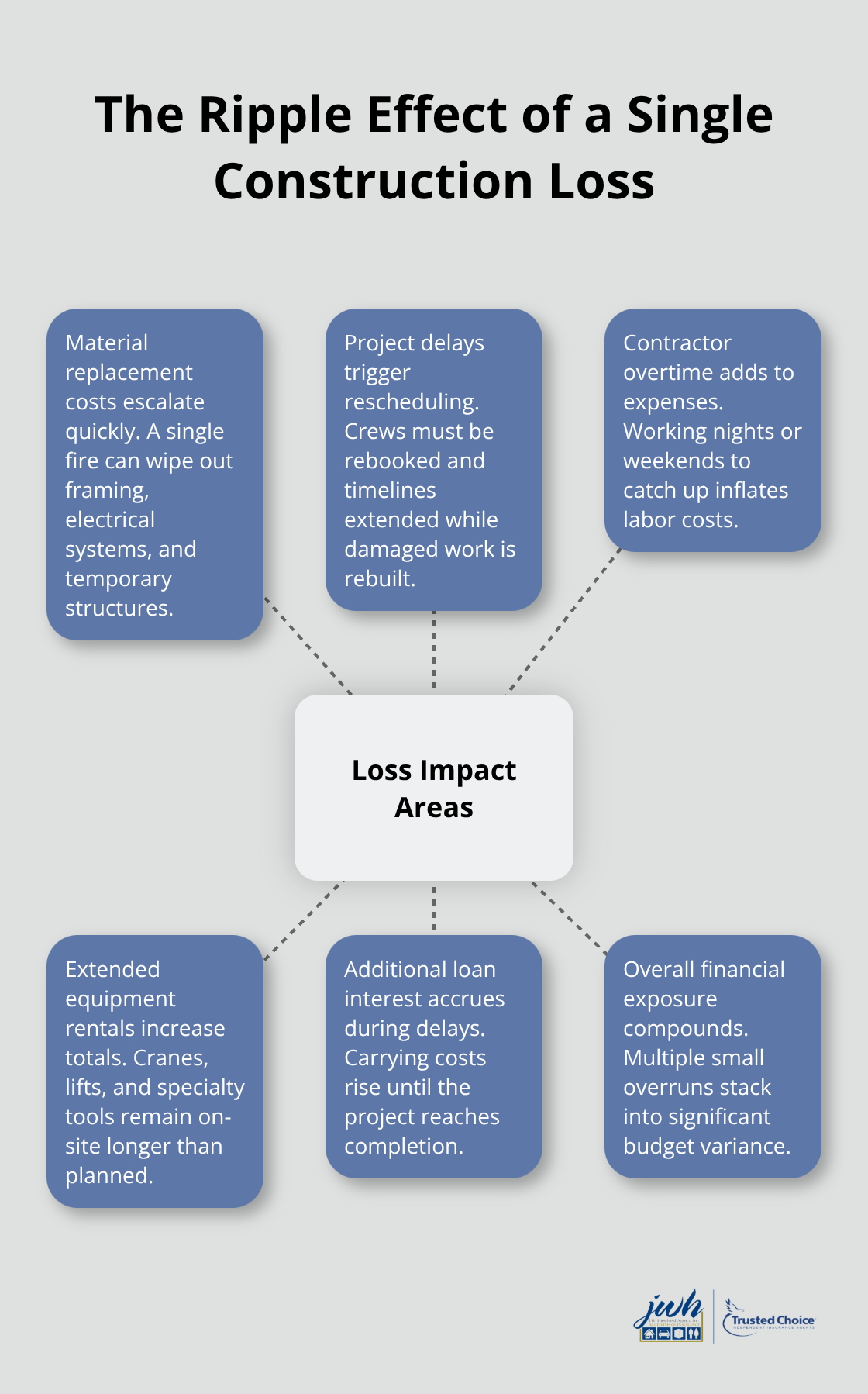
These events trigger additional costs beyond material replacement: contractor overtime, extended equipment rental, and loan interest on delayed completion all compound your financial exposure.
Builder risk premiums typically represent one to five percent of your total project value, making coverage a bargain compared to the potential loss. For a five-hundred-thousand-dollar construction project, you might pay five thousand dollars in annual premium to protect against losses that could reach hundreds of thousands. An independent agent models different scenarios and coverage limits so you understand exactly what financial protection you are purchasing.
Soft Costs Endorsements Protect Your Timeline
Soft costs endorsements add coverage for lost rental income, additional loan interest, and real estate taxes if a covered loss delays your project completion. These extensions cost more but protect your financial timeline when disasters strike. An independent agent who understands your specific project phases recommends which endorsements make sense for your situation and prevents the common mistake of underinsuring just to save premium dollars.
Projects that experience losses without adequate coverage often face financing complications because lenders may halt fund releases until damage is repaired and coverage gaps are closed. This financial standoff extends timelines and increases overall project costs. The right coverage strategy from the start avoids these complications and keeps your construction schedule on track.
Choosing the Right Coverage Limits for Your Project
Calculate Coverage Based on Total Project Costs
Project size determines your baseline coverage needs, and underestimating this number creates serious financial exposure. A five-hundred-thousand-dollar residential build requires different protection than a fifty-thousand-dollar kitchen remodel, yet many property owners apply generic coverage limits without calculating actual project costs. Start by documenting every expense: materials, labor, temporary structures, equipment rentals, and soft costs like extended loan interest if delays occur. Your coverage limit should match or slightly exceed this total because a loss near the end of construction could destroy completed work worth the full project value.
Account for Regional Replacement Costs
Location amplifies this calculation significantly. Coastal properties and wind-prone regions in states like Florida and Louisiana face higher replacement costs due to material scarcity and labor premiums after major storms, according to Amwins Market Insights. A wood-frame home in Miami costs substantially more to rebuild than an identical structure in the Midwest, so your coverage limits must reflect regional replacement pricing rather than national averages. Construction type affects both cost and available protection. Fire-resistive materials like concrete and steel typically qualify for lower premiums and broader coverage than wood-frame construction, depending on the carrier.
Compare Exclusions and Endorsement Costs
Comparing policies means evaluating what each carrier excludes and what endorsements cost to close those gaps. Standard builder risk policies exclude earthquakes, floods, and certain weather events depending on geography, but endorsements add these protections at measurable costs. A flood endorsement for a project in a flood zone might add two hundred to five hundred dollars annually, while earthquake coverage in California could cost significantly more. The challenge is determining which endorsements actually matter for your project versus which represent unnecessary expense. When selecting coverage, focus on matching your coverage limits and deductibles to what actually happens in your operation rather than choosing based on price alone.
Leverage Specialized Underwriting for Better Terms
Larger contractors often discover that carriers using specialized underwriters and digital risk assessment tools offer better pricing and terms because these platforms evaluate actual site conditions rather than applying blanket assumptions. An independent agent represents multiple carriers and shows you side-by-side comparisons of what each policy covers, what costs extra, and which exclusions present real risk for your specific situation. Select limits matching your largest typical project plus a safety margin, and schedule annual reviews to catch coverage gaps as your business grows. Starting coverage early in the project lifecycle prevents gaps when materials arrive or work begins before your policy activates.
Final Thoughts
Builder risk insurance protects your construction investment from the moment materials arrive until the project reaches completion. The coverage you select today determines whether a fire, theft, or weather event becomes a manageable claim or a financial catastrophe that halts your timeline and strains your budget. Standard policies cover the structure, materials, equipment, and debris removal, but exclusions for faulty workmanship and certain natural disasters mean you must actively review what gaps exist for your specific project.
Starting coverage early prevents the common mistake of discovering your policy does not activate until work begins, leaving materials vulnerable during delivery and storage. Lenders require proof of coverage before releasing funds, and contractors will not mobilize crews without it, so timing matters operationally and financially. Your coverage limits should match your total project costs plus regional replacement expenses, not generic industry benchmarks that underestimate what rebuilding actually costs in your area.
The next step involves calculating your exact project value, identifying which endorsements close coverage gaps, and comparing what multiple carriers actually offer rather than accepting the first quote. An independent agent represents multiple top carriers and handles the comparison work for you, securing policies that satisfy lender requirements, contractor demands, and your actual financial exposure without overpaying for unnecessary coverage. Contact JW Hirschfeld Agency, Inc. to discuss your next project and secure the builder risk insurance protection your construction site deserves.
The information provided in this blog is for general informational purposes only and does not constitute legal, financial, or insurance advice. Coverage options, terms, and availability may vary. Please consult with a licensed professional for advice specific to your situation.
Artificial intelligence may have been used to generate text and images in some blog articles.