

Running a business on Long Island means facing unique risks-from coastal weather threats to competitive liability exposure. A business owners policy combines property, liability, and business interruption coverage into one streamlined package designed for companies like yours.
At JW Hirschfeld Agency, Inc., we’ve helped countless Long Island business owners find the right protection without overpaying. This guide walks you through what a business owners policy covers, the real risks your operation faces, and why working with a local independent agent makes all the difference.
What a Business Owners Policy Actually Covers
The Three Core Components of a BOP
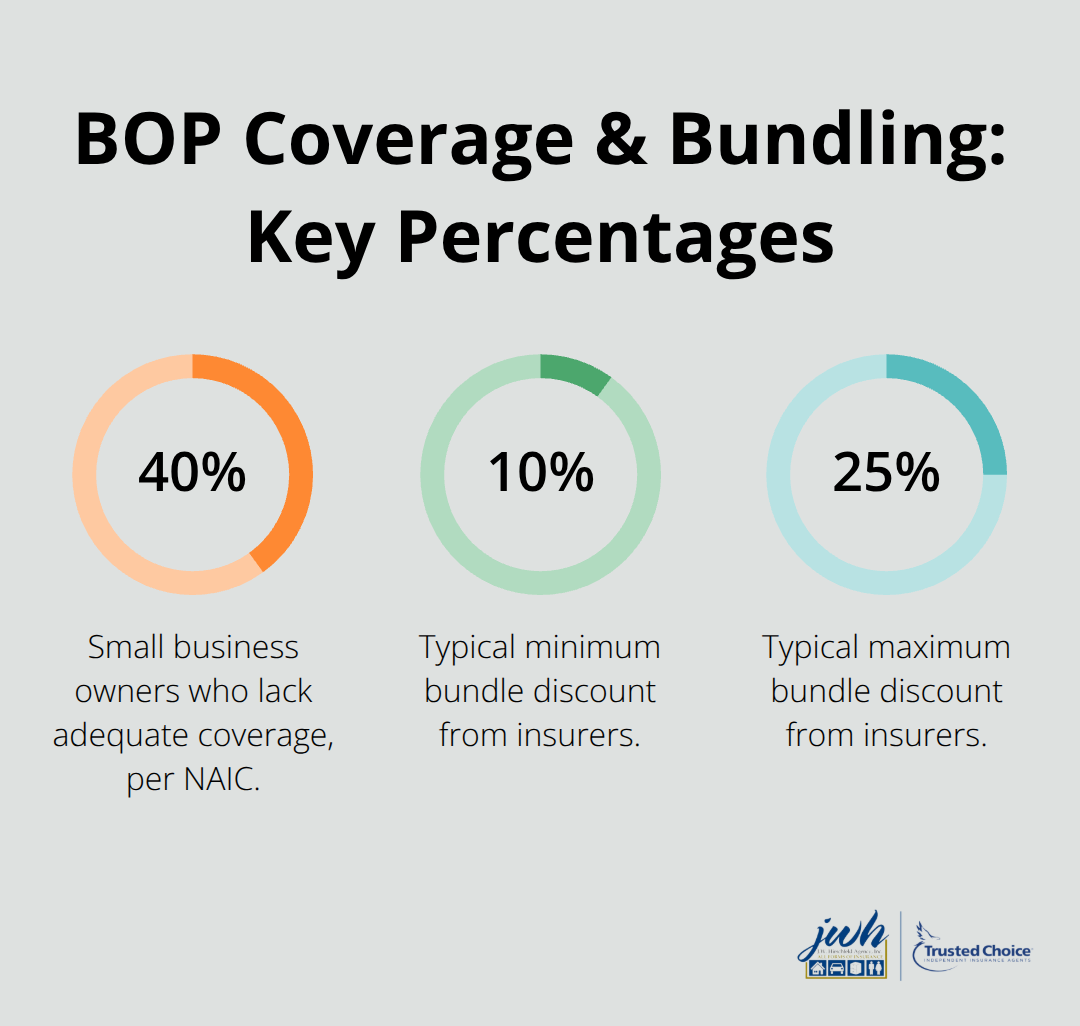
A business owners policy bundles property coverage, general liability, and business interruption protection into a single package designed specifically for small to mid-sized businesses. Unlike purchasing three separate policies, a BOP treats these coverages as an integrated solution, which means your property damage claim won’t sit in one insurer’s queue while your liability claim moves through another’s system. The National Association of Insurance Commissioners reports that approximately 40% of small business owners lack adequate coverage, often because they underestimate how expensive standalone policies become.
Property coverage protects your building, equipment, and inventory from fire, theft, and weather damage. General liability covers medical expenses and legal costs if a customer gets injured on your premises or your operations cause damage to someone else’s property. Business interruption coverage covers operating expenses and lost income for a set period of time when a covered event forces you to temporarily close-this matters enormously on Long Island, where coastal storms can shut down operations for weeks.
Real Pricing: BOP vs. Standalone Policies
A typical BOP for a Long Island retail business or service company costs between $1,200 and $2,500 annually, depending on your industry, revenue, and location. Compare this to the $3,500 to $5,000 you’d spend when purchasing property, liability, and business interruption separately, and the financial advantage becomes clear. The gap widens for higher-risk operations or businesses in coastal areas prone to weather-related claims.
How Bundling Reduces Your Premiums
Insurance companies offer bundle discounts because they reduce their administrative costs when you consolidate coverage with one carrier. Most insurers provide discounts ranging from 10% to 25% when you combine multiple coverages, though the exact percentage depends on your risk profile and the carrier’s underwriting guidelines. A manufacturing business owner in Huntington might find that one carrier offers a 20% bundle discount but charges higher rates on liability, while another provides only a 12% discount but significantly lower baseline premiums on property coverage-the math doesn’t always favor the flashiest discount.
Operational Simplicity and Claims Efficiency
Bundling creates operational simplicity: one renewal date, one deductible structure to manage, and one agent who understands your entire risk picture. This advantage compounds when you file a claim, because your adjuster reviews your complete coverage history with a single company rather than coordinating between multiple insurers with different claim procedures and timelines. An independent agent representing multiple carriers can help you navigate which combination delivers the lowest premium for your specific operation, then guide you through the claims process with knowledge of how that particular insurer handles your coverage.
What Threatens Long Island Businesses Most
Coastal Weather and Business Interruption Losses
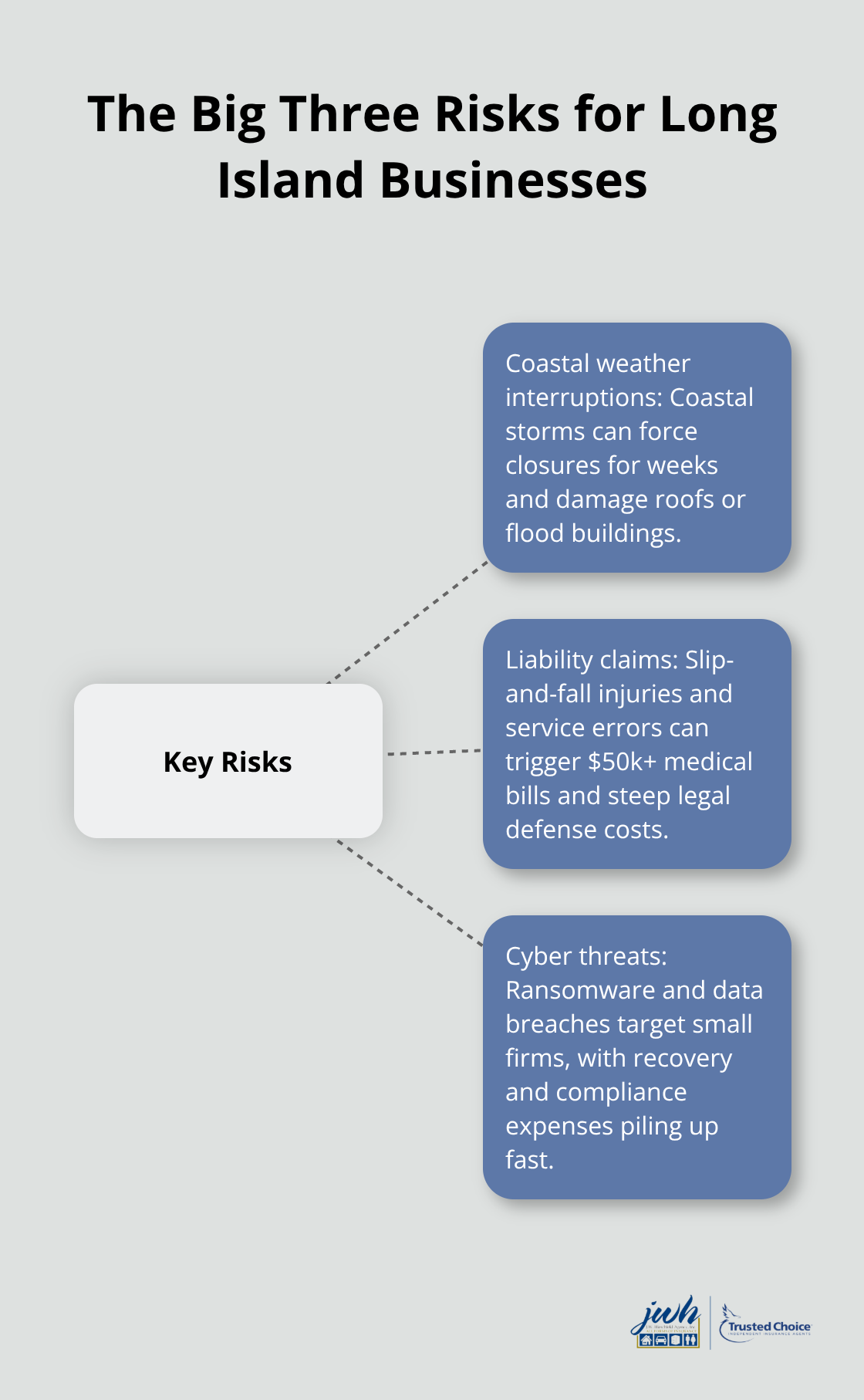
Coastal weather poses the most direct threat to Long Island operations. Hurricane season runs from June through November, and the National Hurricane Center data shows that Long Island experiences tropical storm-force winds approximately every five years on average. When a nor’easter hits, businesses face roof damage or flooding-and weeks of lost revenue while repairs happen. A restaurant or retail shop loses $15,000 to $40,000 per week in revenue during a forced closure, depending on location and customer base.
Property damage claims spike predictably after storms, but the real financial damage comes from business interruption. Business interruption coverage protects against losses when your business cannot operate. Fixed operating expenses like rent, loan payments, and certain payroll costs continue whether the doors are open or not. This is why business interruption coverage matters more on Long Island than in inland markets. Many business owners focus entirely on protecting their building and equipment while ignoring the fact that their operating expenses continue regardless of whether they operate.
Liability Claims and Legal Defense Costs
Liability exposure on Long Island reflects the region’s density and competitive business environment. A single slip-and-fall incident generates medical bills exceeding $50,000, and if a customer pursues litigation, legal defense costs often reach $25,000 to $75,000 before trial. Service businesses face heightened exposure-a plumber installing a water heater, a contractor renovating a kitchen, or a cleaning company entering a client’s home all carry liability risks that most owners underestimate.
Cyber Threats and Data Breach Expenses
Cyber threats have become equally serious for Long Island businesses of all sizes. The FBI reported that ransomware attacks cost U.S. businesses $34.2 billion in 2023, and small businesses face targeting more frequently than large ones because they typically maintain weaker defenses. A dental practice storing patient records, an accounting firm managing client finances, or a retail business processing credit cards all hold data that criminals actively pursue.
Most business owners believe cyber insurance is optional or prohibitively expensive, but cyber attacks destroy a business faster than physical property damage. A single data breach costs between $200,000 and $500,000 when you account for notification requirements, credit monitoring services, legal fees, and lost customer trust. These three risk categories-weather-related interruption, liability exposure, and cyber threats-demand coverage that addresses modern business realities, not just traditional property protection.
Why Independent Agents Outperform National Insurance Companies
National Carriers Prioritize Profits Over Your Coverage
When you call a major national insurance company’s 1-800 number, a representative pulls up your business profile and runs it through their underwriting algorithm. That algorithm maximizes their profits, not your coverage quality or price. National carriers operate on fixed policy templates with minimal customization, treating a manufacturing business in Huntington identically to a service company in Garden City despite their vastly different risk profiles. Independent agents represent multiple top carriers, which means we compare policies across different insurers and recommend the one that actually fits your operation rather than pushing you toward whichever generates the highest commission.
Access to Multiple Carriers Means Lower Premiums
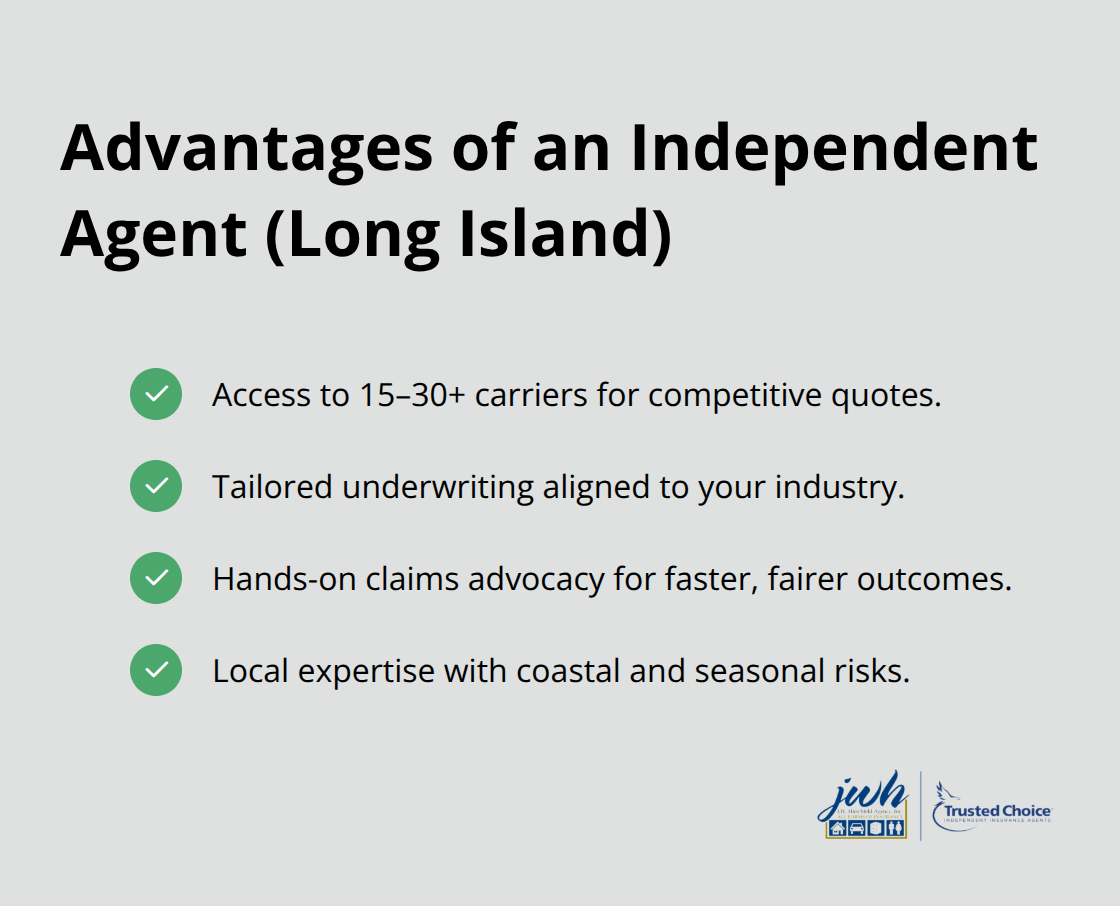
Independent agencies negotiate with 15, 20, or sometimes 30+ carriers simultaneously, giving you options that national companies simply cannot match. When you need a BOP with enhanced business interruption coverage because coastal weather threatens your revenue, an independent agent contacts three carriers known for strong business interruption terms and obtains actual quotes rather than presenting a single option at a fixed price. The difference in annual premiums often ranges from $300 to $800 depending on which carrier’s underwriting criteria favor your specific risk profile. National insurance companies lock you into their menu; independent agents customize your protection to match your actual operations, inventory value, customer traffic patterns, and seasonal revenue fluctuations.
Personalized Underwriting Beats Template-Based Approaches
An independent agent spends time understanding your business in ways national representatives never do. A restaurant owner working with an independent agency gets paired with an insurer experienced in food service liability rather than a company that treats all small businesses identically. This targeted approach produces better coverage terms and more accurate pricing because the carrier’s underwriting expertise aligns with your industry. National carriers apply the same template to every applicant; independent agents match you with carriers whose specialization matches your operation.
Claims Advocacy Makes the Real Difference
During claims, the relationship between you and your independent agent becomes invaluable. A national company’s claims adjuster handles hundreds of cases monthly and follows rigid procedures; an independent agent acts as your advocate within that system, knowing exactly how your specific insurer processes different claim types and pushing for faster settlements when delays occur. When coastal storms damage your property or a liability dispute arises, you need someone who understands your coverage inside and out and fights on your behalf. National carriers treat claims as transactions; independent agents treat them as opportunities to prove their value.
Why Long Island Businesses Need Local Expertise
Long Island’s specific risks-coastal weather exposure, competitive liability environment, and concentrated commercial density-demand agents who understand the region’s business landscape. An independent agent familiar with Long Island operations knows which carriers move quickly on hurricane damage claims, which ones provide the strongest business interruption terms for seasonal businesses, and which ones underwrite service contractors most favorably. This local knowledge translates directly to better coverage and faster claims resolution when you need it most.
Final Thoughts
A business owners policy on Long Island protects your operation against the specific threats your region faces, from coastal weather shutdowns to liability claims that drain cash reserves. The coverage bundling approach reduces your premiums by 10% to 25% compared to purchasing policies separately, while consolidating your protection under one carrier eliminates coordination headaches when claims arise. More importantly, a BOP addresses the financial reality that business interruption losses often exceed property damage costs-your rent and payroll continue whether your doors are open or not.
The difference between working with a national insurance company and partnering with an independent agent becomes starkest when you need coverage tailored to your actual operation. National carriers apply template-based underwriting that treats a manufacturing business identically to a service company, ignoring the risk factors that matter most to your bottom line. Independent agents represent multiple top carriers, which means they obtain actual quotes from insurers whose expertise matches your industry, then recommend the combination that delivers both competitive pricing and coverage terms that fit your business.
We at JW Hirschfeld Agency, Inc. understand Long Island’s unique risks and match them with carriers that respond quickly when storms hit or claims arise. Contact us to discuss how a business owners policy Long Island can protect your operation at competitive rates, and we’ll review your current coverage to identify gaps and show you exactly how much you can save.
The information provided in this blog is for general informational purposes only and does not constitute legal, financial, or insurance advice. Coverage options, terms, and availability may vary. Please consult with a licensed professional for advice specific to your situation.
Artificial intelligence may have been used to generate text and images in some blog articles.