
Your business fleet faces real risks every day. From liability claims to property damage, one accident can threaten your bottom line.
Commercial vehicle insurance in Long Island isn’t optional-it’s a legal requirement and a smart business decision. At JW Hirschfeld Agency, Inc., we help fleet owners find coverage that actually protects what you’ve built.
Why Your Fleet Needs Real Protection
A single accident involving one of your business vehicles can cost far more than most fleet owners anticipate. If your driver is at fault in a collision that injures someone, liability claims can easily exceed $100,000 when medical expenses, lost wages, and legal fees are factored in. New York requires all business vehicles to carry minimum liability coverage of at least $25,000 for property damage and $50,000 for bodily injury per person, but these minimums are dangerously low for most operations. A serious injury claim involving multiple people can quickly exhaust those limits, leaving your business responsible for the remainder.
Property damage to your vehicles adds another layer of financial exposure. Repair costs for commercial trucks and vans routinely run $5,000 to $15,000 per incident, and if your vehicles sit idle during repairs, you lose revenue while still paying overhead. Theft poses a real threat in the Long Island area; tools, equipment, and vehicles themselves disappear regularly. Personal items stolen from your vehicle are not covered under standard commercial auto policies, so you need inland marine coverage for loose tools and equipment-most fleet owners overlook this protection until something goes missing.
Coverage That Matches Your Operation
The coverages you choose should reflect how your fleet actually operates, not what an online quote form assumes. Hired and non-owned auto coverage becomes critical if your employees occasionally use personal vehicles for business purposes. Without it, you have a coverage gap that could expose your company to liability.
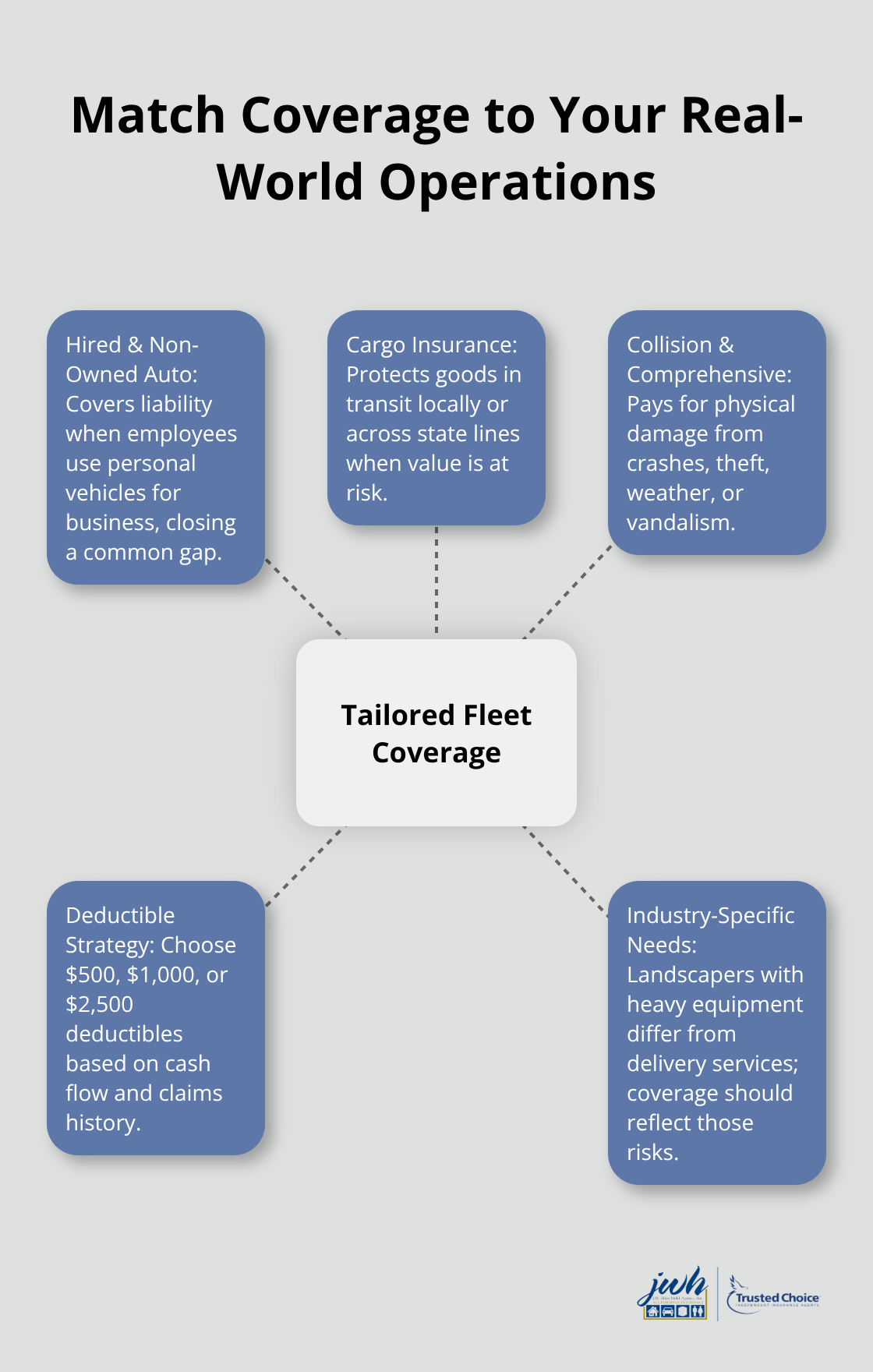
If you operate across state lines or carry goods in transit, cargo insurance protects the value of what’s in your vehicles. Different industries face different risk profiles-a landscaping company with heavy equipment needs different protection than a delivery service, yet many fleet owners accept whatever standard policy is offered.
Collision and comprehensive coverage protect your vehicles’ physical damage, but your deductible choice matters significantly. A $500 deductible costs more upfront but saves money when claims are frequent, while a $1,000 or $2,500 deductible works better for fleets with clean driving records. Uninsured and underinsured motorist coverage is essential because roughly 13% of drivers on the road lack adequate insurance. If an uninsured driver causes an accident, this coverage protects your business and employees from covering their own medical expenses.
Why Local Guidance Matters
Fleet insurance isn’t a one-size-fits-all product, and the decisions you make during the quote process directly impact both your premiums and your actual protection. An independent agent will ask detailed questions about your specific operations, vehicle types, driver records, and service areas-information that shapes whether you’re properly covered or exposed to gaps. Independent agents represent multiple carriers, which means they can compare rates and coverage options rather than pushing you toward a single company’s standard policies. They understand Long Island’s specific risks and regulatory environment, and they act as your advocate if a claim occurs, helping navigate the process toward fair settlement rather than simply processing paperwork. This hands-on approach is what separates working with an independent agency from purchasing coverage online.
What Coverage Do You Actually Need for Your Fleet
Liability Coverage Forms Your Foundation
Liability coverage is the foundation of any commercial vehicle policy, and New York law mandates you carry it. The state requires a minimum of $50,000 per person and $100,000 per accident for bodily injury liability, plus $25,000 for property damage liability. These minimums exist to protect other people, not your business. In reality, a single serious accident with multiple injuries generates medical bills, lost wages, and legal fees that far exceed these thresholds.
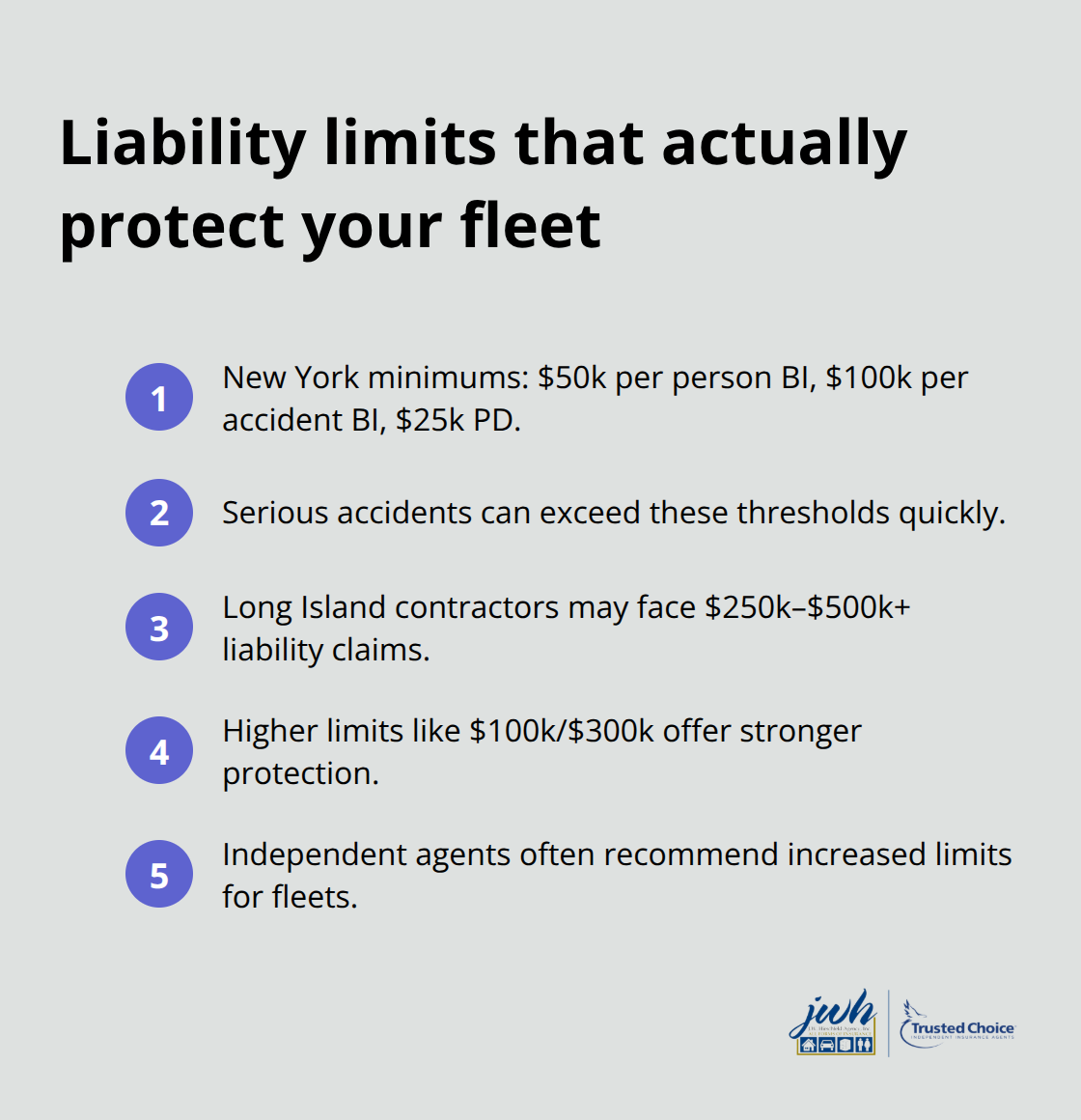
A contractor hitting a pedestrian or another vehicle on Long Island faces liability claims reaching $250,000 to $500,000 or more depending on injury severity. Higher limits like $100,000 per person and $300,000 per accident provide actual protection for your business assets, and most independent agents recommend these increased limits as standard for fleet operations.
Physical Damage Protection for Your Vehicles
Collision coverage pays for damage to your vehicles when you’re at fault in an accident, while comprehensive coverage handles theft, weather damage, vandalism, and other non-collision losses. The choice between a $500, $1,000, or $2,500 deductible depends on your cash flow and claims history. A fleet with consistent minor incidents benefits from a lower deductible, while a company with minimal claims and strong driver safety records can accept higher deductibles to reduce premiums. For Long Island operations, comprehensive coverage proves particularly valuable because vehicle theft and break-ins happen regularly across the region, and repair costs for commercial trucks easily run $5,000 to $15,000 per incident.
Protection When Other Drivers Lack Insurance
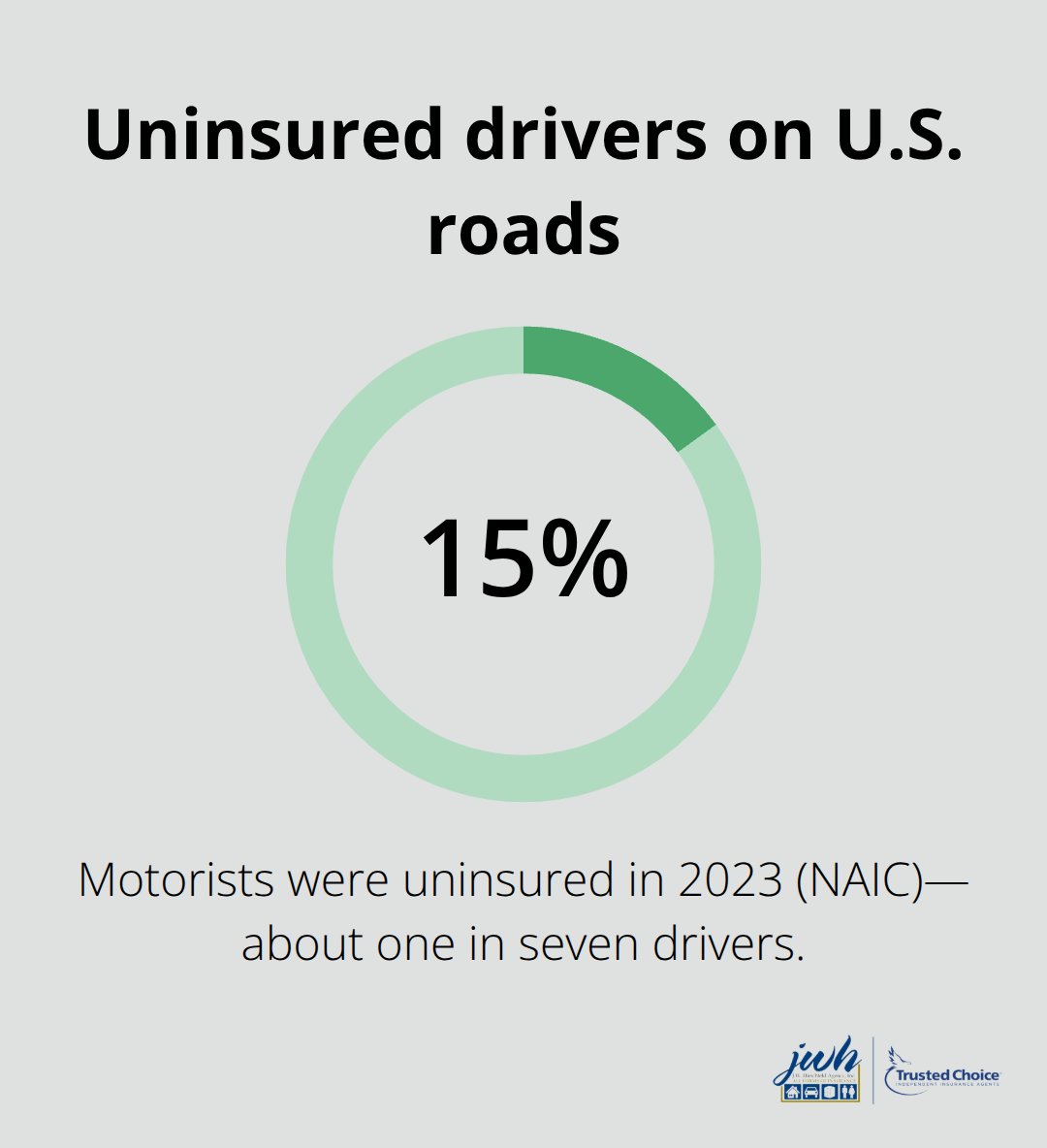
Uninsured and underinsured motorist coverage protects your business when another driver causes an accident but lacks adequate insurance to cover damages. 15.4% of motorists, or about one in seven drivers, were uninsured in 2023, and this percentage is higher in densely populated areas like Long Island. Without UIM coverage, your company absorbs medical expenses and vehicle repair costs when an uninsured driver is at fault, which can devastate cash flow for smaller operations.
Most independent agents recommend UIM limits matching your liability limits, so if you carry $100,000 per person bodily injury liability, your UIM coverage should be equally robust.
Additional Coverages That Close Critical Gaps
Medical payments coverage or personal injury protection covers medical expenses for your employees and passengers regardless of who caused the accident, reducing out-of-pocket costs and keeping workers on the job faster. Hired and non-owned auto coverage closes a critical gap if your employees use personal vehicles for business purposes. Many fleet owners assume their employees’ personal auto policies cover business use, but they typically exclude or severely limit business-related driving. Without hired and non-owned coverage, your company faces direct liability exposure. Inland marine coverage protects loose tools, equipment, and materials inside your vehicles from theft or damage, which standard commercial auto policies specifically exclude. A landscape company with $8,000 in equipment or a contractor carrying specialized tools needs this protection.
The specific combination of coverages that protects your operation depends on how your fleet actually works-the types of vehicles you operate, where you travel, what you carry, and your drivers’ experience levels. An independent agent reviews your operations in detail and identifies which coverages match your actual risk profile rather than selling generic packages. This tailored approach means you pay for protection that matters to your business and avoid gaps that could expose you to unexpected losses.
Why Independent Agents Beat Online Quotes for Fleet Coverage
Online Forms Can’t Capture Your Real Operation
When you shop for commercial vehicle insurance online, you answer a form designed to fit into a carrier’s standard pricing algorithm. The system knows nothing about your actual operation, your drivers’ experience, or the specific risks your fleet faces on Long Island. A contractor needing coverage for three service trucks might find rates ranging from $2,400 to $3,600 annually for identical vehicles and drivers, depending on which carrier underwrites the policy and how they weight your specific risk profile. Online quote tools show you only one company’s price, leaving you blind to better options.
Multiple Carriers Mean Real Competitive Pricing
Independent insurance agents work differently. We represent multiple top carriers, which means we compare rates across different companies rather than locking you into one insurer’s pricing structure. An independent agent shops your fleet across multiple carriers simultaneously, identifying which company offers the best rate for your exact situation. This access to 20+ carriers in most markets means you receive competitive pricing that reflects your true risk profile instead of generic assumptions.
Customized Coverage Matches Your Actual Fleet
Independent agents customize coverage to match how your fleet actually operates rather than forcing you into standard packages. A delivery service in Huntington faces different exposures than a landscaping company in Port Jefferson, yet most online quotes apply the same boilerplate coverage. An independent agent asks the questions that matter: Are your employees using personal vehicles for deliveries? What’s the value of equipment in each vehicle? Do you cross state lines? How experienced are your drivers? These details directly impact which coverages you need and how much you’ll pay.
Bundling and Savings You’ll Actually Find
Independent agents identify cost-saving opportunities that online systems miss entirely. Bundling your fleet auto insurance with general liability, property, or business owner’s policies typically saves 7% or more on your auto premiums. A small contractor who bundles fleet auto with a BOP and general liability might save $400 to $600 annually while simplifying administration through one renewal date and one bill.
Claims Support When It Matters Most
When a claim happens, the difference becomes undeniable. An online policy means you navigate the claims process alone, but an independent agent serves as your inside advocate, guiding the process toward fair settlement and helping your business return vehicles to the road faster.
Final Thoughts
Your fleet’s protection depends on decisions you make today. Commercial vehicle insurance on Long Island isn’t just about meeting legal minimums-it’s about ensuring one accident doesn’t derail your business. The coverage gaps most fleet owners discover are the ones that cost them thousands in unexpected expenses, from liability claims exceeding state minimums to theft of equipment that standard policies exclude.
Working with a local independent agent transforms how you approach fleet insurance entirely. Rather than accepting whatever rates an online quote generates, you gain access to multiple carriers competing for your business. An independent agent compares options across different companies, identifies bundling opportunities that save hundreds annually, and customizes coverage to match your actual operations instead of forcing you into generic packages.
At JW Hirschfeld Agency, Inc., we understand the specific risks your operation faces on Long Island and represent multiple top carriers to find the protection that fits your fleet’s real needs. Contact an independent agent who can compare your options and build coverage that actually protects what you’ve built.
The information provided in this blog is for general informational purposes only and does not constitute legal, financial, or insurance advice. Coverage options, terms, and availability may vary. Please consult with a licensed professional for advice specific to your situation.
Artificial intelligence may have been used to generate text and images in some blog articles.