

Running a small business means managing countless risks every day. One of the most important protections you need is general liability insurance, which shields your company from costly lawsuits and medical claims.
At JW Hirschfeld Agency, Inc., we’ve helped hundreds of small business owners understand their coverage options. This general liability insurance guide walks you through what’s covered, why you need it, and how to select the right policy for your specific business.
What General Liability Insurance Actually Covers
The Three Core Protections
General liability insurance protects your small business from three major financial threats. First, it covers bodily injury claims when someone gets hurt on your property or because of your business operations, including their medical expenses and lost wages. If a customer slips in your office and breaks their arm, or a client gets sick from food at your company event, this coverage pays for their medical bills and any resulting lawsuit.
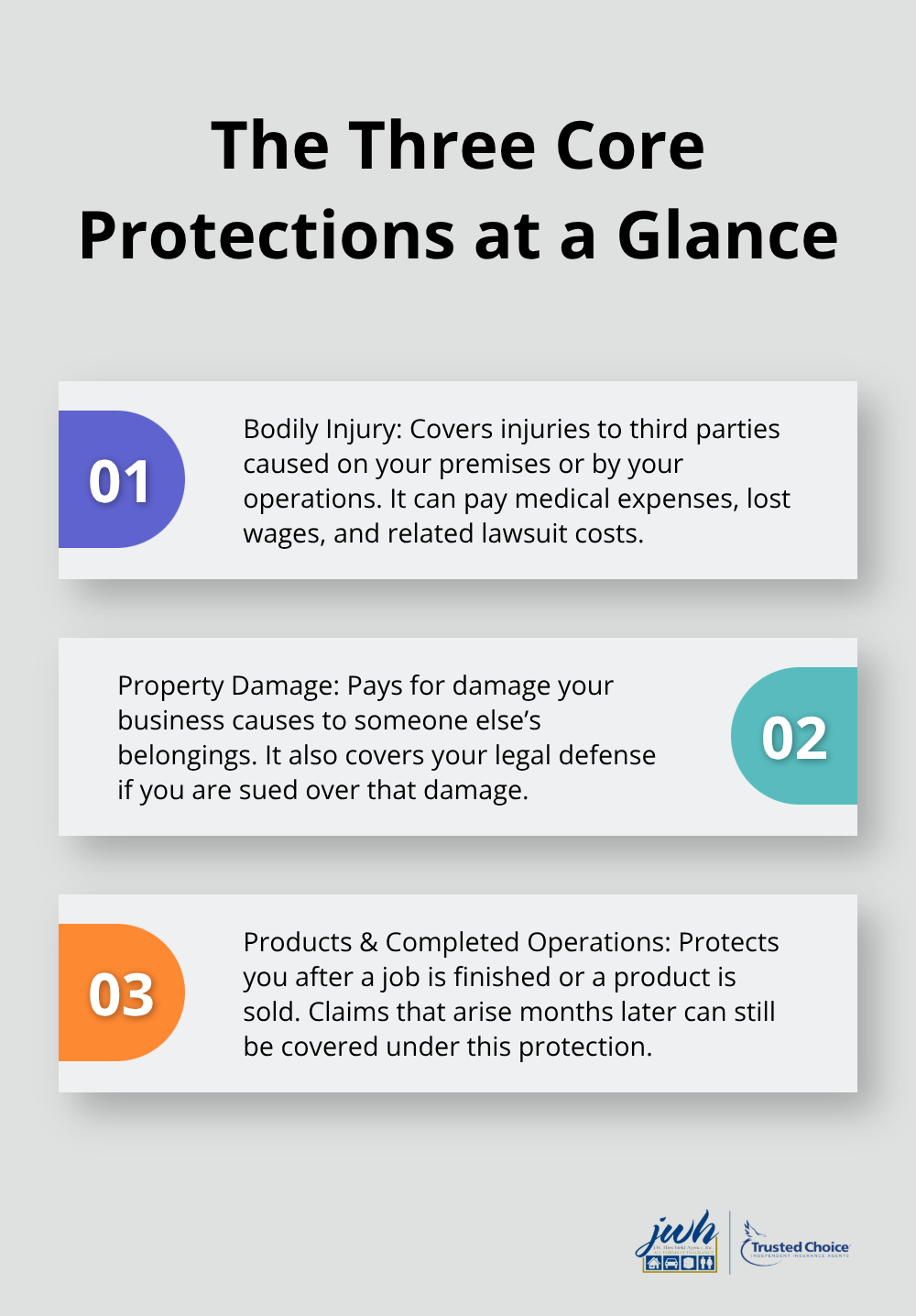
Second, the policy covers property damage you cause to someone else’s belongings, along with your legal defense costs if you’re sued. If your equipment damages a client’s merchandise or your vehicle hits their building, this protection activates. Third, products and completed operations coverage protects you after you finish a job or sell a product.
Why Tail Coverage Matters
A plumbing company remains liable if pipes they installed fail six months later and flood a customer’s basement. A contractor who built a deck faces claims if it collapses a year after completion. This tail coverage matters because many liability claims emerge months or years after the work ends, not immediately.
This statistic makes general liability protection non-negotiable rather than optional for any serious business owner.
Coverage Limits and Industry Considerations
Coverage limits typically range from $300,000 to $2 million depending on your industry and risk profile. Most small businesses in retail, services, and contracting need at least $1 million in general liability coverage to satisfy client contracts and lender requirements.
Your specific industry determines which coverage components matter most. A restaurant prioritizes bodily injury and products liability, while a consulting firm emphasizes professional liability gaps that general coverage doesn’t fill. An independent insurance agent familiar with your local market identifies which threats pose the greatest risk to your operation and recommends appropriate limits without overpaying for unnecessary coverage.
Understanding what your policy covers sets the foundation for selecting adequate protection. The next step involves recognizing why your business specifically needs this coverage and what requirements your clients and lenders impose on your policies.
Why Small Businesses Need General Liability Insurance
Lawsuits Threaten Your Financial Survival
A single lawsuit can destroy a small business. General liability insurance protects your personal assets and business savings from these financial catastrophes. Without it, a customer injured on your property or damaged by your product can pursue your business bank accounts, equipment, and sometimes your personal possessions.
Legal Defense Costs Add Up Fast
The coverage pays your liability insurance defense costs upfront, which matters enormously because defending yourself against a frivolous claim still costs thousands in attorney fees regardless of whether you’re found liable. Most small business owners lack the cash reserves to absorb these expenses while continuing normal operations. Insurance handles these bills immediately, keeping your business running without financial strain.
Clients and Lenders Demand Coverage
General liability insurance has become a business requirement rather than an option. Most commercial contracts now include liability insurance mandates, with clients requiring minimum coverage of $1 million before they’ll work with you. Banks and lenders frequently demand proof of general liability coverage before approving business loans or lines of credit. If you’re bidding on contracts with larger companies or government entities, you’ll face rejection without adequate coverage.
Insurance Builds Customer Confidence
Customers perceive insured businesses as more professional and trustworthy, which influences purchasing decisions in competitive markets. When two service providers offer similar quality and pricing, the one with documented insurance gets hired more often because clients know claims are covered without personal disputes. This competitive advantage translates directly into more revenue and stronger client relationships.
Finding the Right Coverage Limits Matters
Your specific industry and client base determine which coverage limits you actually need. An independent insurance agent familiar with your local market identifies exactly which coverage limits your specific clients and lenders require, preventing you from overpaying while meeting every contractual obligation your industry demands. This personalized approach ensures you carry adequate protection without wasting money on unnecessary limits.
How to Choose the Right General Liability Policy
Assess Your Industry-Specific Risks
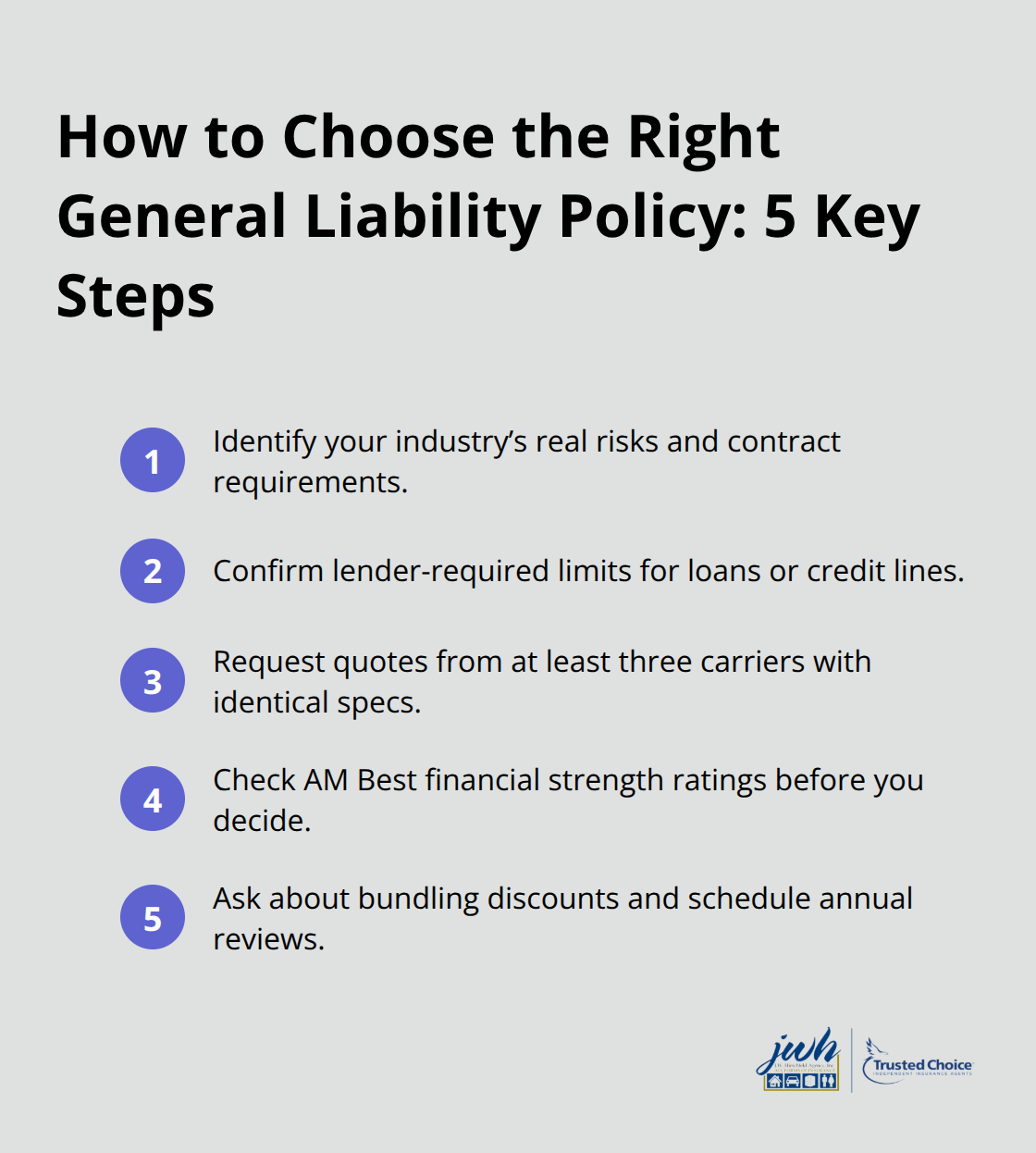
Start by examining what your specific industry actually exposes you to, rather than applying generic coverage recommendations. A landscaping company faces entirely different liability risks than a marketing consultant, and your policy should reflect those real threats. Review your client contracts first, because most larger clients specify exact coverage minimums before they’ll hire you. A contract requiring $2 million in general liability coverage makes that decision for you. Next, contact your lenders and ask directly what coverage limits they require for business loans or credit lines. Banks typically demand $1 million minimum, but some require higher limits depending on your industry and loan size.
Talk to Industry Peers About Coverage Standards
Talk to your competitors or industry peers about what coverage they carry, since businesses operating in the same space usually face comparable risks. An independent insurance agent has worked with dozens of companies in your specific industry and knows which coverage limits actually stick in contracts versus which limits are just suggestions. This experience prevents you from either overpaying for unnecessary limits or discovering too late that your coverage falls short of what clients demand.
Compare Quotes from Multiple Carriers
Request quotes from at least three different carriers before making any decision. Coverage limits matter less than comparing actual pricing across carriers, since the same $1 million limit can cost $400 annually with one insurer and $800 with another. Request identical coverage specifications from each carrier so you’re comparing apples to apples, including the same deductible amounts and any endorsements your contracts require. Many independent agents represent multiple carriers and can pull quotes from several companies simultaneously, saving you hours of phone calls.
Evaluate Carrier Strength and Bundle Opportunities
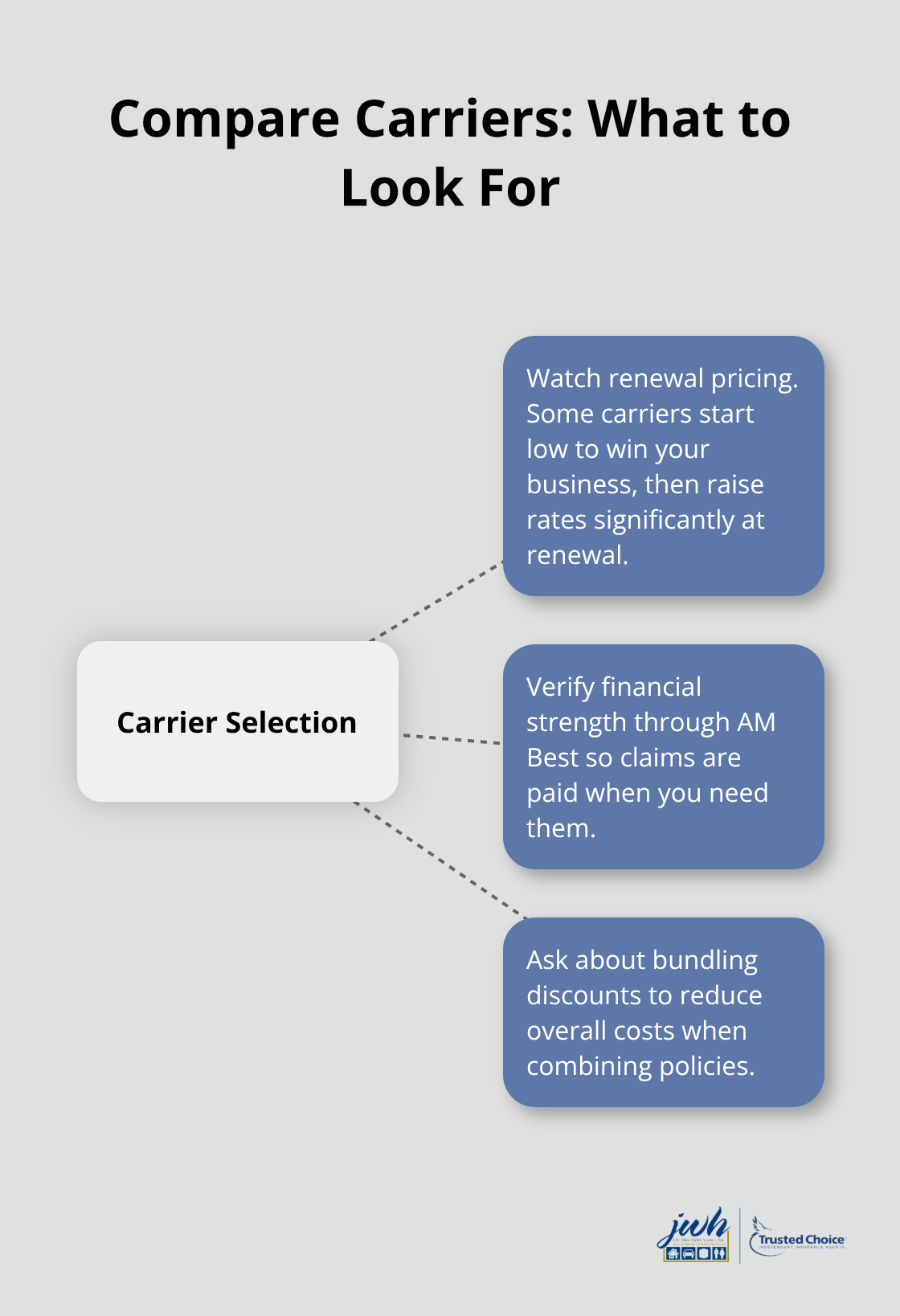
Avoid the trap of choosing the lowest quote automatically, because some carriers price aggressively for new customers then raise rates dramatically at renewal time. Check each carrier’s financial strength ratings through AM Best to confirm they’ll actually pay claims when you need them. Ask about bundling discounts if you’re also purchasing commercial property or other coverage, since combining policies typically reduces your overall costs.
Schedule Annual Coverage Reviews
Once you select a carrier and limits, schedule an annual review with your agent to confirm your coverage still matches your business operations, since growing companies often need higher limits while downsizing businesses might reduce unnecessary coverage.
Final Thoughts
General liability insurance protects your business from the financial devastation that one lawsuit can cause. This general liability insurance guide walked you through what your policy covers, why your specific business needs it, and how to select appropriate limits without overpaying. Your industry faces distinct risks, your clients impose exact coverage minimums, and your lenders demand proof of protection before approving credit.
An independent insurance agent understands these local requirements because they work with dozens of businesses in your market and know which coverage limits actually matter. We at JW Hirschfeld Agency, Inc. represent multiple top carriers, which means we pull competitive quotes simultaneously and find the coverage that matches your actual business needs. We bundle your general liability coverage with commercial property, workers’ compensation, or other policies you need, reducing your overall costs while simplifying your insurance management.
Contact JW Hirschfeld Agency, Inc. to schedule a coverage review and examine your client contracts against what your lenders require. We recommend appropriate limits based on your specific industry and operations, so your business receives protection that actually fits your situation rather than generic coverage that leaves gaps or wastes money on unnecessary limits.
The information provided in this blog is for general informational purposes only and does not constitute legal, financial, or insurance advice. Coverage options, terms, and availability may vary. Please consult with a licensed professional for advice specific to your situation.
Artificial intelligence may have been used to generate text and images in some blog articles.