

General liability insurance in NY protects your business from costly claims that could otherwise drain your finances. Whether you run a small retail shop or a service-based company, understanding your coverage options is essential.
We at JW Hirschfeld Agency, Inc. help New York business owners navigate local regulations and find policies that actually match their needs. This guide walks you through what’s covered, what New York requires, and how to make smart decisions about your protection.
What General Liability Insurance Actually Covers
The Core Protections Your Policy Provides
General liability insurance protects your New York business when someone gets hurt or property gets damaged because of your operations. When a customer slips in your store, a client’s property gets damaged during your work, or someone claims injury from your business activities, general liability steps in to cover medical bills, repair costs, and legal fees.
Most New York businesses start with limits of $1 million per occurrence and $2 million general aggregate. This means your policy pays up to $1 million for any single incident and up to $2 million total across all claims during your policy term.
What Your Coverage Actually Includes
Your general liability policy covers bodily injury, property damage, personal injury claims like defamation, and advertising injury. Legal defense costs are included regardless of whether you win or lose-your insurer covers attorney fees, court costs, and settlements or judgments. Medical payments coverage within your general liability policy pays for minor injuries at your business or from your operations without requiring fault, so if a client gets a minor cut or bruise at your location, this coverage handles the medical expenses immediately.
Product liability is included within your general liability coverage, and if you sell products, you can add product recall insurance as an endorsement. Contractual liability coverage helps when you assume liabilities under contracts like leases or service agreements.
New York’s Unique Liability Landscape
New York’s liability environment demands careful attention to coverage details. The state has seen average jury verdicts balloon in recent years, pushing primary carriers to raise reserves and triggering umbrella coverage requirements. Construction-related businesses face particular scrutiny because New York Labor Law 240, known as the Scaffolding Law, imposes strict liability on building owners for injuries during work, which means your general liability policy needs to account for this exposure.
Many carriers now attach construction exclusions to limit their risk, so if your business involves any on-site work or contractor relationships, you need a policy specifically underwritten for those activities. An independent agent who understands New York’s specific underwriting environment can review your operations and recommend coverage that actually protects you rather than leaving gaps that surprise you during a claim.
What New York Actually Requires for General Liability Coverage
Industry-Specific Coverage Demands
New York doesn’t set a single mandatory general liability limit for all businesses-instead, requirements depend on your industry, your contracts, and who you work for. Construction companies face stricter scrutiny than retail shops because of the Scaffolding Law exposure we mentioned earlier. If you bid on public projects or work for large property managers, expect demands for $1 million per occurrence and $2 million aggregate as a baseline, and many will require an additional $2 million umbrella policy on top. Service-based businesses like plumbers, electricians, and HVAC contractors typically need $1 million per occurrence minimum, while smaller retail operations might qualify with $500,000 if they have minimal public interaction.
Your Contracts Drive Your Coverage Limits
The New York State Insurance Department doesn’t dictate these minimums-your clients and landlords do. Your lease, your vendor agreements, and your client contracts spell out exactly what coverage you need. Most businesses overlook this critical step and purchase generic policies that don’t match their actual obligations. We at JW Hirschfeld Agency, Inc. review these documents upfront so you never face the shock of discovering your policy doesn’t meet a contract’s requirements.
Certificates of Insurance and Additional Insured Status
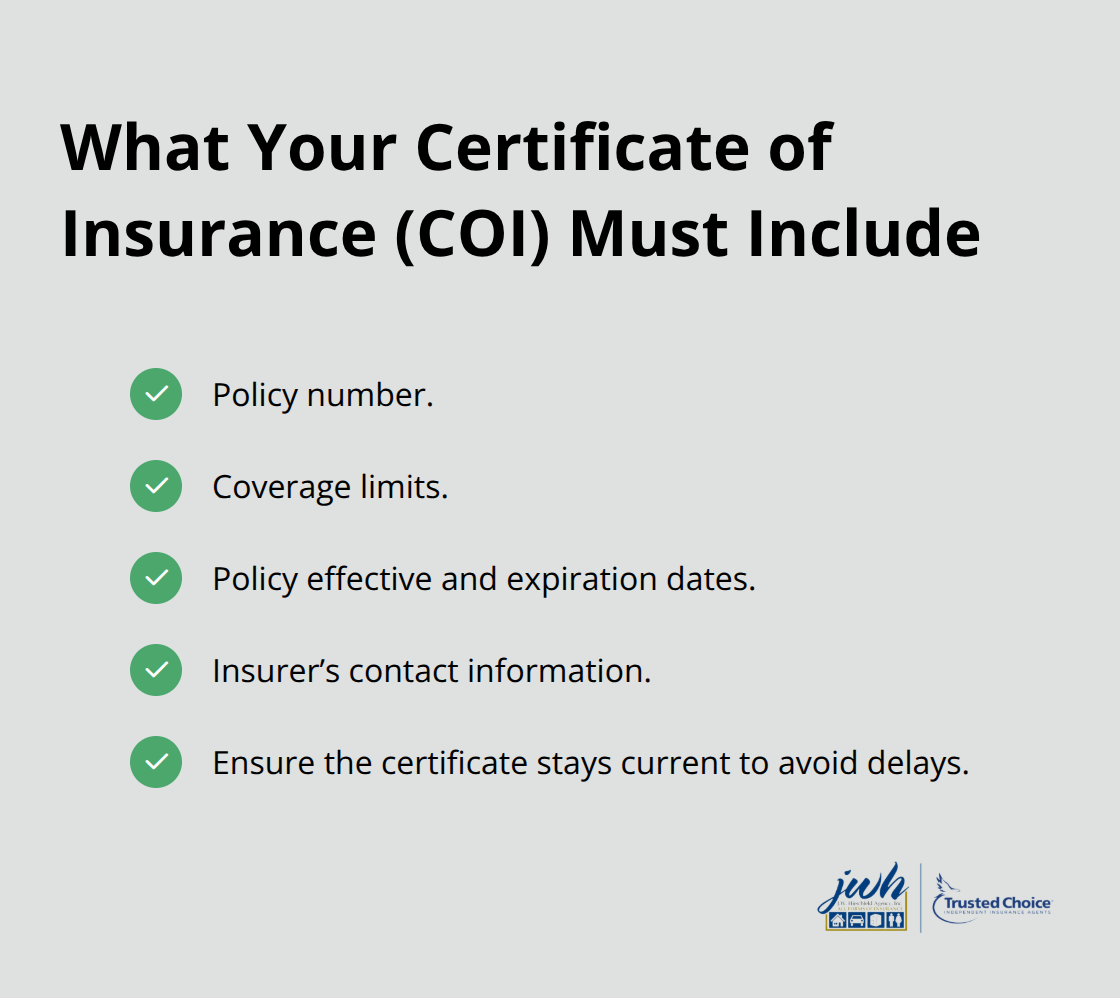
Nearly every landlord, client, and contractor will demand an ACORD certificate of insurance before you start work, and many contracts now require you to name them as an additional insured on your policy. The New York State Insurance Department regulates insurance agents, so working with a licensed independent agent protects you from unlicensed brokers who might issue invalid certificates or miss coverage gaps. Your certificate must list your policy number, coverage limits, policy dates, and your insurer’s contact information-and it must remain current. Expired certificates kill deals and damage business relationships.
Getting Ahead of Certificate Requests
Many businesses wait until a contract is signed to request a certificate, which creates delays and frustration. The smarter approach is to request your certificate immediately after your policy renews and keep copies on hand. If a client asks for additional insured status, your agent can add them to your policy with an endorsement, usually at no extra cost. An independent agent who understands New York’s business environment can also advise you on whether your current limits match what your contracts actually demand, catching gaps before they become problems.
Why Local Expertise Matters for Compliance
Working with an independent agent means someone reviews your specific contracts and operations rather than applying a one-size-fits-all approach. This hands-on review ensures liability coverage protects your assets in the event you or your employees cause bodily injury or property damage to another, positioning you to move forward with confidence when new opportunities arrive.
How to Pick Coverage That Actually Protects Your Business
Match Your Coverage to Real Risks in Your Operation
Your industry determines what risks matter most, and generic policies miss critical exposures. A restaurant faces slip-and-fall claims and food contamination risks that a consulting firm never encounters. A contractor working on scaffolding needs protection against New York Labor Law 240 liability, while a photographer’s main exposure comes from damaged client property or copyright disputes. General liability insurance claims rank among the most frequent for small businesses, so your coverage must match where accidents actually happen in your operation.
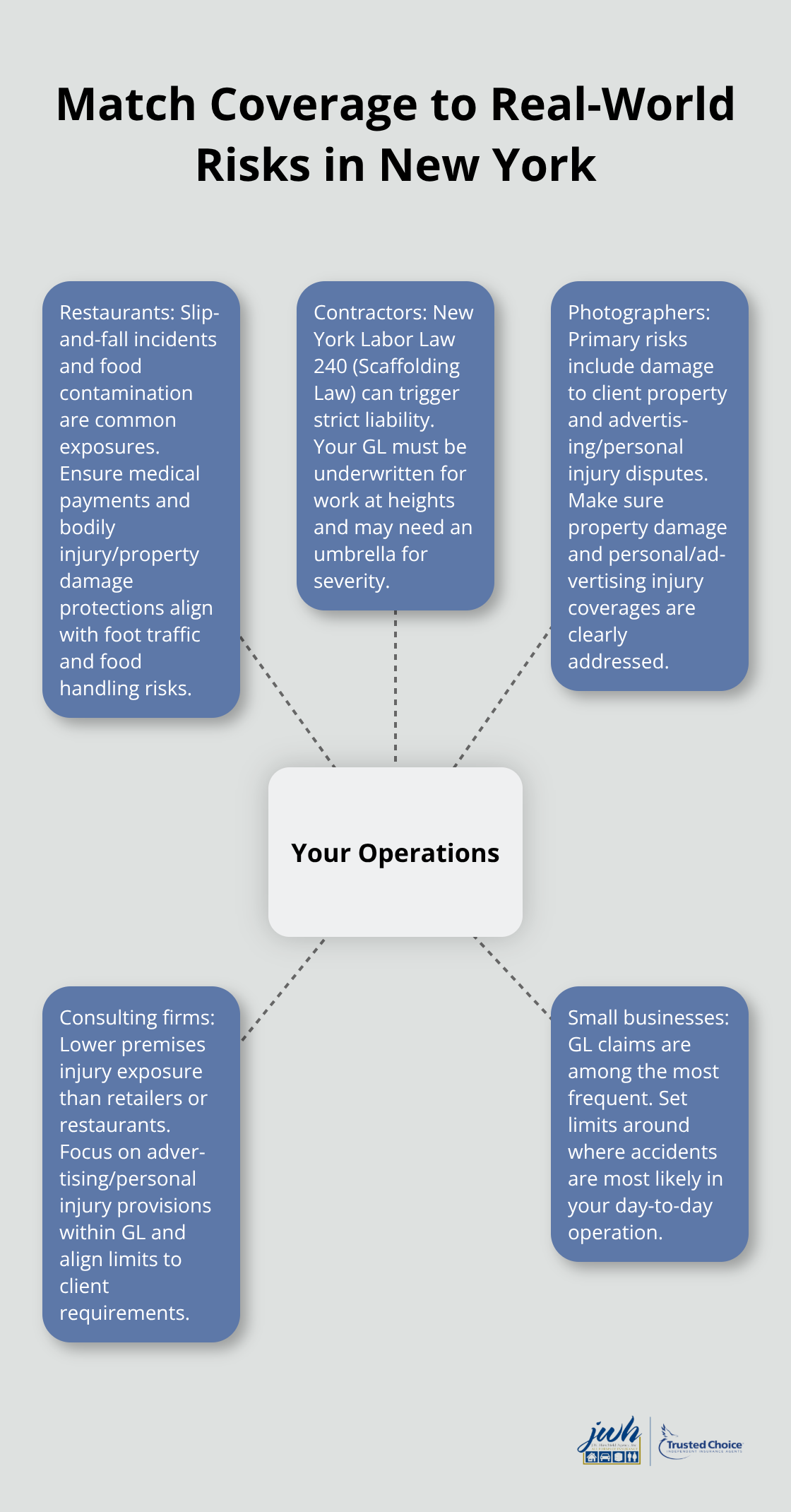
Start by listing the three to five biggest ways someone could get hurt or property could get damaged because of what you do. Construction companies should account for work at heights and equipment damage. Retailers need to consider customer injuries from products or premises conditions. Service providers must factor in liability from tools, vehicles, or work performed at client locations. This exercise sounds simple, but most business owners skip it and buy coverage based on what competitors have or what an online quote suggests.
Bundle Policies to Cut Costs and Close Coverage Gaps
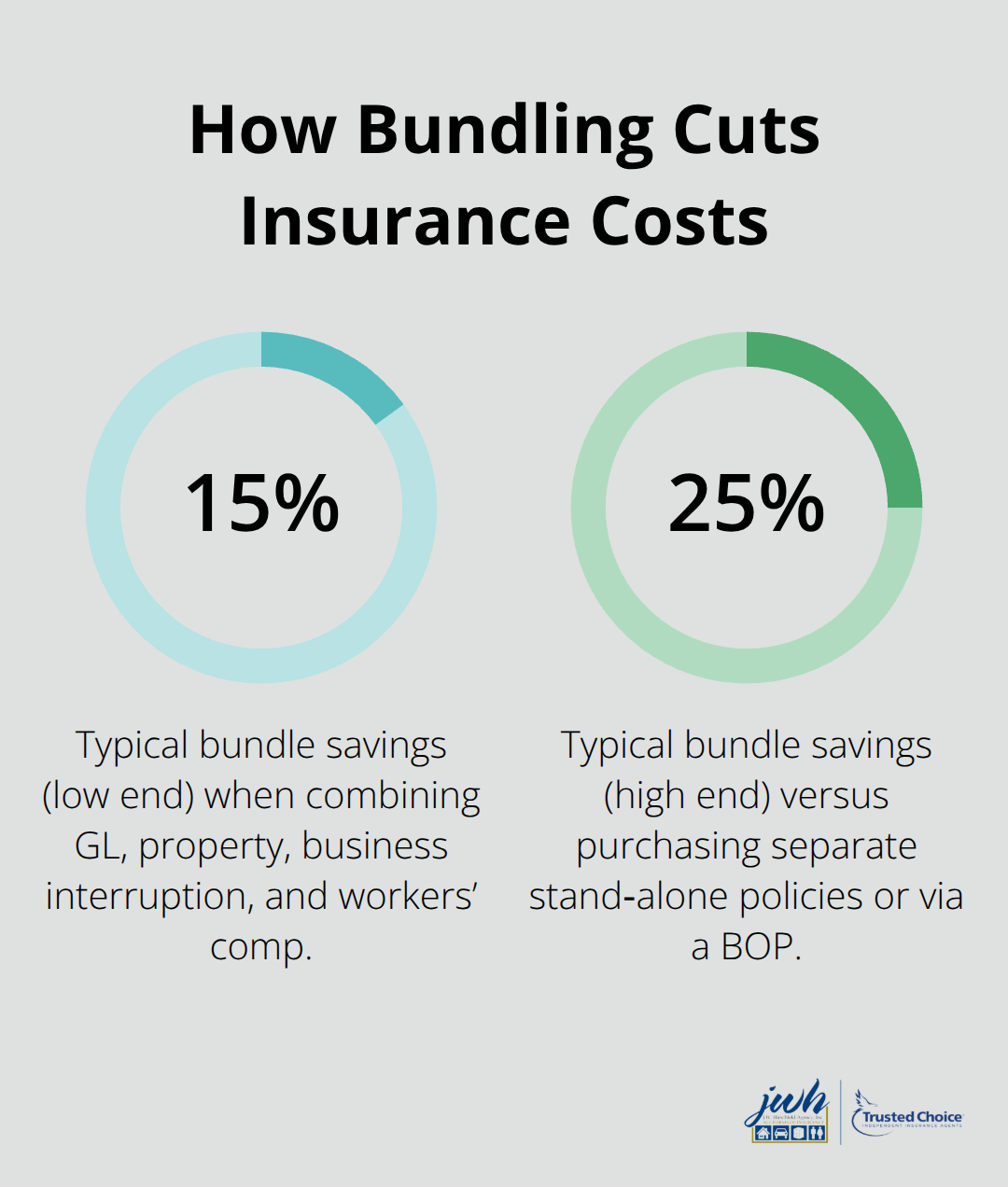
Bundling your general liability with commercial property, business interruption, and workers’ compensation typically saves 15 to 25 percent compared to buying policies separately, according to industry data. A Business Owner’s Policy bundles these coverages specifically designed for small to mid-sized operations. If your business handles digital operations or customer data, adding cyber liability protection costs roughly $30 to $50 monthly and covers breach response costs and ransomware expenses-increasingly important as New York businesses face more digital threats.
Work with an Independent Agent Who Knows New York
The real difference between adequate protection and overpaying for unnecessary coverage comes down to working with someone who understands your specific operation and New York’s regulatory landscape. An independent agent represents multiple carriers rather than pushing one company’s products, meaning they negotiate better rates for your risk profile and catch coverage gaps that online quotes miss. Independent agents review your actual contracts, inspect your location if needed, and recommend limits based on what your clients demand and what your assets need protection. This hands-on approach costs nothing extra but prevents the expensive mistake of discovering during a claim that your policy doesn’t cover the exposure that caused the loss.
Final Thoughts
General liability insurance in New York protects your business from financial devastation when accidents happen. A single slip-and-fall claim or property damage incident costs tens of thousands of dollars, and New York’s elevated jury verdicts mean claims frequently exceed $100,000. Without proper coverage, one accident wipes out years of profit and threatens your ability to operate.
Coverage requirements vary dramatically based on your contracts, industry, and location, which means what works for a retail shop fails for a construction company. Online quotes and generic policies miss these critical details, leaving you exposed to gaps that emerge during claims. An independent agent reviews your actual contracts, understands New York’s specific regulatory environment, and negotiates with multiple carriers to find general liability insurance NY that matches your real risks at competitive rates.
Contact JW Hirschfeld Agency, Inc. to discuss your operation and review your coverage needs. Gather your lease, client contracts, and vendor agreements, then speak with an independent agent who understands New York business. They’ll assess your industry-specific risks, recommend bundled policies that provide comprehensive protection, and handle certificate requests and renewals so you operate with confidence.
The information provided in this blog is for general informational purposes only and does not constitute legal, financial, or insurance advice. Coverage options, terms, and availability may vary. Please consult with a licensed professional for advice specific to your situation.
Artificial intelligence may have been used to generate text and images in some blog articles.