

General liability insurance protects your business from costly claims when someone gets hurt on your property or you accidentally damage their belongings. Most business owners underestimate how quickly a single incident can drain their finances.
At JW Hirschfeld Agency, Inc., we help business owners understand general liability policy essentials so they can stop guessing and start protecting what they’ve built. This guide walks you through what’s covered, where gaps hide, and how to pick the right policy for your specific situation.
What Your General Liability Policy Actually Protects
Bodily Injury Claims from Third Parties
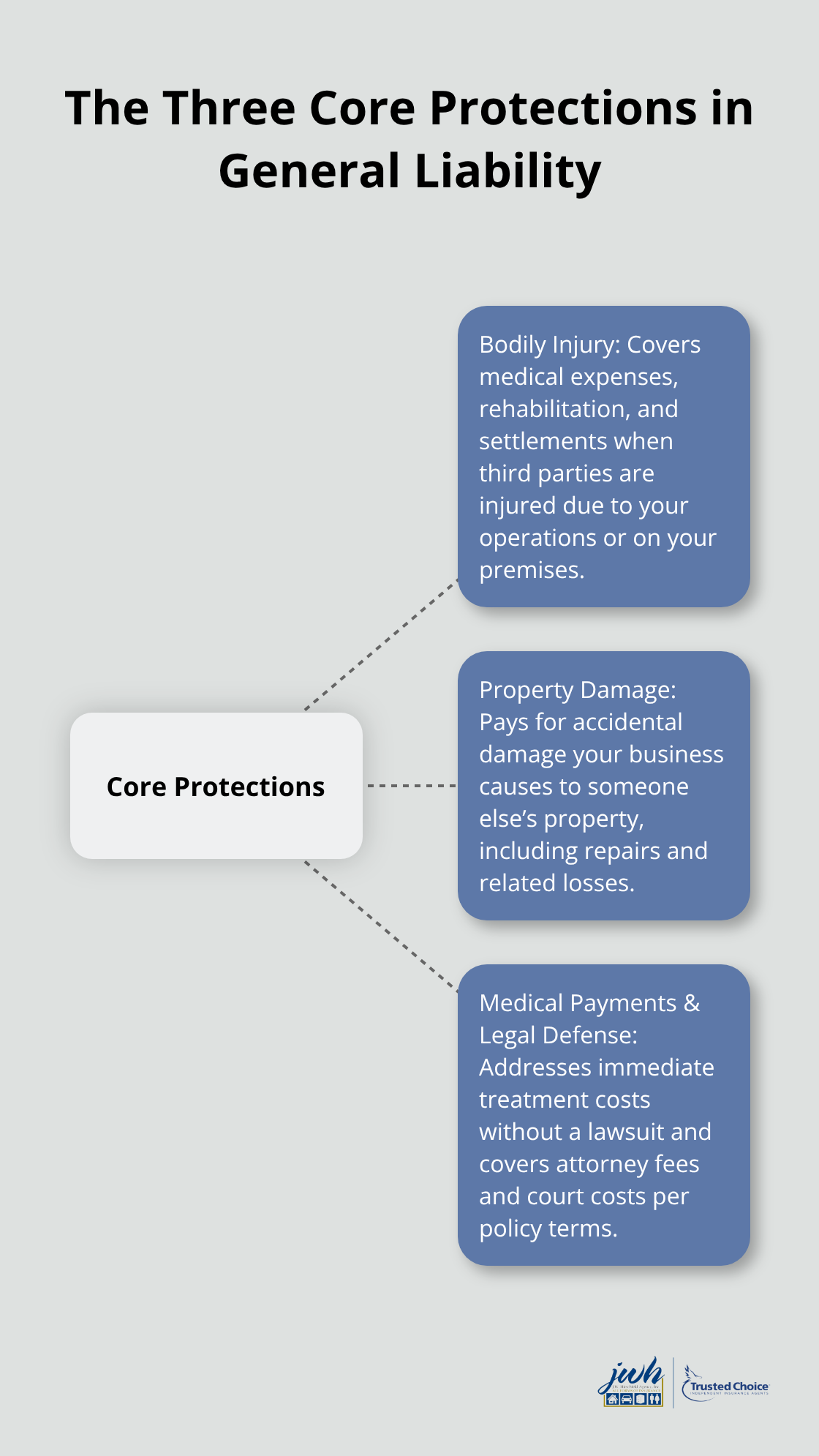
General liability insurance covers three core areas that protect your business from financial devastation when things go wrong. First, bodily injury claims happen when someone gets injured because of your business operations or on your property. A customer slips in your retail store, a client trips over equipment at your job site, or a visitor gets hurt at your office-these incidents result in medical bills, lost wages, and legal judgments that reach six figures quickly. Your general liability policy covers medical expenses, rehabilitation costs, and court settlements up to your policy limit.
Property Damage Liability
Property damage liability forms the second protection, covering accidental damage you cause to someone else’s belongings or their building. You back a company vehicle into a client’s storefront, your equipment damages their flooring during installation, or a fire originating from your business spreads to an adjacent property-these situations create significant financial exposure. The costs mount quickly when property damage claims involve structural repairs or business interruption losses for the affected party.
Medical Payments and Legal Defense Costs
The third component includes medical payments coverage and legal defense costs. Medical payments cover immediate treatment expenses for injured parties without requiring them to file a lawsuit, which often prevents claims from escalating. Legal defense costs cover attorney fees, court expenses, and investigation costs if someone sues your business, and these expenses are typically paid separate from your coverage limit (though some carriers handle defense costs differently). This distinction matters because a $1 million policy doesn’t mean you have $1 million after legal fees are paid-your attorney’s bill comes out of that limit in many policies.
Matching Coverage to Your Industry
Understanding these three components helps you identify whether your current coverage actually matches your business operations. A construction company faces different bodily injury risks than a consulting firm, and a manufacturer needs different property damage protection than a service-based business. Your industry determines which coverage areas matter most and what limits actually protect you. The gaps in your standard policy become obvious once you map these three protections against your specific operations-which is exactly where many business owners discover they’re either overinsured or dangerously underprotected.
Common Gaps in General Liability Coverage
Why Standard Policies Leave You Exposed
Standard general liability policies come with built-in exclusions that leave many business owners exposed to serious financial risk. Insurance carriers design these policies around common scenarios, which means anything outside their standard assumptions gets denied when you file a claim. A bakery owner discovers their policy excludes product liability after a customer gets sick from contaminated goods. A contractor finds out their coverage doesn’t apply to work performed more than 50 miles from their office. A salon owner learns that chemical burns from hair treatments fall under professional liability, not general liability. These aren’t rare edge cases-they’re situations that happen regularly across different industries, and business owners only discover these gaps when it’s too late.
Industries That Face the Biggest Coverage Shortfalls
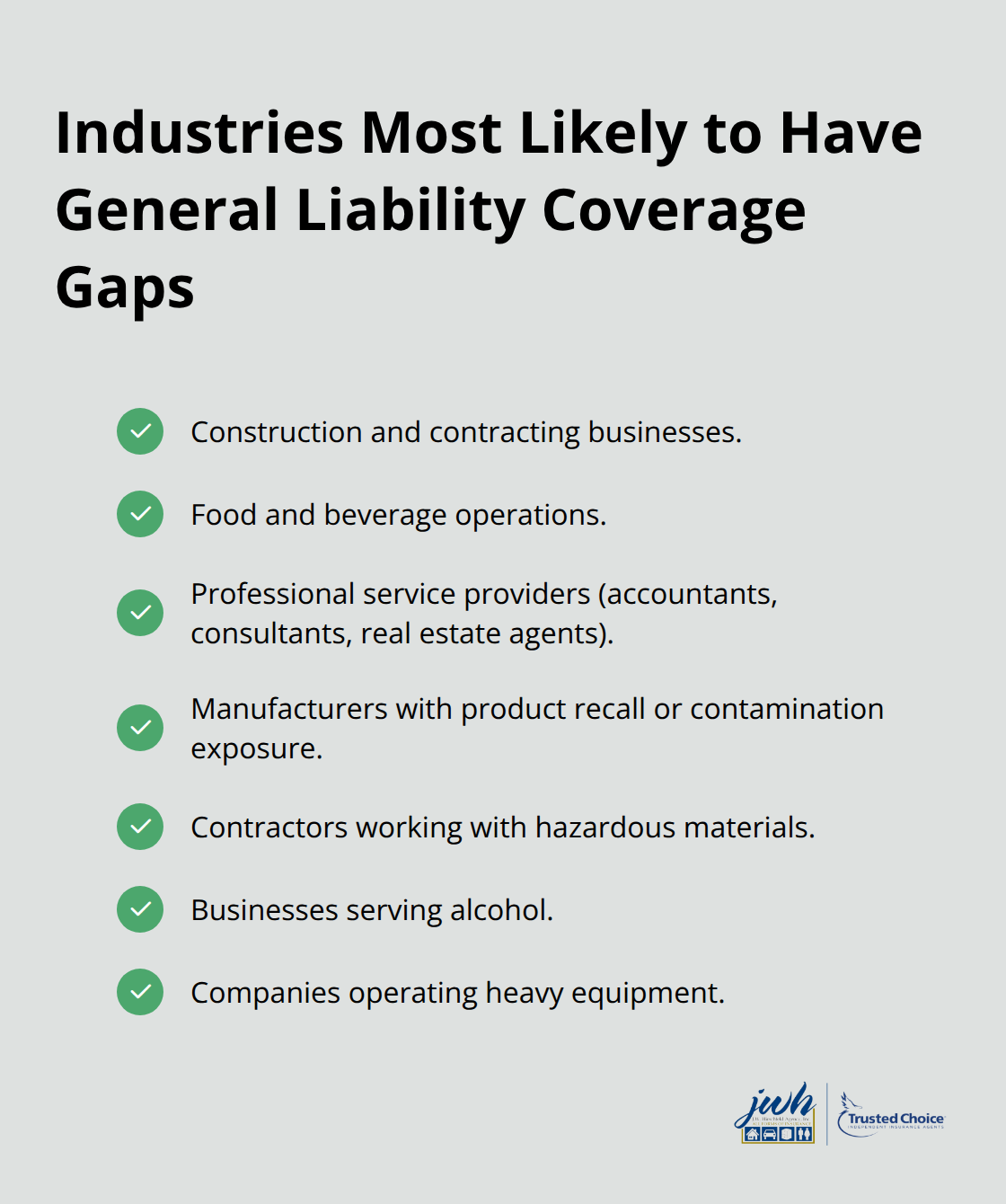
The industries that face the biggest coverage shortfalls operate in specialized niches where standard policies simply don’t fit. Construction and contracting businesses need coverage for equipment damage, completed operations, and contractual liability that basic policies exclude. Food and beverage operations require product liability coverage that standard general liability doesn’t include. Professional service providers like accountants, consultants, and real estate agents need errors and omissions protection that general liability explicitly doesn’t cover. Manufacturers face product recall costs and contamination issues that standard policies won’t touch. Contractors working with hazardous materials, businesses serving alcohol, and companies operating heavy equipment all sit in this dangerous gap where their standard policy sounds adequate until a claim gets denied.
How to Identify What Your Business Is Missing
Start by listing every service or product you deliver, every location where you operate, and every type of customer or client interaction you have. Then ask your independent insurance agent to map each of those activities against your current policy exclusions. This exercise typically reveals that your standard policy covers only a portion of your actual business operations, leaving dangerous blind spots.
An independent agent can identify these gaps and structure additional coverage like product liability, professional liability, or pollution liability that fills the holes in your standard policy. The cost of adding these coverages usually runs far less than what a single denied claim would cost your business. Once you understand what gaps exist in your current protection, the next step involves selecting the right policy limits and comparing options that actually fit your operations.
How to Choose the Right General Liability Policy for Your Business
Assess Your Actual Financial Exposure
The biggest mistake business owners make is copying their competitor’s coverage limits or picking a round number like $1 million without understanding what that limit actually protects. Your coverage limit should reflect your specific financial exposure, not industry averages. A small consulting firm with five employees and $500,000 in annual revenue faces completely different risk than a commercial contractor with 20 employees and $3 million in revenue. Your limit needs to cover not just typical claims but the worst-case scenario your business could reasonably face.
Start by calculating your maximum potential loss: what’s the worst bodily injury or property damage incident your operations could cause? A retail store owner should consider the cost of a customer hospitalization plus legal defense. A contractor should factor in property damage to a client’s building plus business interruption losses. A restaurant owner needs to account for foodborne illness claims affecting multiple customers. These worst-case scenarios typically guide your minimum coverage limit.
Compare Quotes Across Multiple Carriers
Insurance pricing for general liability varies dramatically between carriers because they assess risk differently and offer different underwriting credits. A construction company might pay $1,200 annually with one carrier and $1,800 with another for identical coverage. Independent agents have access to multiple carriers, which means they can show you side-by-side quotes that reveal where you’re overpaying or underinsured.
When comparing quotes, ignore the premium price alone and examine what each quote actually covers, what exclusions exist, and what deductible level makes sense for your cash flow. A $2,500 deductible might save you $300 annually but create cash flow problems if you face a claim. A $1,000 deductible costs more upfront but protects your working capital. Request quotes with different deductible levels and coverage limits so you can see how each variable affects your total cost.
Understand Defense Cost Structures
The quotes should also specify whether legal defense costs are paid inside or outside your coverage limit, since this distinction directly impacts your actual protection. Some carriers pay defense costs separately from your limit, while others deduct them from your total coverage amount. This difference matters significantly when you face a lawsuit (a $1 million policy with defense costs paid inside your limit leaves you with less actual coverage than a policy where defense costs are paid outside).
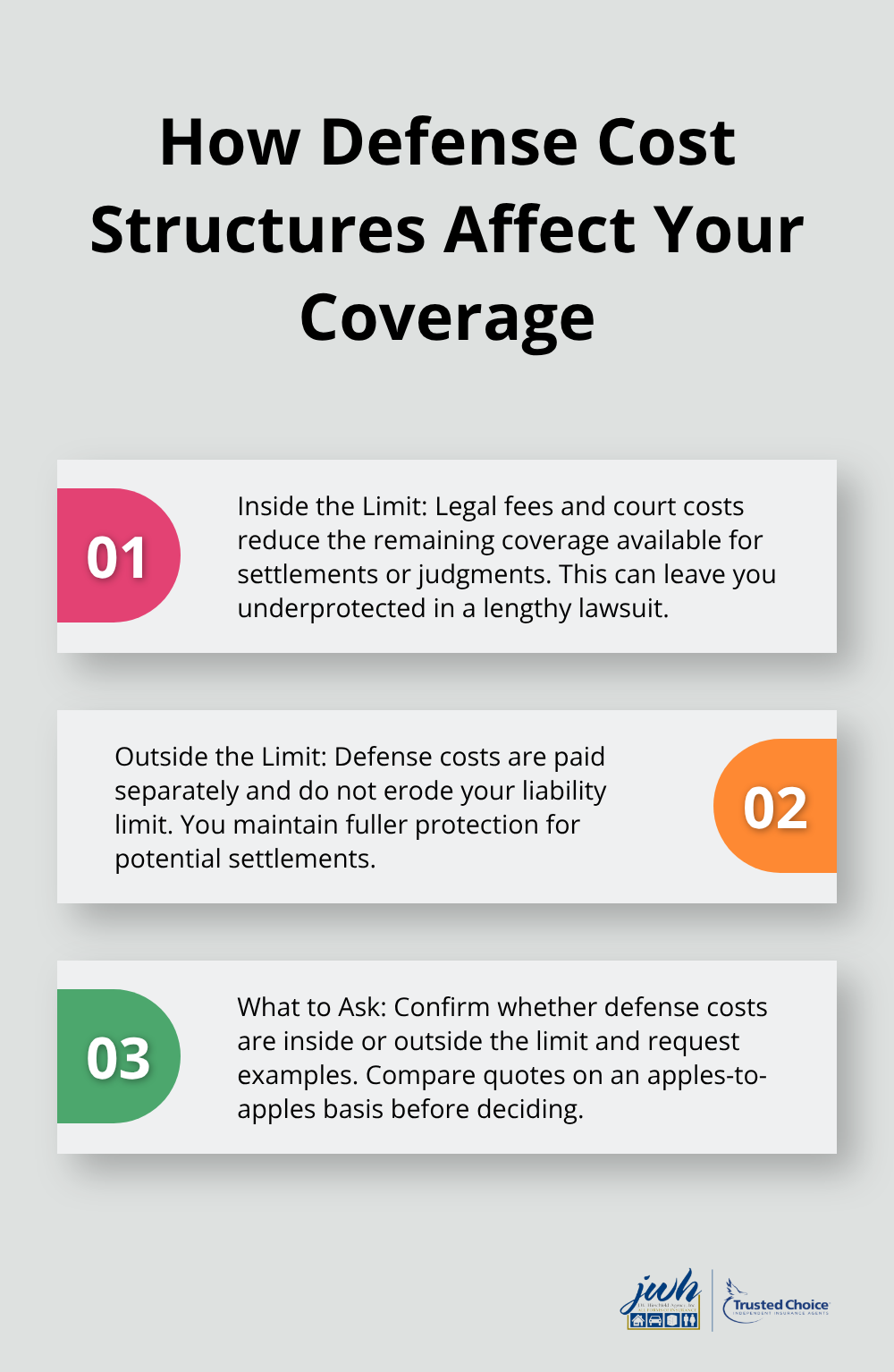
Ask each carrier to clarify their specific approach so you can make an accurate comparison.
Final Thoughts
General liability policy essentials come down to three realities: standard policies contain gaps, your coverage limits must match your actual risk, and comparing quotes across multiple carriers saves money while strengthening protection. Most business owners learn these truths only after a claim gets denied or they realize their policy excludes their primary business activity. The financial damage from underinsurance far outweighs the cost of getting it right from the start.
An independent insurance agent gives you access to multiple carriers and the expertise to spot coverage gaps specific to your operations. Unlike captive agents who represent one company, independent agents show you side-by-side quotes and explain exactly what each policy covers, what it excludes, and how defense costs work under different structures. They understand your industry’s unique risks and recommend additional coverages like product liability or professional liability that fill holes in your standard policy.
Contact an independent agent who can assess your current coverage against your actual business operations and request quotes with different deductible levels so you can see the real cost of protection. Ask specifically about exclusions that might apply to your industry and what additional coverages would fill those gaps. Visit JW Hirschfeld Agency, Inc. to discuss your general liability needs with agents who understand your local business environment and deliver quotes from carriers that actually compete for your business.
The information provided in this blog is for general informational purposes only and does not constitute legal, financial, or insurance advice. Coverage options, terms, and availability may vary. Please consult with a licensed professional for advice specific to your situation.
Artificial intelligence may have been used to generate text and images in some blog articles.