

Running a business fleet in New York means dealing with complex insurance rules. State requirements, coverage options, and pricing all factor into protecting your vehicles and bottom line.
At JW Hirschfeld Agency, Inc., we help business owners cut through the confusion around NY commercial auto insurance. Our team works with you to find coverage that meets legal requirements while keeping costs reasonable.
What Coverage Do You Actually Need in New York?
State Minimums Fall Short for Most Businesses
New York mandates state minimum liability coverage in New York: $25,000 bodily injury per person, $50,000 per accident, and $10,000 property damage. These minimums exist for a reason, but they protect your business poorly. A single serious accident in New York easily exceeds these thresholds. Medical costs alone in urban areas like Brooklyn or Manhattan routinely push past $50,000, and property damage claims involving multiple vehicles climb fast. Most businesses should carry at least 100/300/100 limits, effectively doubling the state minimum for bodily injury coverage.
Required Protections You Cannot Skip
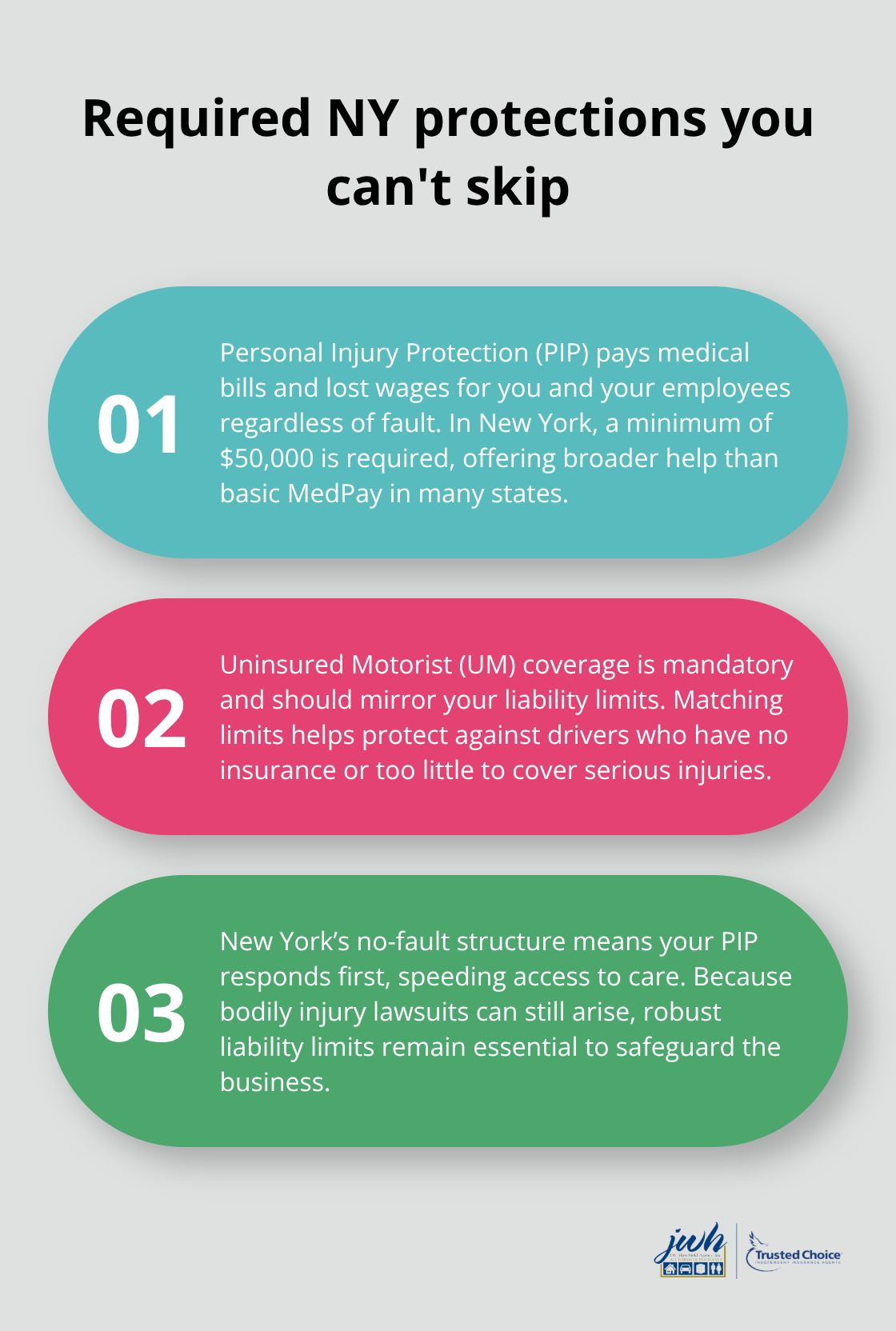
New York requires $50,000 in Personal Injury Protection, which covers medical bills and lost wages regardless of fault-this is broader than Medical Payments coverage offered in other states. Uninsured Motorist coverage is mandatory, and you should select limits matching your liability coverage. The no-fault structure means your own PIP kicks in first, protecting your employees but making comprehensive liability limits even more important when your business faces responsibility.
Optional Coverage That Protects Your Fleet
Beyond legal requirements, consider Hired and Non-Owned Auto coverage if employees drive personal vehicles for business tasks. Collision and Comprehensive coverage protects owned vehicles from accidents and weather damage. Towing and Labor provides roadside assistance when your vehicles break down. Food trucks, landscaping services, and contractors operating in New York face additional exposure due to equipment, cargo, or specialized operations-Loading and Unloading coverage and bobtail protection for tractors without trailers address these specific risks.
Pricing Varies Dramatically by Your Business Profile
The average New York commercial auto policy runs around $275 monthly or $3,305 annually, but this varies dramatically by profession, vehicle size, driving history, and location. Construction contractors typically pay less than rideshare drivers, and vehicles operating primarily in dense urban zones cost more than those in rural areas. An independent agent represents multiple carriers, shops rates on your behalf, and identifies bundling opportunities-combining commercial auto with General Liability or Business Owner’s Policies often yields savings around 7 to 10 percent.
Your specific business needs shape which coverage options matter most, and that’s where understanding your fleet’s actual exposure becomes critical for the next phase of protection.
Building the Right Coverage for Your Fleet
Liability Coverage Forms Your Legal Foundation
Liability coverage forms the legal foundation of any commercial auto policy in New York, but the state minimum of 25/50/10 leaves your business dangerously exposed. A single accident involving multiple vehicles or serious injuries generates $100,000 or more in claims. Contractors working on job sites, delivery services navigating congested streets, and food truck operators face heightened exposure because their vehicles interact with the public constantly. We recommend carrying at least 100/300/100 limits for most operations-this means $100,000 per person and $300,000 per accident for bodily injury, plus $100,000 for property damage. Urban areas like Brooklyn command higher settlements, so businesses operating in dense zones should consider even higher limits.
Collision and Comprehensive Coverage Protect Your Assets
Your liability coverage protects third parties when your vehicle causes injury or property damage, but it does nothing if your own fleet gets damaged. Collision coverage pays for repairs or replacement when your vehicles collide with other cars, objects, or structures-regardless of fault. Comprehensive coverage handles non-collision damage like theft, vandalism, weather events, or animal strikes. For businesses with vehicles financed or leased, lenders typically require both. Even if you own vehicles outright, collision and comprehensive make financial sense if you cannot absorb replacement costs. A used delivery van costs $15,000 to replace; a food truck equipped with kitchen gear runs $30,000 or more. Skipping these coverages means one accident or theft cripples operations for weeks.
Uninsured and Underinsured Motorist Coverage Fills Critical Gaps
Uninsured and underinsured motorist coverage protects your employees and business when at-fault drivers lack adequate insurance. New York requires uninsured motorist coverage as part of every commercial auto policy, but many business owners select the state minimum of 25/50. This fails to match higher liability limits you carry. If your business carries 100/300/100 liability, your uninsured motorist coverage should mirror those limits. An underinsured motorist driver might carry only the state minimum 25/50, leaving a $75,000 gap if they cause a serious accident to your employee. Your underinsured motorist coverage fills that gap, covering medical expenses, lost wages, and pain and suffering that the at-fault driver’s policy won’t pay.
FMCSA Requirements Demand Higher Limits for Certain Operations
In New York’s no-fault system, your own Personal Injury Protection covers initial medical costs regardless of fault, but uninsured and underinsured motorist coverage provides additional recovery when the other driver bears responsibility. The Federal Motor Carrier Safety Administration establishes higher liability requirements for vehicles with USDOT numbers-some operations require $750,000 or $1,000,000 in coverage. An independent agent represents multiple carriers and understands which coverage combinations work for your specific operation, helping you carry appropriate limits without overpaying for unnecessary protection. This expertise becomes especially valuable when your fleet operates across state lines or handles specialized cargo, as requirements shift based on vehicle type and use.
What Really Drives Your NY Commercial Auto Costs
Your Profession Shapes Premium Calculations
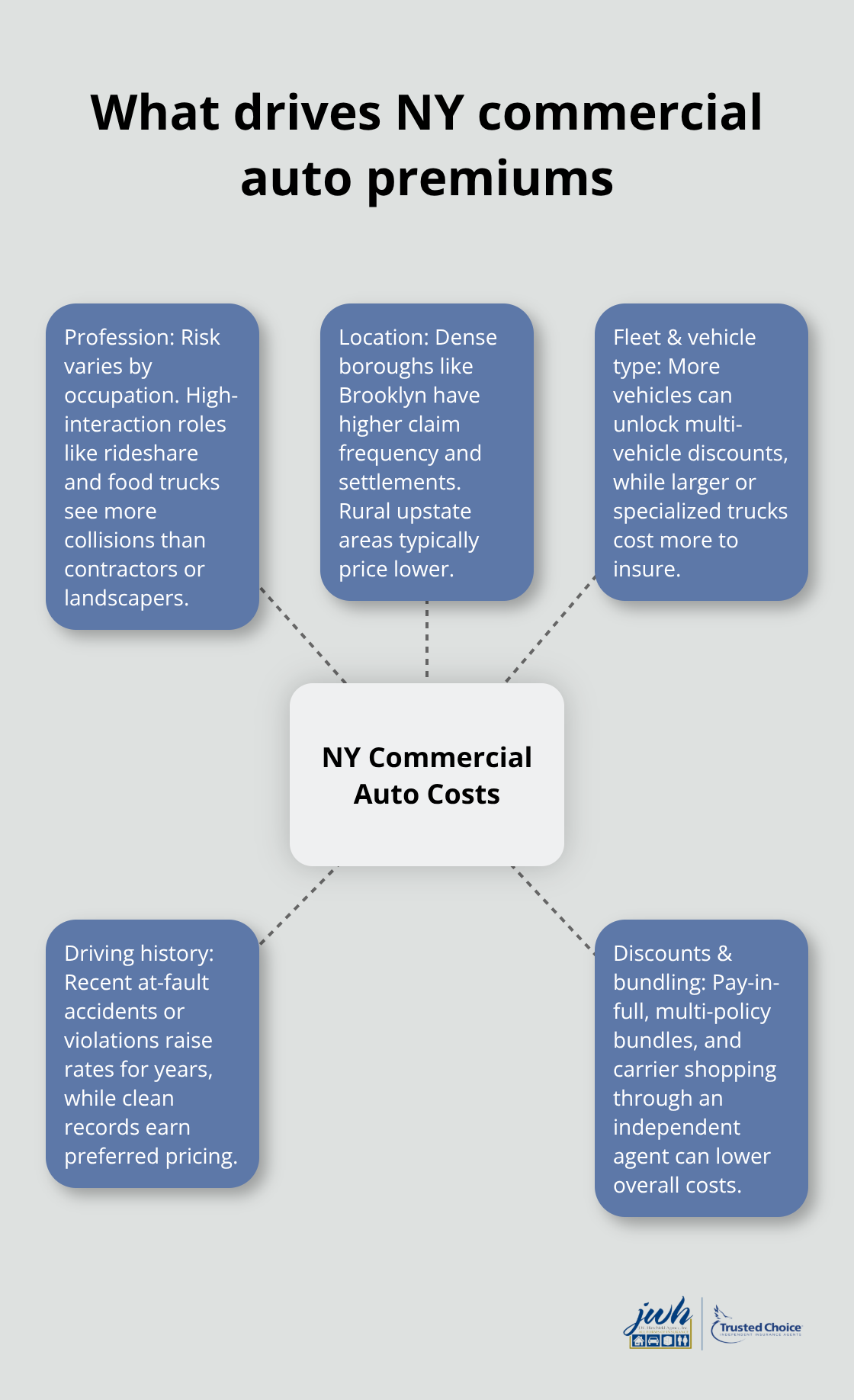
Your profession matters far more than most business owners realize when calculating commercial auto premiums. A contractor operating a pickup truck in suburban Nassau County pays dramatically less than a rideshare driver working Brooklyn streets or a food truck operator running deliveries across multiple boroughs. Construction companies, landscapers, and snow plow services typically sit at the lower end because their vehicles operate during predictable hours and face lower accident frequency. Rideshare, delivery services, and food truck operations face the opposite reality-constant public interaction, unpredictable traffic patterns, and higher collision exposure drive premiums up 40 to 60 percent or more depending on the specific borough and service model.
Fleet Size and Vehicle Type Impact Your Bottom Line
Your fleet size compounds these calculations significantly. A single vehicle operation pays a baseline rate, but adding a second vehicle doesn’t simply double your premium-most carriers apply modest discounts for multiple vehicles, typically reducing the per-vehicle cost by 5 to 15 percent depending on the insurer. A small business fleet coverage approach qualifies for more aggressive pricing than two vehicles, making fleet expansion actually cheaper on a per-vehicle basis. Vehicle type and size significantly influence what you pay each month. Larger commercial trucks, box trucks, and vehicles carrying specialized equipment command higher premiums than standard pickups because repair costs escalate and liability exposure increases proportionally. A food truck equipped with kitchen equipment costs $30,000 or more to replace, justifying higher comprehensive and collision premiums.
Driving History and Location Create the Largest Gaps
Driving history shapes your entire cost structure-a single at-fault accident or moving violation increases premiums by 20 to 30 percent for three to five years, while a clean record unlocks access to the lowest-tier pricing that carriers reserve for their safest operators. Location within New York creates the largest premium variance after profession and driving history. Brooklyn consistently ranks as the most expensive borough due to congestion, claim frequency, and settlement amounts that routinely exceed other regions. A contractor operating primarily in Brooklyn pays 30 to 50 percent more than an identical business in rural upstate areas. Urban density drives repair costs upward-body shops in Manhattan charge premium rates, and insurance carriers price accordingly.
Discounts and Bundling Strategies Reduce Costs Substantially
Paying your annual premium in full rather than monthly installments saves 10 percent or more with most carriers, a straightforward reduction that compounds when combined with other discounts. Bundling commercial auto with General Liability, Business Owner’s Policies, or commercial property coverage generates savings, making an integrated approach substantially cheaper than purchasing policies separately. Independent agents represent multiple top carriers and shop your exact business profile across their entire network-they identify which insurer offers the best rates for your specific profession, fleet size, and location rather than forcing you into a single carrier’s pricing structure.
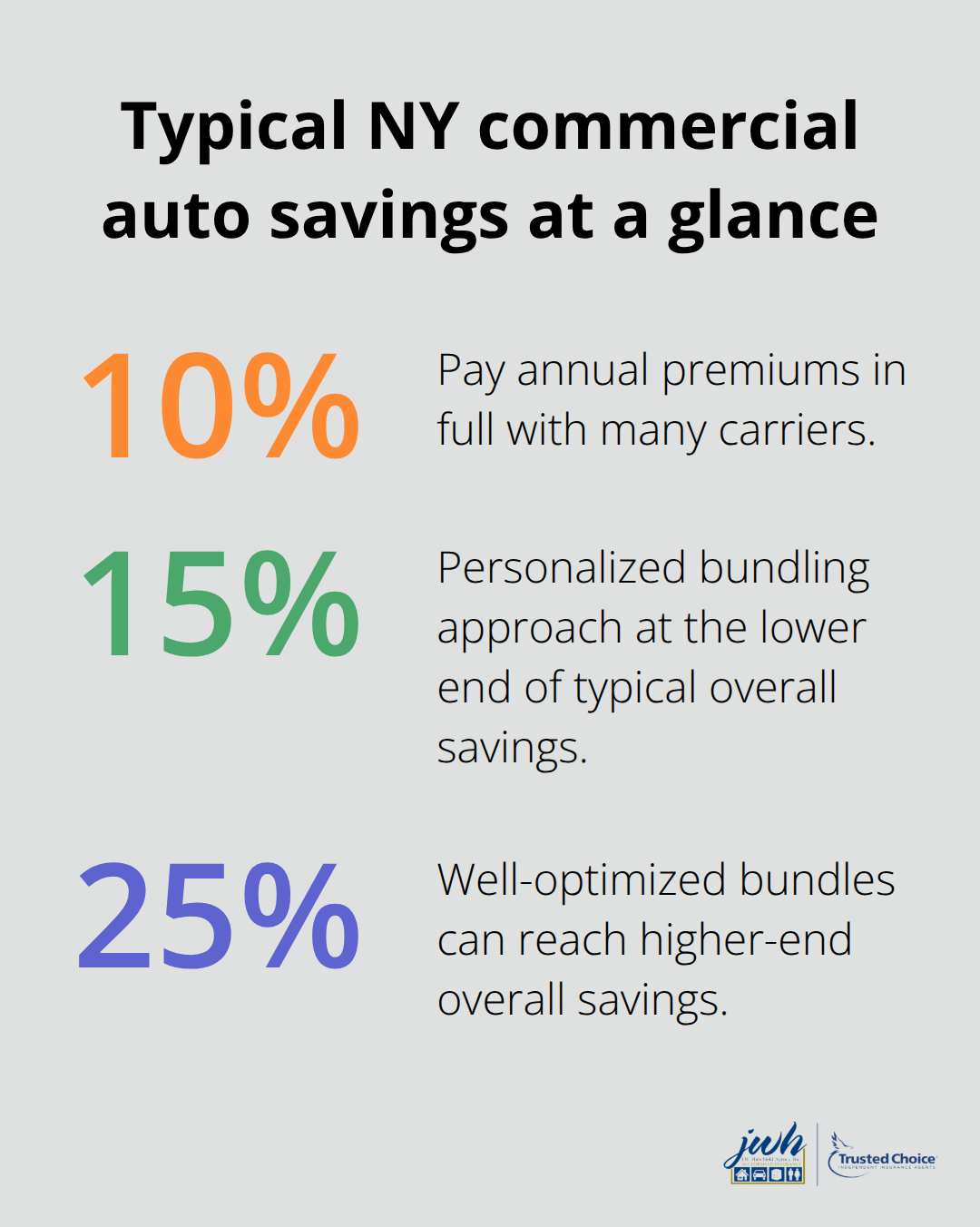
This access to approximately 15 different insurers means your contractor profile receives quotes against GEICO’s specialized contractor plans, Progressive’s commercial offerings, and regional carriers that might price your exact scenario more competitively. An independent agent also layers bundling discounts strategically, combining your auto policy with property coverage to maximize savings while ensuring no coverage gaps exist (this personalized approach typically yields 15 to 25 percent overall savings compared to online quotes or captive agent relationships where you accept whatever one company offers).
Final Thoughts
New York’s commercial auto insurance requirements extend far beyond the state minimum of 25/50/10. Your business operates in a complex environment where liability exposure, fleet composition, and location determine whether your coverage protects you adequately or leaves you financially vulnerable. A single accident easily exceeds $100,000 in claims, making appropriate collision, comprehensive, and uninsured motorist coverage essential for most operations.
Finding competitive rates requires shopping multiple carriers rather than accepting one insurer’s quote. Independent agents represent top carriers and understand how each one prices your specific business profile, whether you run a construction company, food truck operation, or delivery service. They identify bundling opportunities that combine your NY commercial auto insurance with general liability or business owner’s policies, generating savings that online quotes cannot match, and they act as your advocate during claims to fight for fair settlements.
Contact JW Hirschfeld Agency, Inc. today to discuss your fleet’s coverage gaps and discover how competitive shopping and bundling strategies can reduce your premiums while strengthening your protection.
The information provided in this blog is for general informational purposes only and does not constitute legal, financial, or insurance advice. Coverage options, terms, and availability may vary. Please consult with a licensed professional for advice specific to your situation.
Artificial intelligence may have been used to generate text and images in some blog articles.