

Running a business on Long Island means facing unique risks-from coastal weather to competitive local markets. A small business owners policy for Long Island can bundle your property, liability, and business interruption coverage into one affordable package.
We at JW Hirschfeld Agency, Inc. help Long Island firms find the right protection without overpaying for separate policies. This guide walks you through what a BOP covers, where gaps typically appear, and how to choose the right fit for your operation.
What a Business Owners Policy Actually Covers
The Three Essential Components
A Business Owners Policy bundles three essential coverages into one package: general liability, commercial property, and business interruption insurance. General liability protects you if a customer gets injured on your premises or claims your product caused them harm-something that happens frequently on Long Island where foot traffic and service-based businesses are common. Commercial property coverage pays to repair or replace your building, equipment, inventory, and fixtures if fire, theft, or weather damage occurs.
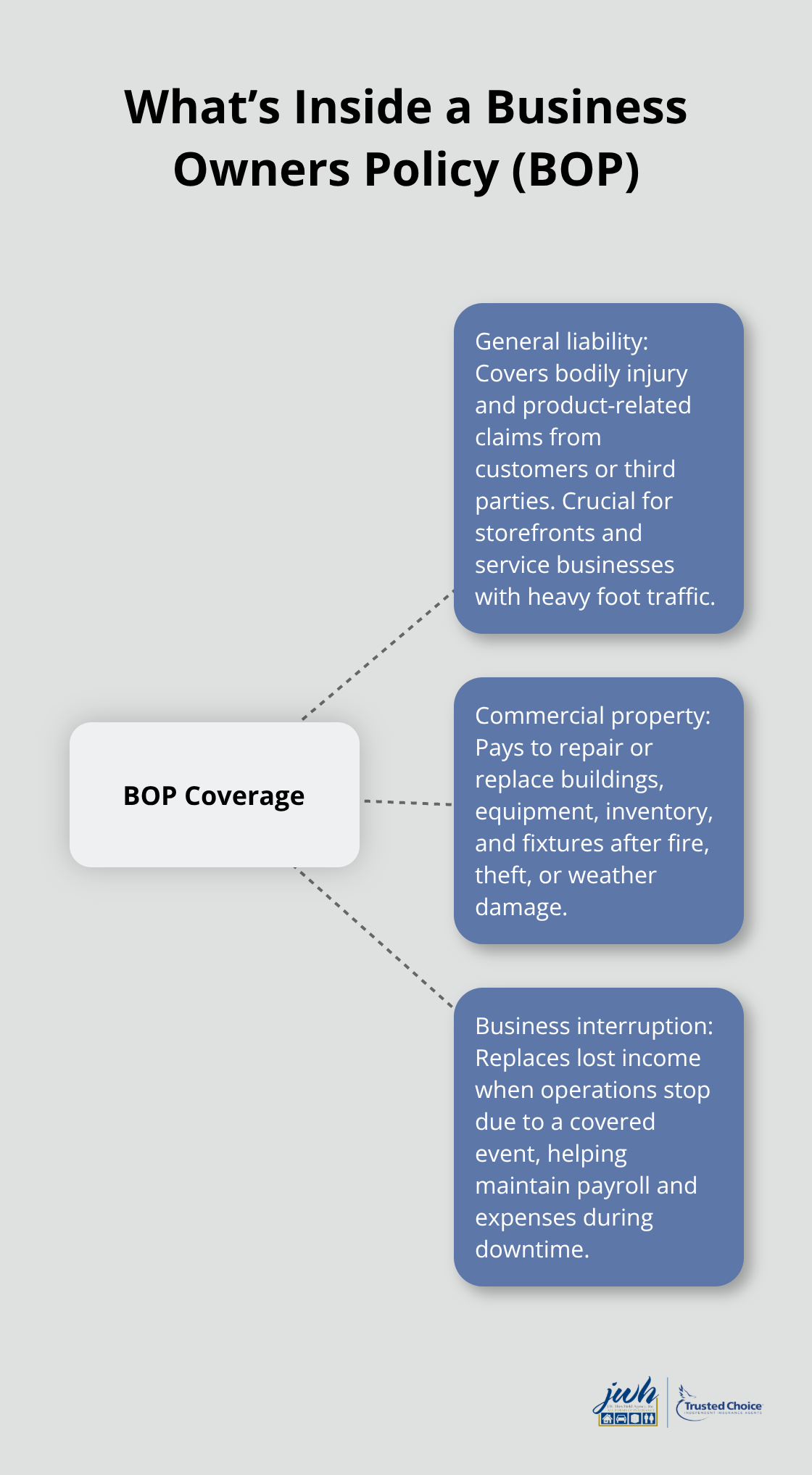
Business interruption insurance covers lost income when you cannot operate due to a covered event, which matters enormously for Long Island firms dependent on seasonal tourism or consistent local customer flow.
Why Business Interruption Coverage Matters
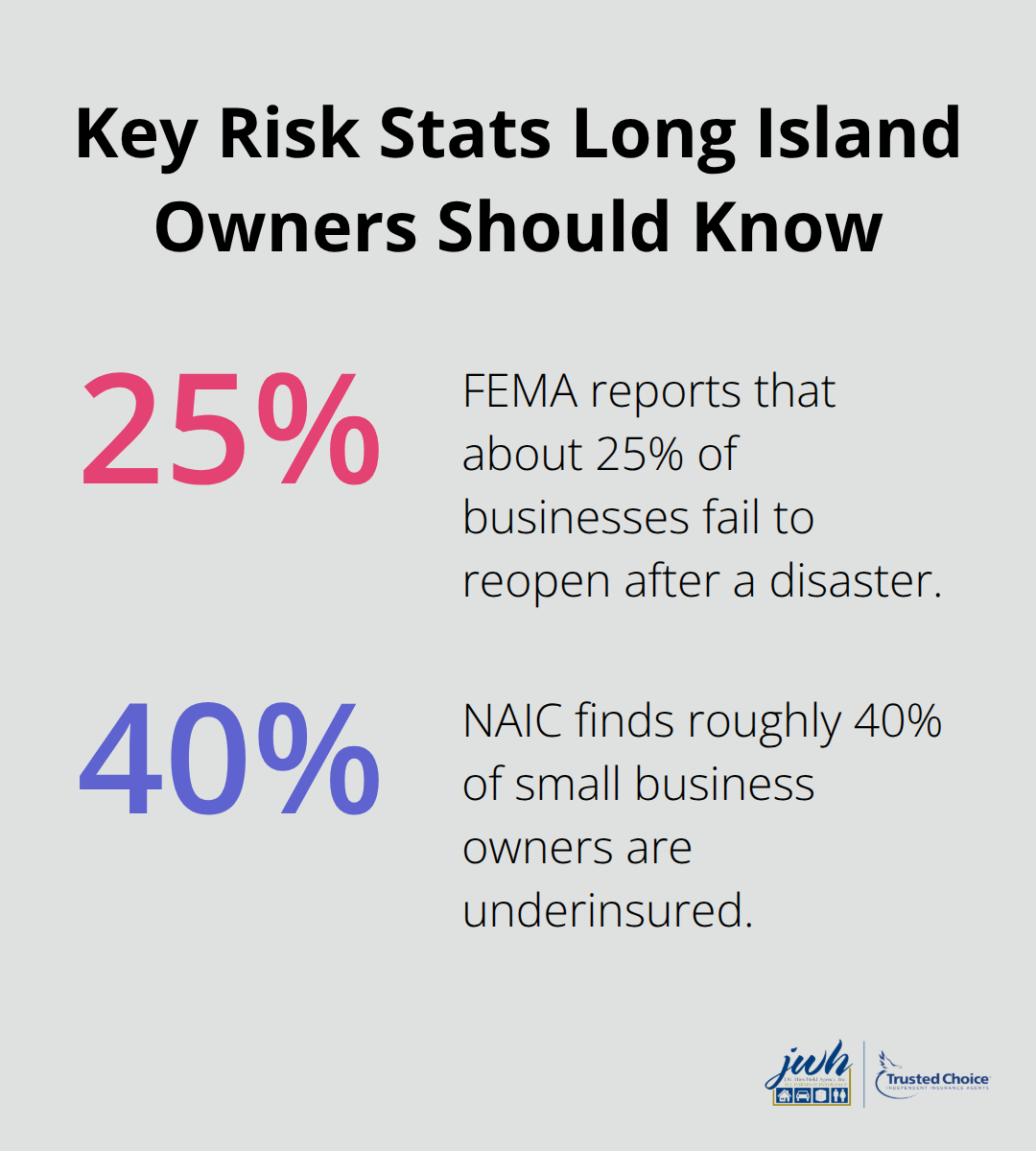
According to the Federal Emergency Management Agency (FEMA), about 25% of businesses fail to reopen after a disaster strikes. This statistic alone makes business interruption protection non-negotiable rather than an optional add-on. A single weather event or fire can halt operations for weeks or months, and without this coverage, your revenue stops while your expenses continue.
The Cost Advantage of Bundling
Purchasing these three coverages separately costs significantly more than buying a BOP because you pay multiple deductibles, administrative fees, and underwriting costs for each policy. A Long Island manufacturer might pay $2,500 annually for standalone general liability, $1,800 for commercial property, and $900 for business interruption insurance-totaling $5,200 before any discounts. The same firm could secure comparable coverage through a BOP for roughly $3,600 to $4,200 annually depending on risk factors, generating savings of $1,000 to $1,600 per year.
Simplified Administration and Local Expertise
BOPs simplify your insurance management since one renewal date, one agent contact, and one policy document replace three separate relationships. Long Island’s coastal location creates specific risks-salt spray corrosion, hurricane exposure, flooding-that independent agents understand deeply and address through properly structured BOPs. Online quotes often miss these local nuances entirely, leaving your business exposed to gaps that matter most in your region.
Moving Forward with the Right Coverage
Understanding what a BOP covers is only the first step. Many Long Island business owners discover significant gaps in their current protection once they examine their actual operations and local risk factors.
Common Coverage Gaps That Cost Long Island Businesses Real Money
Property Damage Hits Harder Than Most Owners Expect
Most Long Island business owners think their current insurance is adequate until something goes wrong. Property damage strikes without warning-a kitchen fire at your restaurant, water damage at your retail storefront, or equipment theft at your service shop-and suddenly you realize your coverage falls short. The National Association of Insurance Commissioners found that roughly 40% of small business owners are underinsured, meaning they lack enough coverage to replace damaged assets or recover lost income.
Business Interruption Losses Extend Far Beyond Repair Costs
When you lack business interruption insurance, the financial damage extends far beyond the initial loss. A manufacturing facility on Long Island that closes for three weeks due to a fire pays not just repair costs but also lost revenue, unpaid employee wages, and lease obligations that continue regardless. A restaurant owner might spend $50,000 fixing fire damage but lose an additional $30,000 in revenue during the closure period-money that doesn’t come back without proper business interruption coverage.
Liability Claims Drain Cash Flow Fast
Liability claims present an equally dangerous gap for Long Island firms that operate without comprehensive general liability protection. A customer slip-and-fall at your salon, a client injury during a service call, or an allegation that your product caused harm triggers legal fees, medical payments, and settlement costs that drain cash flow immediately. The Insurance Information Institute reports that workers compensation claims average $91,433 depending on recovery time and ongoing treatment.
Underinsurance Creates Claim Denials
Without adequate liability limits bundled into a BOP, you pay these expenses from operating capital, potentially forcing you to delay payroll, halt growth investments, or worse. Long Island’s dense commercial areas and high foot traffic mean liability exposure is genuinely higher here than in rural regions. Underinsured businesses face claim denials or partial coverage because their policy limits don’t match their actual exposure. The solution isn’t hoping nothing happens-it’s structuring a BOP that reflects your real operational risks, not some generic template.
Choosing the Right Coverage Requires Professional Guidance
This is where the selection process becomes critical for your Long Island operation.
Selecting the Right BOP for Your Long Island Operation
Document Your Assets and Revenue Accurately
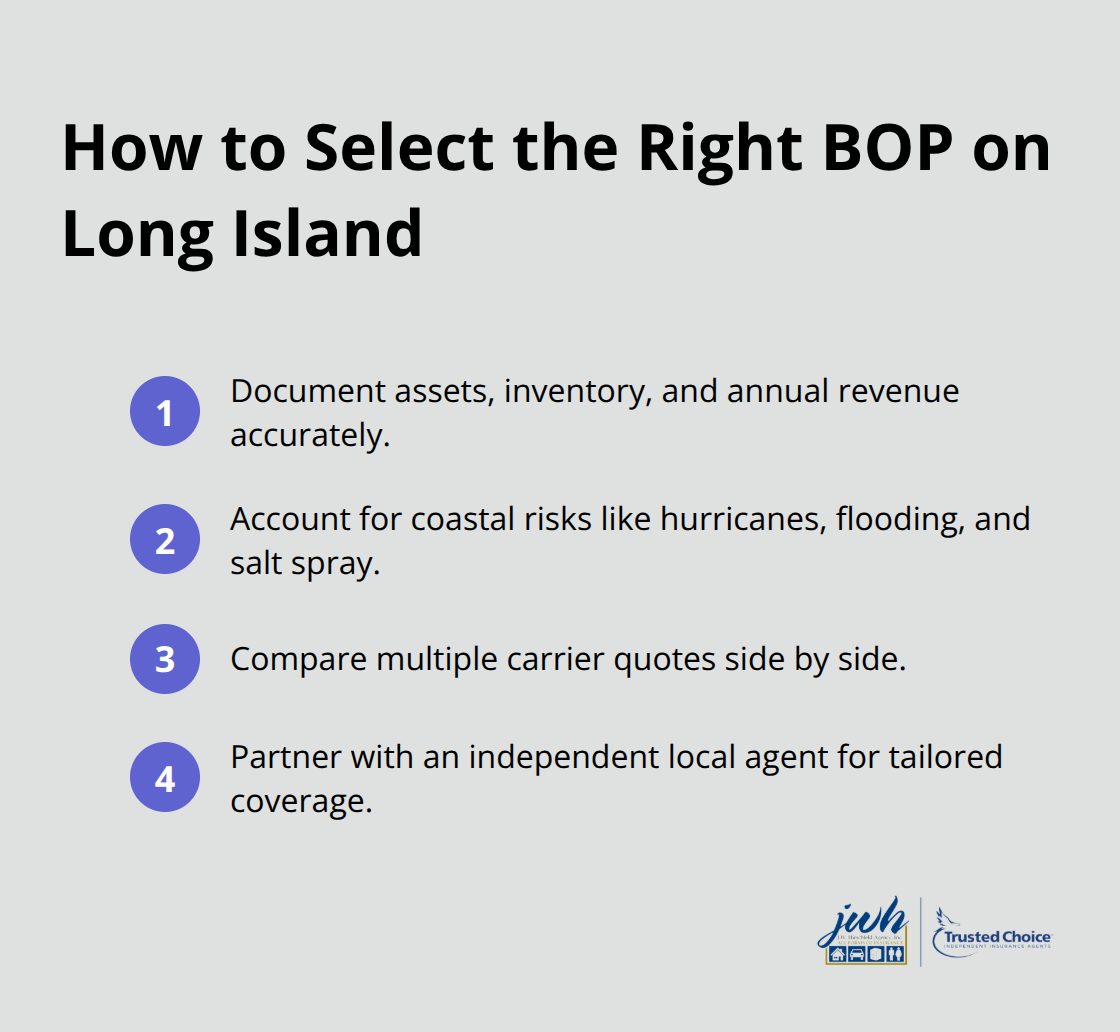
Assessing your coverage needs starts with understanding your actual revenue, assets, and liability exposure rather than guessing. Most Long Island business owners underestimate their property values by 20 to 30 percent, according to insurance industry loss data, which creates immediate gaps when claims happen. Walk through your facility and document everything: building square footage, equipment replacement costs, inventory value, and annual revenue. If you run a retail shop, your inventory might be worth $80,000, but you only remember $50,000 when talking to an agent. If you operate a service business, calculate your daily revenue loss during downtime-a plumbing company losing $2,000 daily during a two-week closure needs business interruption coverage that reflects your actual downtime costs.
Account for Long Island’s Specific Environmental Risks
Long Island’s coastal exposure matters significantly when selecting a BOP. Ask yourself whether your location faces hurricane risk, flooding potential, or salt spray damage to equipment. These local factors determine which BOP structure works, which deductibles make sense, and which optional coverages become necessary rather than nice-to-have. A property manager in Huntington faces different risks than one operating in a suburban inland location, and your policy should reflect that reality.
Compare Multiple Carrier Quotes Side by Side
Comparing quotes from multiple carriers reveals dramatic price differences for identical coverage. A Long Island contractor might receive quotes ranging from $2,800 to $4,500 annually for the same general liability, property, and business interruption package-that’s a $1,700 gap that directly affects your bottom line. Online quote tools and direct insurers typically offer lower initial prices but provide minimal guidance on whether their coverage actually matches your operation.
They ask generic questions and generate one-size-fits-all recommendations that often miss the specific risks your business faces.
Work with an Independent Agent Who Understands Your Market
An independent agent representing multiple top carriers finds quotes tailored to your actual situation, then reviews each policy’s language to confirm coverage aligns with what you need. Local independent agents spend time understanding your business rather than pushing you through an automated system, which means they catch gaps that online platforms miss entirely. An independent agent recognizes that your Long Island restaurant needs different coverage than a manufacturer, different limits than a consulting firm, and different protections than a retail operation-and they structure your BOP accordingly rather than applying a template. JW Hirschfeld Agency, Inc., a third-generation family-owned independent broker in Huntington, works with multiple top carriers to deliver this level of personalized service and competitive pricing for Long Island businesses.
Final Thoughts
A small business owners policy for Long Island firms solves a real problem: protecting your operation without overpaying for fragmented coverage. Property damage, liability claims, and business interruption losses hit Long Island businesses regularly, and most owners discover their gaps only after something goes wrong. A properly structured BOP bundles the protections you need into one affordable package, typically saving $1,000 to $1,600 annually compared to separate policies while simplifying your administration and renewal process.
The selection process matters more than the price tag alone. Documenting your actual assets, revenue, and Long Island-specific risks ensures your coverage matches reality rather than assumptions. Comparing quotes from multiple carriers reveals pricing gaps that directly affect your bottom line, and reviewing policy language confirms each option actually covers what you need.
An independent agent like JW Hirschfeld Agency, Inc. represents multiple top carriers, which means they find tailored quotes rather than pushing you toward one company’s limited options. They spend time understanding your specific business, catch coverage gaps that automated systems miss, and act as your advocate through claims rather than disappearing after the sale. Contact a local independent agent who understands Long Island’s unique risks and can deliver competitive pricing backed by genuine expertise.
The information provided in this blog is for general informational purposes only and does not constitute legal, financial, or insurance advice. Coverage options, terms, and availability may vary. Please consult with a licensed professional for advice specific to your situation.
Artificial intelligence may have been used to generate text and images in some blog articles.