

Running a construction business means managing multiple moving parts, and subcontractor insurance coverage is one piece many general contractors overlook. Your subcontractors’ policies often leave gaps that could expose your company to significant financial risk.
At JW Hirschfeld Agency, Inc., we’ve seen contractors face unexpected liability claims and property damage costs that their subcontractors’ insurance didn’t cover. The right protection strategy protects both your business assets and your bottom line.
What Subcontractor Insurance Actually Covers
The Real Cost of Unprotected Liability
Subcontractor insurance protects your business from financial devastation when something goes wrong on a job site. Without proper coverage in place, a single incident can cost thousands or even hundreds of thousands of dollars. When a subcontractor causes injury, property damage, or faces a liability claim, their insurance should cover it-but most general contractors operate under a dangerous false assumption that a subcontractor’s policy will fully protect them.
A roofer’s faulty work causes water damage, an electrician’s mistake sparks a fire, or a laborer suffers an injury on site. Each scenario creates liability that extends beyond the subcontractor’s coverage limits. If the subcontractor’s policy has gaps or insufficient limits, your company becomes the financial backstop. Courts and injured parties often look to the general contractor for recovery because you’re the one with deeper pockets and ongoing business operations.
Medical and Legal Expenses Mount Quickly
Medical expenses from job site injuries add up fast. Emergency room visits, ongoing treatment, and lost wages can reach $50,000 or more for a serious incident. Legal defense costs mount immediately when a claim is filed, even before you know if you’re actually liable. Your attorney fees, expert witnesses, and court costs can exceed $25,000 to $75,000 depending on case complexity.
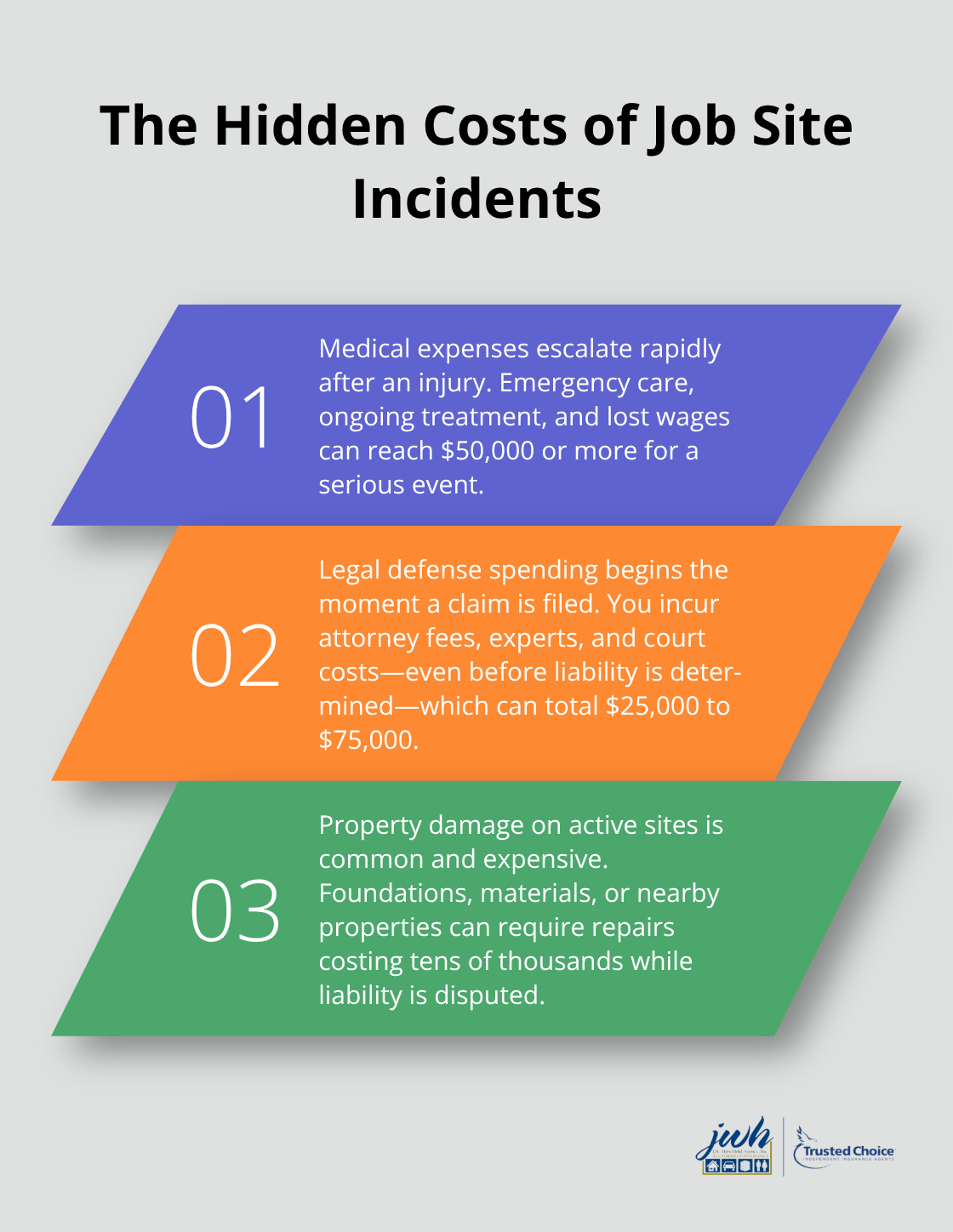
Property damage claims on construction sites are common and expensive. A damaged foundation, ruined materials, or vandalism to adjacent properties can cost tens of thousands to repair. Without clear coverage responsibility, you pay out of pocket while fighting with the subcontractor’s insurer over who is actually liable.
Why Subcontractor Policies Fall Short
Subcontractor policies often exclude certain types of work or contain conditions that make claims difficult to collect. Coverage gaps exist for pollution liability, professional errors, equipment damage, and specialized construction methods. Your business needs its own comprehensive subcontractor insurance strategy because relying solely on a subcontractor’s certificate of insurance is a gamble.
Building Your Own Protection Strategy
Obtaining proof of coverage through a certificate of insurance before work begins is essential, but it’s not enough. You must verify that the coverage actually applies to the work being performed, that limits are adequate for your exposure, and that your company is properly named as an additional insured. An independent insurance agent can review each subcontractor’s policy details, identify gaps, and recommend the right coverage layers for your operation.
Independent agents understand construction risk and structure your policies to handle situations that standard off-the-shelf coverage misses. They represent multiple top carriers, which means they compare options across providers to find the protection that fits your specific operation. This approach-working with an agent who has access to multiple insurers rather than a single carrier-gives you flexibility and competitive pricing that protects both your assets and your budget.
Why Your Subcontractor’s Insurance Isn’t Your Safety Net
The False Security of a Certificate of Insurance
A certificate of insurance from your subcontractor feels like protection, but it masks real risk. That piece of paper shows coverage exists-it doesn’t reveal what actually happens when a claim lands. Subcontractor policies contain exclusions, coverage gaps, and limits that stop well short of real-world incident costs. When a plumber’s work causes water damage to a neighboring property or an electrician’s error triggers a liability claim, the subcontractor’s insurer investigates and often finds reasons the claim falls outside their policyholder’s coverage. That leaves you exposed.
Courts and injured parties understand that general contractors have deeper financial resources and ongoing business operations, so they pursue recovery from you first. Your subcontractor may have declared bankruptcy, disappeared, or simply lack assets to satisfy a judgment. The indemnification clause in your contract sounds protective but provides zero immediate relief when a claim is filed against your company. You still face legal defense costs, investigation expenses, and potential liability judgments before any indemnity payment ever materializes-if it materializes at all.
Inadequate Limits Create Massive Exposure
Inadequate coverage limits on subcontractor policies create another serious gap. A standard general liability policy carries limits of $1,000,000 per occurrence, which sounds substantial until a major incident occurs. Construction site injuries routinely exceed $100,000 in medical costs alone. Property damage claims on commercial projects can reach $500,000 or more.
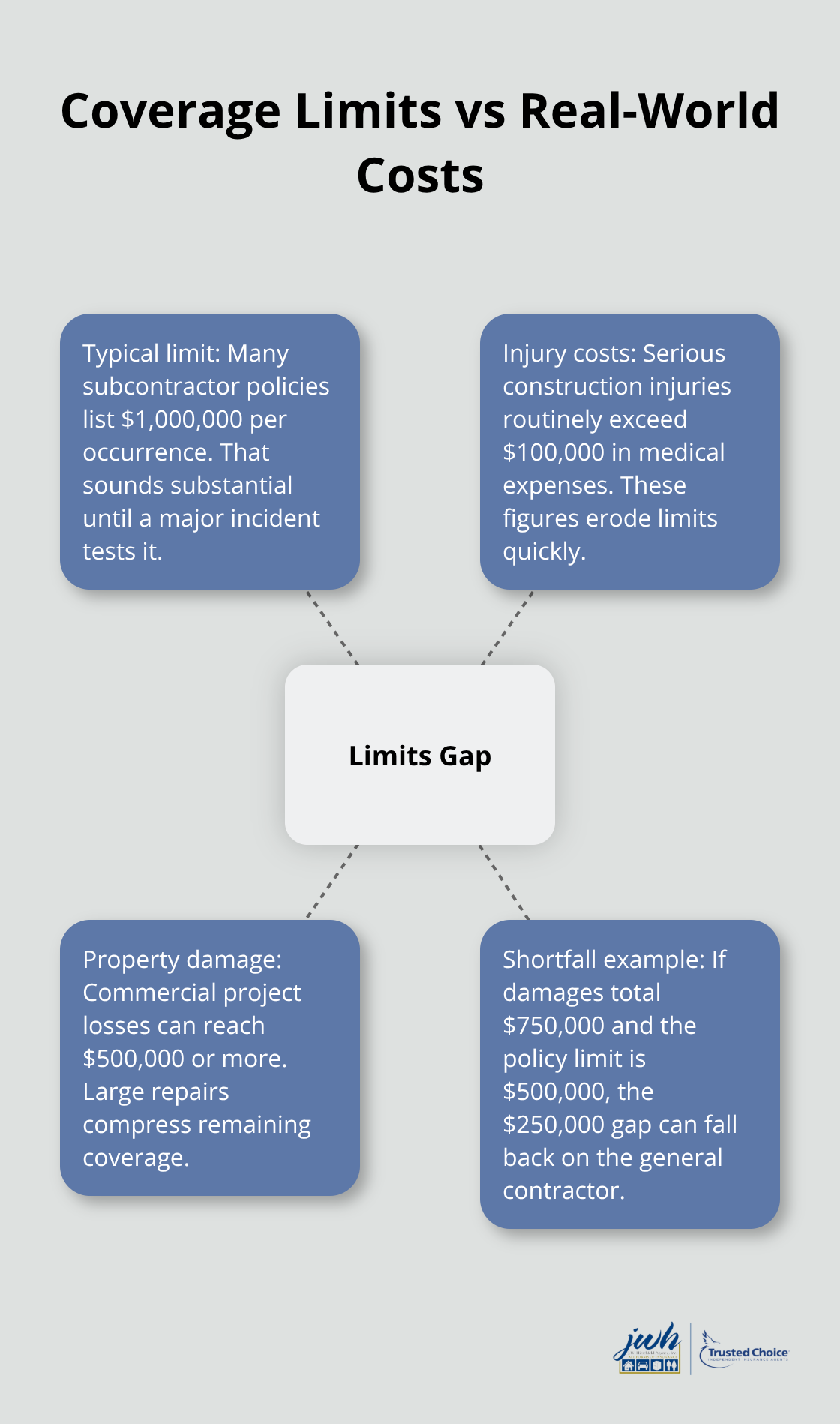
If your subcontractor’s policy limits are $500,000 and actual damages total $750,000, you absorb the $250,000 difference. Many subcontractors carry minimum limits to save on premiums, leaving massive exposure for you. Your business assets-equipment, vehicles, real estate, and operating capital-become targets when subcontractor incidents create uninsured or underinsured liability.
What Comprehensive Protection Requires
You need general liability coverage for all subcontractor operations under your supervision, workers’ compensation coverage for injuries involving subcontractor employees, and property coverage for equipment and materials on site. An independent insurance agent reviews your actual project types, subcontractor mix, contract terms, and real exposure to structure policies that cover gaps subcontractor policies leave behind.
Independent agents representing multiple top carriers compare options across providers-something captive agents cannot do-to find competitive pricing and coverage tailored to construction operations. They verify that additional insured endorsements are properly placed on subcontractor policies, confirm coverage applies to the specific work being performed, and maintain ongoing documentation throughout the project.
Claims Advocacy Makes the Difference
When a claim arises, an independent agent acts as your advocate during the claims process, translating policy language and negotiating with carriers on your behalf. This hands-on approach prevents costly delays and ensures coverage gets applied correctly. The agent identifies coverage overlaps that waste premium dollars and recommends appropriate limits based on your project scale and contract terms. That proactive strategy keeps your business assets protected and your cash flow stable when incidents occur. With the right insurance structure in place, you’re ready to address what happens when subcontractor work creates unexpected liability-and how to verify that coverage actually responds.
How to Choose the Right Subcontractor Insurance
Independent Agents Compare Coverage Across Multiple Carriers
Independent insurance agents represent the practical difference between adequate protection and false security. Unlike captive agents tied to a single carrier, independent agents compare options across multiple top-rated insurers to find coverage that actually fits construction operations. When you work with an independent agent, they translate your specific subcontractor mix, project types, and contract terms into underwriting language that carriers understand. This means coverage gets placed correctly from day one instead of discovering gaps during a claim.
An agent reviews your current general liability policy, workers’ compensation limits, and property coverage to identify where subcontractor operations create exposure that standard policies don’t address. They verify that additional insured endorsements are properly placed on your policies and that your company gets listed correctly on subcontractor certificates of insurance. This verification step matters because incorrectly named additional insureds or missing endorsements leave you unprotected despite having paid for coverage.
Verification and Compliance Keep Your Projects Protected
Independent agents handle the ongoing compliance work-they request updated certificates of insurance before renewal, confirm coverage limits haven’t dropped, and flag policy expiration dates so work doesn’t start on an uninsured project. This proactive approach prevents the common mistake of assuming last year’s insurance still covers this year’s operations. Your agent maintains documentation throughout each project and alerts you to coverage changes that affect your protection.
Bundling Policies Reduces Premiums and Improves Coordination
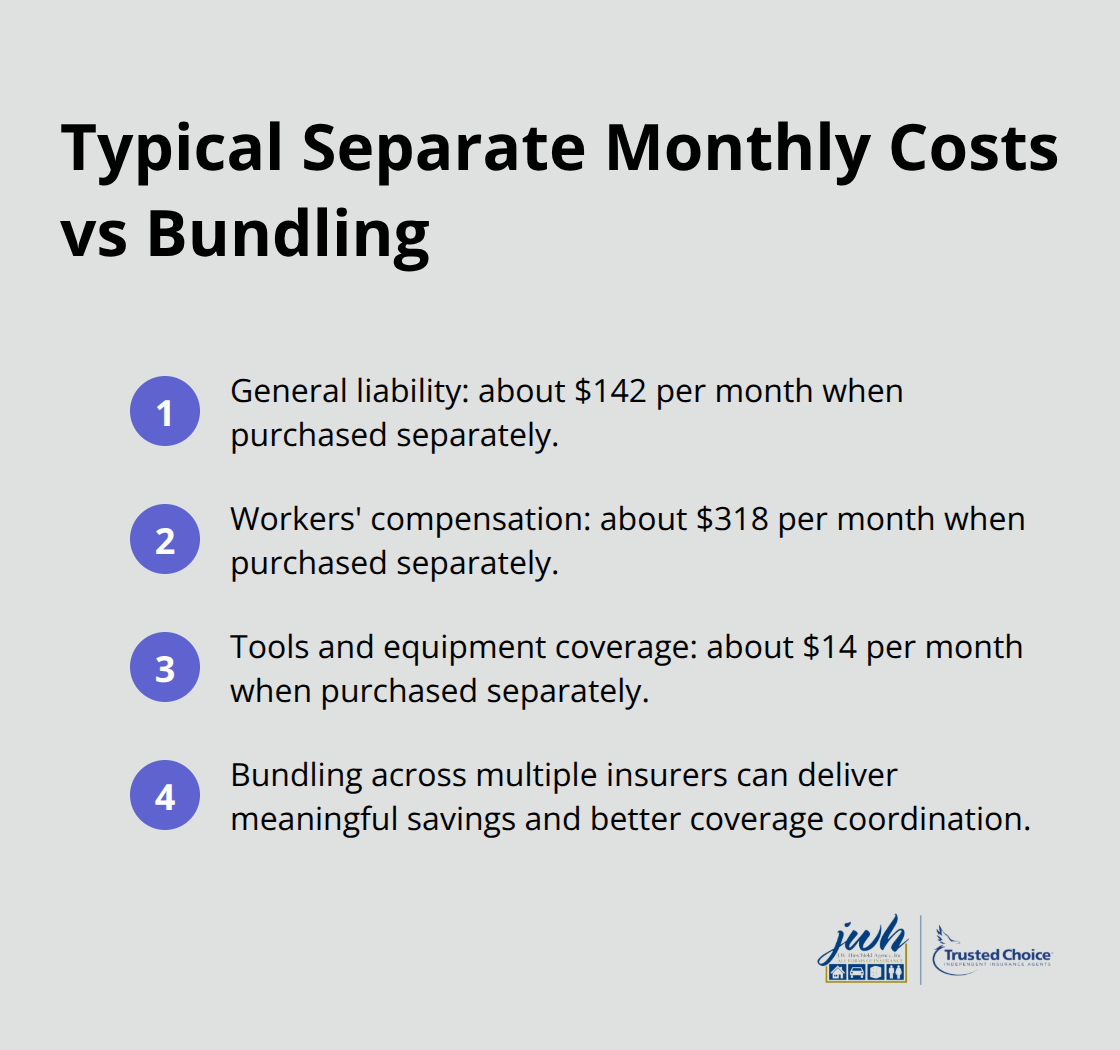
Bundling policies reduces general liability, workers’ compensation, property coverage, and commercial auto into a single program compared to purchasing policies separately from different carriers. An independent agent shopping across multiple insurers finds the best bundled rates available rather than accepting whatever a single carrier offers. A general contractor might pay roughly $142 per month for general liability, $318 per month for workers’ compensation, and $14 per month for tools and equipment coverage when purchased separately, but bundling these lines through an independent agent often produces meaningful savings while improving coverage coordination.
The agent also identifies which coverage limits make sense for your operation instead of recommending excessive limits that waste premium dollars or inadequate limits that create exposure. Project size, contract terms, and your claims history all factor into appropriate limit recommendations.
Claims Advocacy Protects Your Cash Flow
When a claim occurs, your independent agent acts as your advocate with the carrier, handling documentation, explaining policy language, and negotiating claim decisions on your behalf rather than leaving you to navigate carrier communications alone. This hands-on service protects your cash flow during claims and ensures coverage gets applied correctly. The agent identifies coverage overlaps that waste premium dollars and recommends appropriate limits based on your project scale and contract terms. That proactive strategy keeps your business assets protected and your operations stable when incidents occur.
Final Thoughts
Subcontractor insurance coverage protects your business from financial devastation when incidents occur on job sites. Medical costs, legal defense expenses, and property damage claims routinely exceed $100,000, and your business assets become targets when subcontractor policies fall short. The certificate of insurance your subcontractor provides masks real coverage gaps, inadequate limits, and exclusions that leave you exposed when claims actually happen.
An independent insurance agent who represents multiple top carriers solves this problem by comparing options across providers instead of pushing a single carrier’s offerings. They verify that your policies properly cover subcontractor operations, confirm additional insured endorsements are correctly placed, and maintain ongoing compliance throughout your projects. This hands-on approach prevents costly gaps and ensures coverage actually responds when incidents occur.
We at JW Hirschfeld Agency, Inc. understand the specific risks general contractors face with subcontractor operations. Contact us today to review your current coverage and identify gaps that could expose your company to unnecessary risk.
The information provided in this blog is for general informational purposes only and does not constitute legal, financial, or insurance advice. Coverage options, terms, and availability may vary. Please consult with a licensed professional for advice specific to your situation.
Artificial intelligence may have been used to generate text and images in some blog articles.