

Contractor insurance rates vary dramatically based on how insurers classify your business and assess your risk profile. Understanding what drives these premiums helps you make smarter decisions about coverage and costs.
We at JW Hirschfeld Agency, Inc. work with contractors daily to break down the factors that influence pricing and show you where real savings opportunities exist.
How Insurers Classify Your Contractor Business
Workers Compensation Classification Codes Set Your Base Rate
Insurance companies don’t charge all contractors the same rate-they classify your business based on specific risk markers that predict claim likelihood. Workers compensation classification codes form the foundation of this system. The National Council on Compensation Insurance assigns these codes, which group contractors by trade and hazard level. An electrician falls into a different code than a painter, and that code difference directly affects your workers comp premium. If you work in HVAC, electrical, roofing, or plumbing, you’re in a higher-risk tier than cabinet installation or cleaning services. This matters because higher-risk trades pay substantially more.
Your Experience Modification Rate Reflects Past Claims
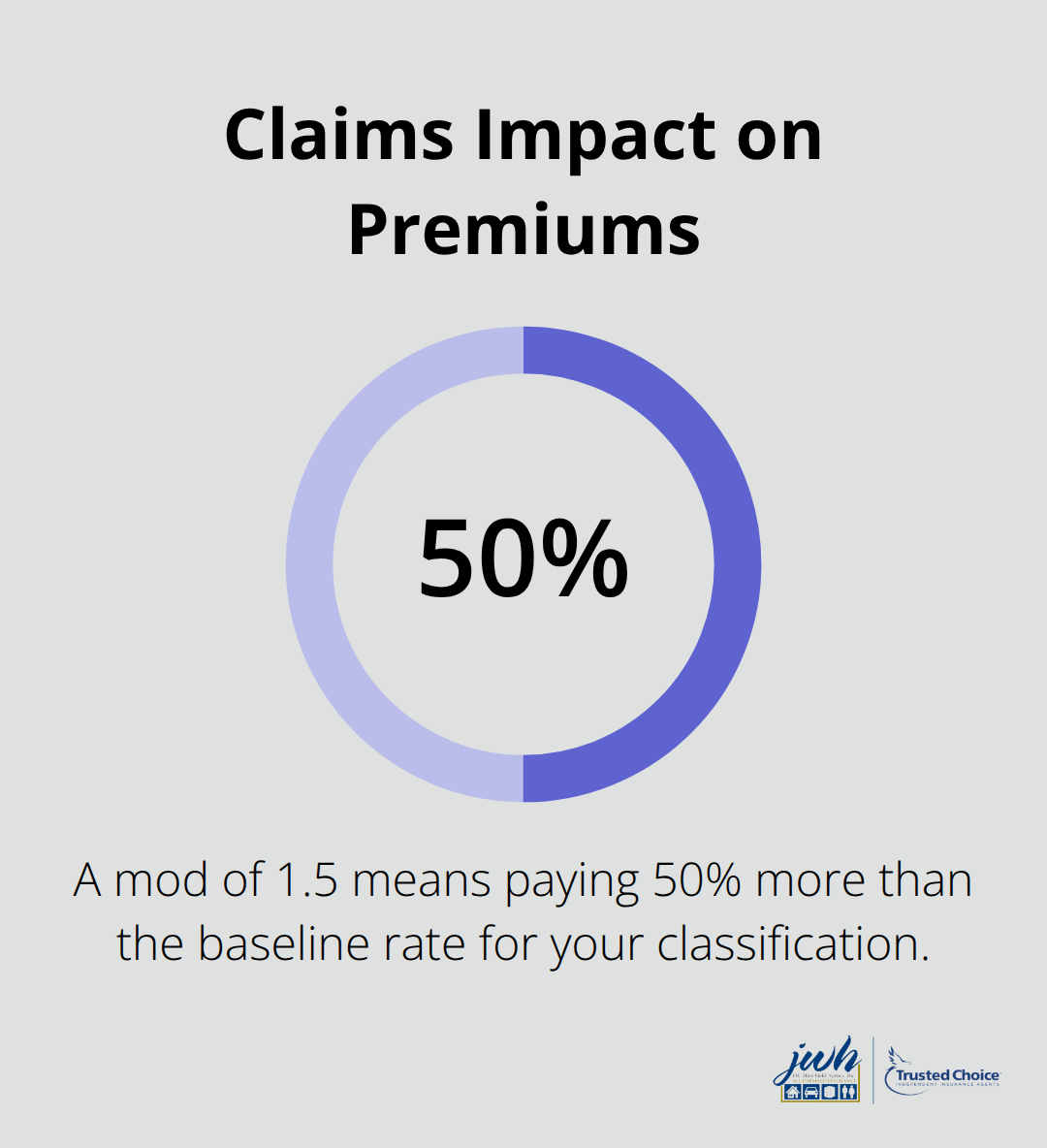
Your experience modification rate, often called an EMR or mod, layers on top of your base classification. If you filed workers comp claims in the past three years, your mod increases-sometimes significantly. A contractor with a clean claims history pays a mod of 1.0 or lower, which means they receive a discount. A contractor with multiple claims might see a mod of 1.5 or higher, meaning they pay 50% more than the baseline rate for their classification. This penalty sticks with you for three years after each claim closes, so a serious injury on a job site today affects your rates well into the future.
Business Size and Revenue Determine Your Exposure Level
Your business size and annual revenue complete the classification picture. Insurers know that contractors with larger payrolls and higher revenue face greater exposure-more employees mean more chances for injuries, and bigger projects mean bigger potential losses. A contractor with two employees and $80,000 in annual revenue pays far less than one with fifteen employees and $500,000 in revenue, even if both are electricians. These classification factors stack together in ways that most contractors don’t fully understand, which is why working with an independent agent matters. An independent agent understands how these elements interact and can spot opportunities to restructure your business information to reflect your actual risk profile accurately.
Getting Your Classification Right Saves Real Money
Misclassification happens more often than you’d think, and catching it saves real money. An independent agent reviews your classification codes to verify they’re correct, examines how your mod was calculated, and ensures your business size is reported in a way that captures any legitimate discounts available to you. These details compound-a single code correction or mod review can lower your annual premium by hundreds of dollars. Now that you understand how insurers classify your business, the next step is recognizing which specific factors actually drive your premiums higher.
What Really Drives Your Contractor Insurance Premiums Higher
The Type of Work You Perform Sets Your Premium Foundation
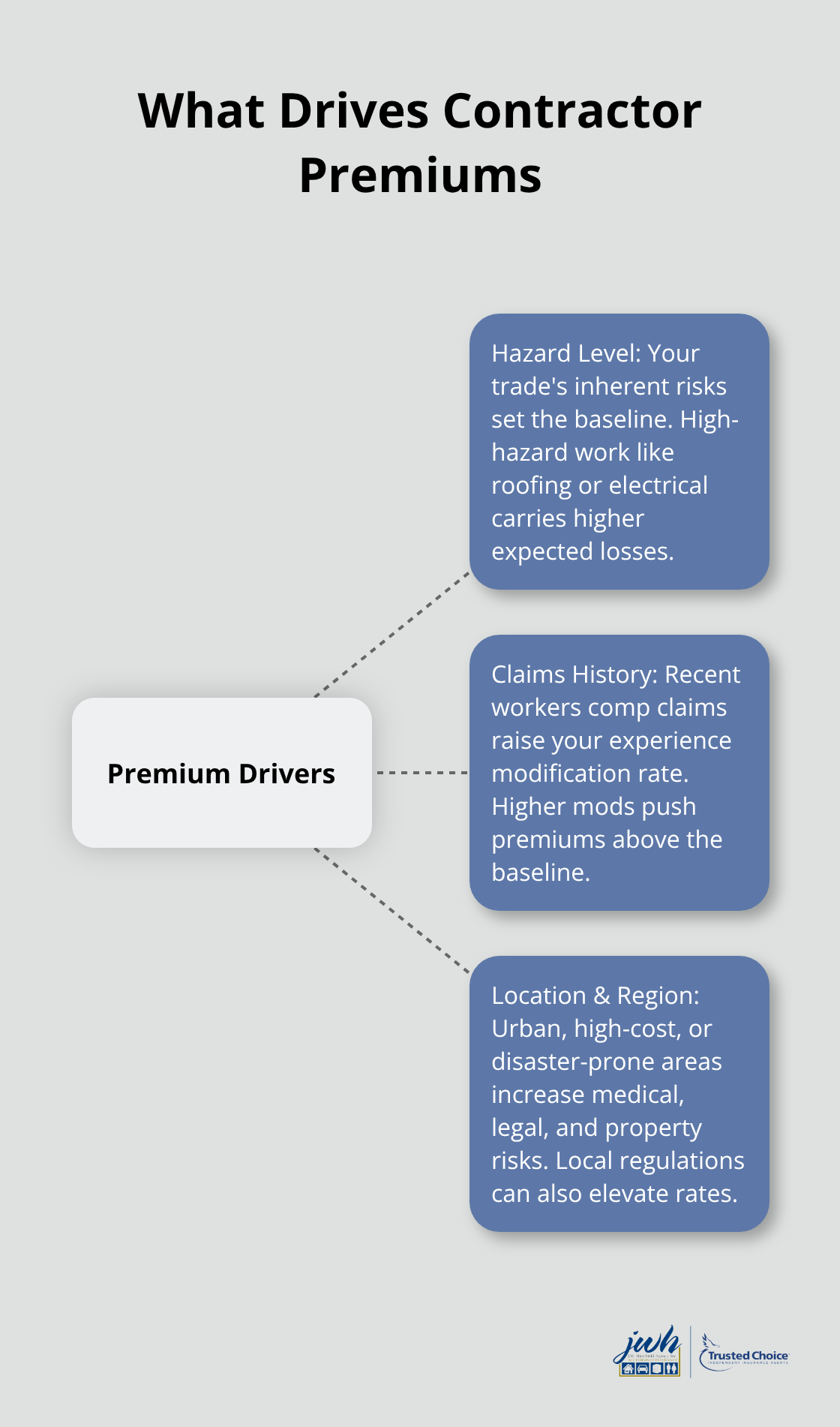
The type of work you perform is the single biggest lever on your insurance costs, and it’s not negotiable. Roofing contractors pay substantially more than painters because fall hazards and injury frequency are documented facts that insurers track carefully. According to the Bureau of Labor Statistics, roofing has one of the highest nonfatal injury rates in construction at 4.9 cases per 100 full-time workers, compared to 2.1 for general construction. HVAC work, electrical work, and plumbing similarly command higher premiums due to electrocution risk, confined space hazards, and the physical demands of the job. A low-risk trade like cabinet installation or handyman work costs far less because the injury probability is measurably lower. This is why your specific trade classification matters so much-insurers have decades of claims data showing exactly which work creates which injuries, and they price accordingly.
Your Safety Record and Claims History Multiply Your Base Rate
Your safety record amplifies or reduces this baseline dramatically. If you filed workers compensation claims in the past three years, your experience modification rate climbs, and that increase compounds year after year. A contractor who files even one serious claim jumps into a higher premium bracket, sometimes paying 30 to 50 percent more than a peer with a clean record. This isn’t punishment-it’s math based on actual claim frequency.
Contractors who implement formal safety programs, require toolbox talks on job sites, and document safety training see lower mod rates because their claims history proves the investment works. The data supports this: insurers reward contractors whose practices reduce injuries. A clean claims record over three years qualifies you for a mod of 1.0 or lower, which means you receive a discount on your baseline rate.
Location and Regional Risk Factors Add Significant Cost Variation
Your location adds another layer of cost variation that many contractors overlook. A contractor operating in a high-cost urban area like New York or California pays more for workers compensation, general liability, and property coverage than one in a rural region, partly because medical costs and litigation expenses are higher in those areas. Local regulations also matter-some states have stricter workers compensation requirements or different coverage thresholds that push premiums up.
Additionally, if your work area has high property crime rates or frequent weather events like hurricanes or flooding, your commercial property and general liability premiums rise to reflect that regional risk. These three factors-hazard level, claims history, and location-work together to create your actual premium. An independent agent can review how each factor applies to your specific operation and identify where you have real control to reduce costs through better documentation, safety practices, or coverage restructuring. Understanding these drivers positions you to take action on the costs you can actually control.
Ways to Lower Contractor Insurance Costs Without Sacrificing Coverage
Safety Programs Reduce Your Experience Modification Rate
Safety programs deliver measurable premium reductions that most contractors overlook. When you establish formal safety protocols on job sites, document toolbox talks, and require workers to complete safety training, your experience modification rate drops noticeably. Insurers track this data because it correlates directly with fewer claims. A high EMR can raise workers’ compensation premiums and make bids harder to win, while a lower EMR signals stronger safety performance and qualifies for discounts on your baseline rate.
The investment in safety training pays for itself through lower premiums, and the human benefit of fewer injuries on your team matters more. Your claims history shapes your future costs, so preventing injuries today protects your rates tomorrow. Cutting workers compensation costs without sacrificing protection follows the same principle-prevention reduces claims and premiums.
Bundling Coverage Types Generates Substantial Savings
Consolidating your coverage types into a single Business Owner’s Policy, or BOP, combined with commercial auto and workers compensation, generates meaningful discounts. Most insurers offer 10 to 15 percent savings when you consolidate multiple policies with one carrier instead of spreading coverage across several companies. A contractor with general liability, commercial property, workers compensation, and commercial auto bundled together typically pays less in total premium than purchasing each policy separately.
This bundling approach also simplifies your administrative work since you manage one renewal date and one point of contact instead of juggling multiple policies and renewal schedules. Fewer moving parts mean fewer opportunities for coverage gaps or missed deadlines. Online quote tools and direct insurers typically offer lower initial prices but provide minimal guidance on whether their coverage actually meets your needs.
Independent Agents Access Multiple Carriers for Better Rates
The most overlooked cost-saving strategy involves working with an independent agent who represents multiple carriers. Captive agents work for a single insurance company and have no incentive to shop your rates competitively, but independent agents can quote your business across five to ten different carriers in the same timeframe. This matters because contractor premiums vary between insurers for identical coverage.
An independent agent reviews your classification codes to catch misclassifications that inflate your premiums, examines your experience modification calculation to verify accuracy, and restructures your coverage to eliminate unnecessary add-ons you don’t need. An independent agent also provides ongoing advocacy during claims, guiding you through the reporting process and ensuring the carrier handles your claim fairly. This hands-on support protects your long-term rates because proper claims documentation and communication can prevent unnecessary premium increases on renewal.
Switching Carriers When Rates Rise or Coverage Lapses
When your premium increases or a carrier nonrenews your policy, an independent agent has the relationships and market knowledge to move your coverage to a better-priced carrier without starting over with a new representative. An independent broker representing multiple top carriers can find tailored coverage and competitive pricing that reflect your actual risk profile rather than generic pricing formulas. This continuity of service matters because your agent already understands your operations, safety practices, and coverage needs-no need to explain everything to a new contact or wait weeks for underwriting to restart.
Final Thoughts
Contractor insurance rates reflect three interconnected factors: how insurers classify your business, which hazards your work creates, and the coverage decisions you make. Your workers compensation classification code, experience modification rate, and business size form the foundation, while your work type, safety record, and location multiply that baseline into your actual cost. You control more of this equation than most contractors realize, and prevention delivers measurable results that compound over time.
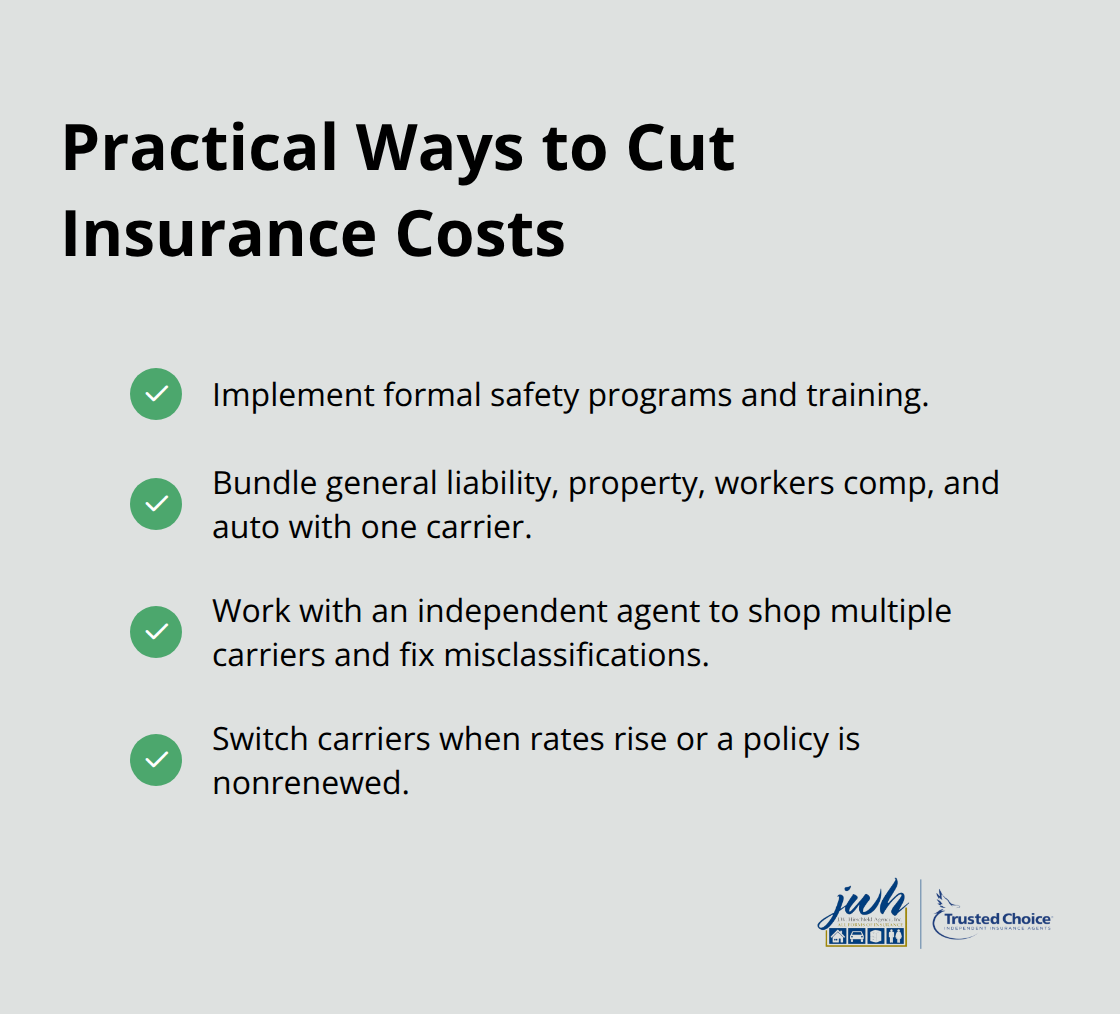
A formal safety program reduces your experience modification rate by demonstrating lower claim frequency to insurers, and bundling your general liability, commercial property, workers compensation, and commercial auto into a single policy generates 10 to 15 percent savings compared to purchasing coverage separately. These two strategies cut your annual contractor insurance rates significantly without reducing your protection. The most powerful move involves working with an independent agent who represents multiple carriers and catches misclassifications that inflate your premiums, verifies your experience modification calculation, and removes unnecessary add-ons.
We at JW Hirschfeld Agency, Inc. represent multiple top carriers and provide the hands-on advocacy that matters when claims happen. Your contractor insurance strategy should reflect your actual operations and risk profile, not generic pricing formulas. That’s what independent agents deliver.
The information provided in this blog is for general informational purposes only and does not constitute legal, financial, or insurance advice. Coverage options, terms, and availability may vary. Please consult with a licensed professional for advice specific to your situation.
Artificial intelligence may have been used to generate text and images in some blog articles.